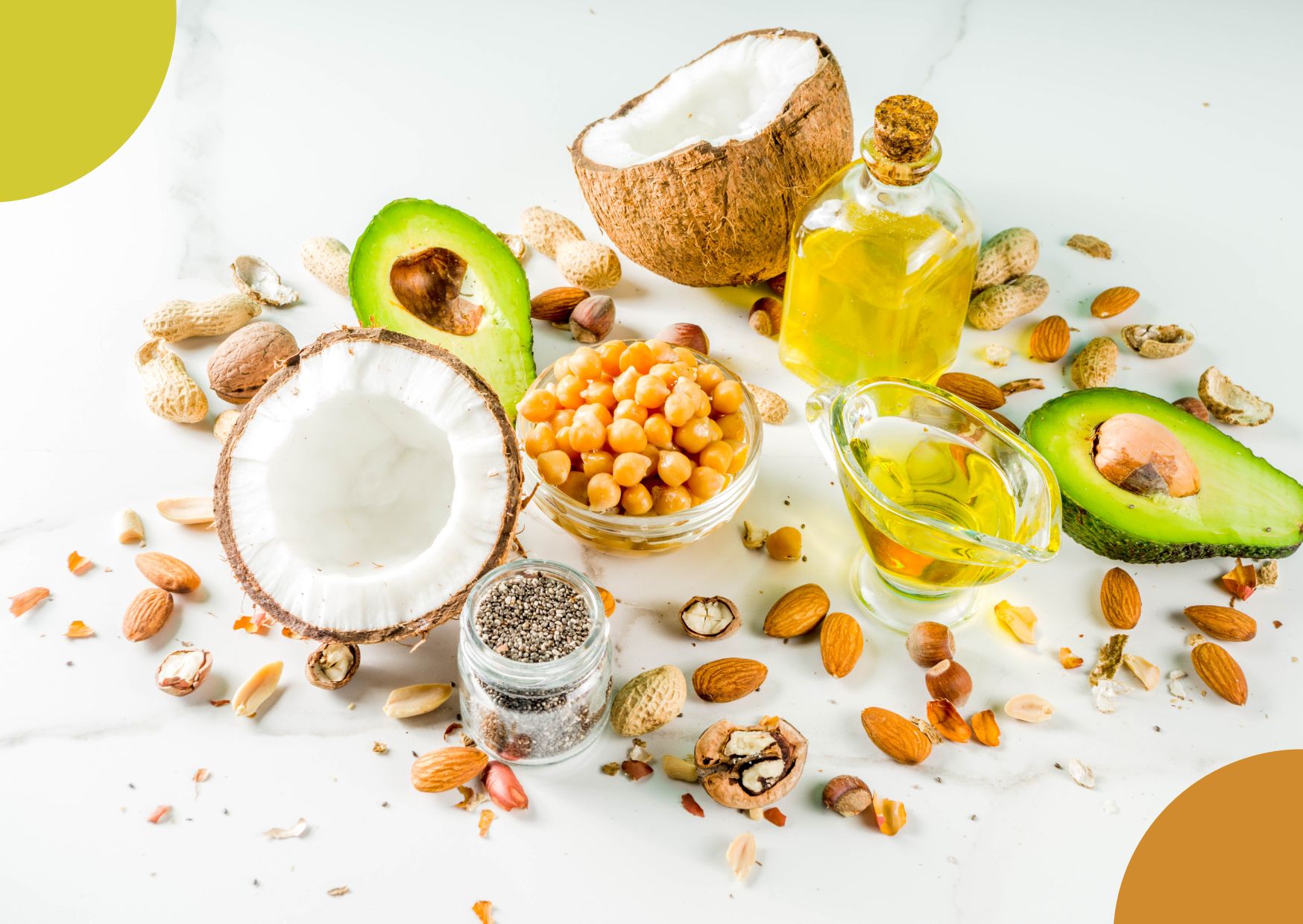


Is the Food Matrix the Overlooked Factor in Nutrition

As a nutrition graduate who lives with gluten and lactose sensitivities, I spent years obsessively reading labels. I stared at calories, fat grams, and protein numbers, treating my body like a calculator. But I quickly learned that our bodies don’t read numbers; they read food structure, i.e, food matrix.
Yes, I know…walking down any supermarket aisle, you are bombarded with isolated numbers: 100 calories, 20 grams of protein, 0 grams of fat. In the minds of consumers, and even legacy nutrition guidelines, food has been reduced to a simple math problem.
We treat the human metabolism like a calculator, assuming that if you plug in a specific set of macronutrients, you will get an entirely predictable metabolic output. But our bodies do not work like that; they are complex biological ecosystems.
Dairy is a textbook example of this concept. Rather than reading ingredient lists on isolated calcium or whey powders, exploring the Bulgarian yogurt food matrix shows how its physical architecture fundamentally dictates nutrient absorption.
And it turns out, nutrition science has been suffering from a massive blind spot: the food matrix. The food matrix is the physical and chemical architecture of a whole food. It is the complex, natural network of fibrous cell walls, protein webs, and mineral bonds that house our nutrients. And yes, the food matrix is widely considered the missing link in modern nutrition.

What is Food Matrix?
The food matrix refers to the physical and chemical structure of food and the biosinergy of its nutrients and bioactive compounds. These are:
- Cell walls, fiber networks, and protein structures that physically trap nutrients.
- And food matrix interactions: the way fats, proteins, vitamins, and minerals chemically bind together within a food.
However, modern science is proving that the food matrix is not just a passive wrapper. The structural integrity of what you eat determines its entire metabolic fate, or how it is digested, how it impacts glycemic index and glycemic load, your blood sugar, and exactly how many calories your body can extract.
When we strip this structure away through ultra-processing, we don’t just change the texture; we alter how the food behaves inside the human body. Two foods can look identical on a back-of-pack nutritional label, yet may have vastly different biological responses based entirely on their physical food matrix.
If we want to truly understand human nutrition, we have to stop looking at what a food contains and start looking at how it is structured. We need to step beyond reductionism and look at the whole picture.
The Bricks in a Bank Vault vs. Bricks on a Pallet
How to describe the food matrix? We can do it in that way. Imagine you want to build a house, and you need bricks. In this scenario, bricks are nutrients (such as fats, carbs, and vitamins), and your body is the house.
To use the bricks, you first have to get your hands on them, i.e., called bioaccessibility. Once you actually have them at the site and can start building, that is bioavailability.
Now, look at how two different food structures deliver these bricks:
The Whole Food Matrix
Eating a whole food, like an intact grain, is like ordering bricks that arrive locked inside a high-security bank vault. Imagine heavy steel doors and concrete walls are the rigid, fibrous plant cell walls. Then, your digestive enzymes are like a team of locksmiths. They start drilling, but they only have a limited amount of time before the vault moves down the conveyor belt (your digestive tract). The locksmiths successfully crack open the front gate and grab some bricks. But by the time the vault passes through, a massive stack of bricks is still locked deep inside the vault. They leave your body completely unused.
Everyday Cooking
Long before industrial factories existed, our ancestors recognized that rigid plant structures such as grains and millets required intentional cultivation. They discovered that by manipulating the food matrix through traditional processing, such as grinding, soaking, fermenting, and cooking, they could manually turn the lock, shifting a food from a state of low bioaccessibility to one of maximum nourishment.
If ultra-processing is like demolishing the entire bank vault with a wrecking ball, traditional processing is like hiring an architect to remodel the building. You are intentionally altering the walls, not to destroy them, but to make the valuable assets inside easier to get to.
Mechanical Grinding & Particle Size
When you grind a whole grain like millet into flour, you mechanically shatter the rigid outer fibrous hull and cell walls. While intact matrices like almonds show how our bodies can be locked out of nutrients, human history has long relied on a clever workaround. Decreasing particle size significantly increases grain surface area.
In whole millet, the matrix protects its carbohydrate core, and the glycemic response will be low (a lot of labor). When ground to a micro-powder, starch granules can be readily accessed and digested by amylase enzymes. This increases starch solubility, speeds gastric emptying, and produces a faster, sharper postprandial glucose spike.
Cooking & Gelatinization
Raw millet starch is tightly packed, crystalline, and highly resistant to human enzymes.
But under heat and moisture (hydrothermal cooking), the starch granules absorb water, swell, and burst open. This process is called gelatinization. As a result, the starch becomes instantly bioaccessible to digestive enzymes. Without this specific matrix alteration, raw grains would pass through us largely undigested, starving us.
Soaking, Fermentation, and Germination
Grains and millets naturally contain anti-nutrients like phytic acid and polyphenols locked within their matrices. These compounds act like chemical bodyguards, binding tightly to vital minerals such as iron, zinc, and calcium, preventing our bodies from absorbing them.
Fermentation uses live microbes to unlock a stubborn food matrix. It breaks down compounds like phytic acid (which can block mineral absorption) and transforms plant grains into a highly bioaccessible, nutrient-dense powerhouse. If you ever wonder why sauerkraut has more vitamin C than raw cabbage, this is the answer.
The Ultra-Processed Food
Here, the picture is different. Eating an ultra-processed food, where the matrix has been mechanically and chemically shredded, is like ordering the exact same number of bricks, but they arrive stacked loosely on an open wooden pallet in your driveway. There are no walls, no locks, and no barriers as the natural matrix has been completely dismantled. Your enzymes don’t need to do any heavy lifting. There is no vault to crack. So, the moment the pallet arrives, your body floods the site with workers and instantly absorbs every single brick.
The Reductionist Trait: Why Counting Nutrients Fails Us
So, where are the problems? For over a century, nutrition science was defined by reductionism, i.e., taking only nutrients into account. Let’s look at some marking points.
The Deficiency Era (19th to mid-20th Century): The discovery of macronutrients, calories, and vitamins (like vitamin C for scurvy) revolutionized public health. Food was viewed simply as a delivery vehicle for these isolated compounds. This led to widespread food fortification (e.g., adding iodine to salt).
The Paradigm Shift (Late 1990s): Researchers began noticing anomalies. Isolated nutrient supplements rarely yielded the same long-term health benefits as whole foods containing those exact same nutrients. The term “food matrix” emerged in academic literature to describe how a food’s physical microstructure alters nutrient release and absorption kinetics.
The NOVA Classification (2009): Dr. Carlos Monteiro and his team in Brazil found that rising obesity rates didn’t track with changes in isolated nutrients (such as total fat or sugar), but rather with how foods were processed. This shifted the scientific focus from what is in food to what has been done to its structure.
Human Evolution in Digestion
Well, as Homo sapiens, we evolved to process whole food matrices. Our physiology possesses incredible evolutionary strengths designed to dismantle tough, complex structures within the body. There are a few concerns worth mentioning.
The Satiety Brake System: For millions of years, our food required extensive mechanical chewing and long gastrointestinal transit times. Our brains evolved to rely on these slow, physical cues. When a whole-food matrix stretches the stomach and moves slowly into the lower intestines, it triggers the release of satiety hormones such as GLP-1 and PYY, signaling to the brain that we are full.
Symbiotic Gut Microbiota: Our colon houses trillions of microbes that evolved to ferment the complex, fibrous scaffolding of plant matrices that our human enzymes cannot break down. This slow microbial fermentation produces Short-Chain Fatty Acids (SCFAs), which regulate our immune system, gut barrier, and metabolism.
Human Evolutionary Limits: The Lack of an “Off-Switch”
While we excel at extracting nutrients from tough matrices, our evolutionary history left us completely defenseless against an environment where those matrices do not exist. There is something called the calorie-scarcity mindset. In the ancestral environment, energy-dense nutrients (like pure fats and free sugars) were incredibly rare. We never evolved a metabolic speed limit or an off-switch for them, as we never encountered them in large quantities without a heavy fibrous or protein matrix wrapping them up.
In addition, our sensory organs (taste, smell, texture) were designed to evaluate the nutritional value of a matrix. A soft, sweet texture in nature meant safe, ripe fruit. We are hardwired to seek out and overconsume these textures because, historically, they meant survival.
The UPF Phenomenon or the Industrial Pre-Digestion
I know, we live in a different world from our ancestors. Ultra-processed foods can be really convenient if used as a temporary band-aid. We all have these moments when we prefer to grab and go something packed and ready to be cooked or just pre-heated.
But the core mechanism of ultra-processing is the deconstruction of the natural food matrix, which, together with other additives, increases shelf life and makes the food quick, convenient, and still edible. Which means a completely different structure than, let’s say, people ate 100 years ago. This is an incredibly short time frame for our bodies to adapt to these dietary changes.
How does the UPF manufacturing produce it? The process uses extreme heat, extrusion, and chemical refining to shred plant cell walls and dairy membranes. It reduces whole foods into an acellular slurry of isolated starches, fats, and sugars. Ultimately, this manufactured food is essentially “pre-digested” outside the body. Consequently, our bodies receive new substances that they don’t know how to utilize.
What Does This Mean in Metabolic Response?
Let’s see this process in more detail. When you consume a UPF, the oral phase is drastically shortened; you chew less and eat faster. The “pre-digested” nutrients hit your upper gastrointestinal tract like a tidal wave. They are absorbed so rapidly that they completely bypass the lower intestine, failing to trigger the GLP-1 and PYY satiety hormones that tell you to stop eating.
Why Is the Microbiome Starving?
Then, as these broken-down nutrients are absorbed in the upper gut, the complex matrices that normally travel down to feed your gut microbiota never arrive. This starves your beneficial microbes, which usually leads to gut dysbiosis and systemic inflammation.
Timeline Comparison: Whole Plant Matrix vs. UPF
| Digestive Phase & Timeline | Whole Plant Matrix | Ultra-Processed Food Matrix |
|---|---|---|
| 1. Oral Phase (Minutes 0–2) | High Mechanical Effort: Prolonged chewing is required to break down rigid, fibrous cell walls. The Metabolic Signal: High sensory exposure and saliva mixing activate strong neurological satiety cues. Eating rate is slow. | Minimal Effort (“Melt-in-Mouth”): Cellular structures are already industrially destroyed. Food requires little to no chewing. The Metabolic Signal: Rapid oral transit bypasses sensory satiety cues. Eating rate is accelerated. |
| 2. Gastric Phase (Minutes 5–60) | Slow, Controlled Churning: The stomach must work hard to mechanically grind the intact food particles. The Metabolic Signal: High volume triggers stomach stretch receptors, initiating early fullness signals. Gastric emptying is slow and steady. | Instant Liquefaction: The acellular slurry dissolves almost immediately upon contact with stomach acid. The Metabolic Signal: Minimal mechanical work is needed. Stretch receptors are barely activated before the food rapidly empties into the duodenum. |
| 3. Upper Intestinal Phase (Minutes 30–120) | Obstacle Course Digestion: Digestive enzymes (amylase, lipase) face physical barriers. They can only slowly chip away at the edges of the intact plant cells. The Metabolic Signal: Nutrients are released in a slow trickle. Blood glucose and insulin curves are flat, stable, and manageable. | Enzymatic Avalanche: Because the matrix is gone, digestive enzymes instantly flood and break down the exposed nutrients. The Metabolic Signal: Massive amounts of glucose and fats pour into the bloodstream at lightning speed, causing a sharp insulin spike. |
| 4. Lower Intestinal Phase (Minutes 60–180) | Satiety Brake Activation: A significant portion of chyme reaches the ileum (lower gut) still structurally intact. The Metabolic Signal: The presence of undigested nutrients here triggers the “Ileal Brake,” flooding the brain with fullness hormones (GLP-1 and PYY). | The Metabolic Silent Zone: Nutrients were completely absorbed in the upper gut. Virtually nothing reaches the ileum. The Metabolic Signal: The “Ileal Brake” is never pulled. Satiety hormones (GLP-1/PYY) remain silent, leaving you feeling hungry shortly after eating. |
| 5. Colonic Phase (Hours 3–24) | Feeding the Microbiome: Intact fibrous scaffolding and resistant starches make it safely to the large intestine. The Metabolic Signal: Gut microbes ferment this matrix, producing Short-Chain Fatty Acids (SCFAs) that lower systemic inflammation. | Starving the Microbiome: The colon receives little to no complex food matrix structure. The Metabolic Signal: Microbes are starved of fermentable substrate, potentially shifting to degrade the gut mucus layer, contributing to dysbiosis. |
As you can see, by the time UPF hits your tongue, industrial factories have already done the heavy lifting that your teeth, stomach, and enzymes evolved to do. When the physical obstacle course of a whole food matrix is missing, UPFs trick our ancient metabolism, flooding our blood with energy before our brain ever receives the biological memo that we’ve eaten.
FAQs
What exactly is the “food matrix”?
Think of it as nature’s architecture. Food is not just a loose bucket of vitamins, minerals, fats, and carbs. It is a complex web where these components are physically bound together. This structure dictates how quickly your enzymes or microbiome will break down food, how nutrients interact, and how your body responds.
If the calories are the same, why does the matrix matter?
Because your body is a chemistry lab, not a calculator. A classic example is whole almonds versus almond butter.
They have the exact same nutrient profile on paper. However, the intact cell walls in whole almonds trap some of the fats. Your body cannot fully break them down, meaning you absorb up to 20–25% fewer calories from whole almonds than almond butter, where the matrix has been mechanically destroyed.
Can a food matrix make “unhealthy” nutrients healthy?
Yes, and full-fat cheese is the ultimate proof. For decades, we were told to avoid cheese because it is high in saturated fat and sodium.
However, recent clinical trials show that whole cheese does not raise LDL (“bad”) cholesterol the way butter does. Why? The cheese matrix binds calcium, phosphorus, and fatty acids together, forming droplets that change how fat is absorbed in your gut. The whole is healthier than the sum of its parts.
Does blending a smoothie ruin the food matrix?
It modifies it. When you blend fruit, you physically crush the cellular structure.
The downside: You bypass the chewing phase, and the liquid enters your stomach much faster, which can lead to quicker blood sugar spikes and less fullness.
The upside: For certain vegetables, blending can actually increase the bioavailability of specific antioxidants (like lycopene in tomatoes or beta-carotene in carrots) by breaking tough cell walls your teeth might miss.
How does ultra-processing affect the matrix?
Ultra-processing completely obliterates the natural matrix. Industrial manufacturing strips away the original cellular structure of grains, meats, or plants. They reduce them to isolated powders, mix them with additives, and rebuild them into a fully synthetic matrix (such as chips or pastries).
Without a natural matrix to slow down digestion, these foods hit your system rapidly, causing severe blood sugar crashes and disrupting your hunger hormones.
How can I use this knowledge without getting obsessive?
Aim for “intact” when convenient: Swap in brown rice, whole oats, or intact grains when it fits your day, but don’t panic if white bread is what’s on the menu.
Enjoy the nuance: Stop stressing over the fat content in whole yogurt or the sugar content in a whole apple. The food matrix has your back.
Ditch the perfection: A healthy diet is built on consistency, not absolute perfection. Protect your mental peace and your relationship with food first.
How do refined or ultra-processed foods fit into this?
This is where our 80/20 rule keeps us sane. Leaning on whole-food structures for the bulk of our meals provides our bodies with steady energy. Leaving room for refined foods means we can enjoy life, convenience, and our favorite treats without guilt.
In Summary
The next time you turn a food package around to read the label, take a step back. Remember that your body does not read numbers; it reads architecture. A calorie count or a macronutrient gram value is only a theoretical calculation. What truly matters for your metabolic health, satiety hormones, and gut microbiome is how securely those nutrients are locked within their natural home.
Traditional processing methods, such as soaking grains, fermenting millet, or cooking vegetables, are a beautiful way to enhance bioavailability. They act like a controlled home renovation, opening the matrix’s doors to release bound minerals and make starches safe to digest. Ultra-processing, on the other hand, is a demolition ball. It shatters the biological brakes your body relies on, leaving your metabolism defenseless against an unnatural avalanche of pre-digested energy.
If you want to optimize your health, stop trying to win a game of nutrient math. Shift your focus away from isolated numbers and prioritize the integrity of whole foods. Your ancient physiology will thank you for it.
Thank you for reading!
YourDani x x



About the Author: Dani
Gluten-Free Recipes | Gut Health | Metabolic Health
Hi! I’m Dani, a Human Nutrition graduate with a strong interest in lifestyle medicine, gut health, metabolic health, UPF-free, whole-food, and gluten-free cooking. Your visit means the world to me!
I share simple recipes, nutrition tips, lifestyle experiences, and insights into living with food intolerances.