
Dyson Supersonic Hair Dryer Honest Review From a Professional

Is a £300+ hair dryer really worth it? I’ve been using the Dyson Supersonic hairdryer for over five years, both on myself and in a professional setting, and while I genuinely rate it, I will explain it. If you’re curious whether it’s worth the investment, here’s my honest, experience-based review.
After more than 33 years working as a hairdresser, I’ve used countless hair dryers, reliable salon tools, heavy-duty models, and everything in between. Most of them did the job, but over time, they all followed the same pattern: performance slowly declined, airflow weakened, heat became less consistent, and eventually, they needed replacing.
This post may contain affiliate links. If you make a purchase through these links, I may earn a small commission at no extra cost to you. I only recommend products I personally use and trust. Thank you for your support!
Table of Contents
Is the Dyson Hairdryer Worth It
In fact, throughout my career, I replaced a professional hair dryer roughly every two years, even with proper cleaning and care. When I first picked up the Dyson Supersonic Hairdryer, I approached it the same way I would any tool: a bit skeptical, practical, and focused on results, staying away from hype.
Five years later, I can finally share a review based not on first impressions but on long-term, daily use, including work with clients.
What Makes It Different (Without the Marketing Hype)
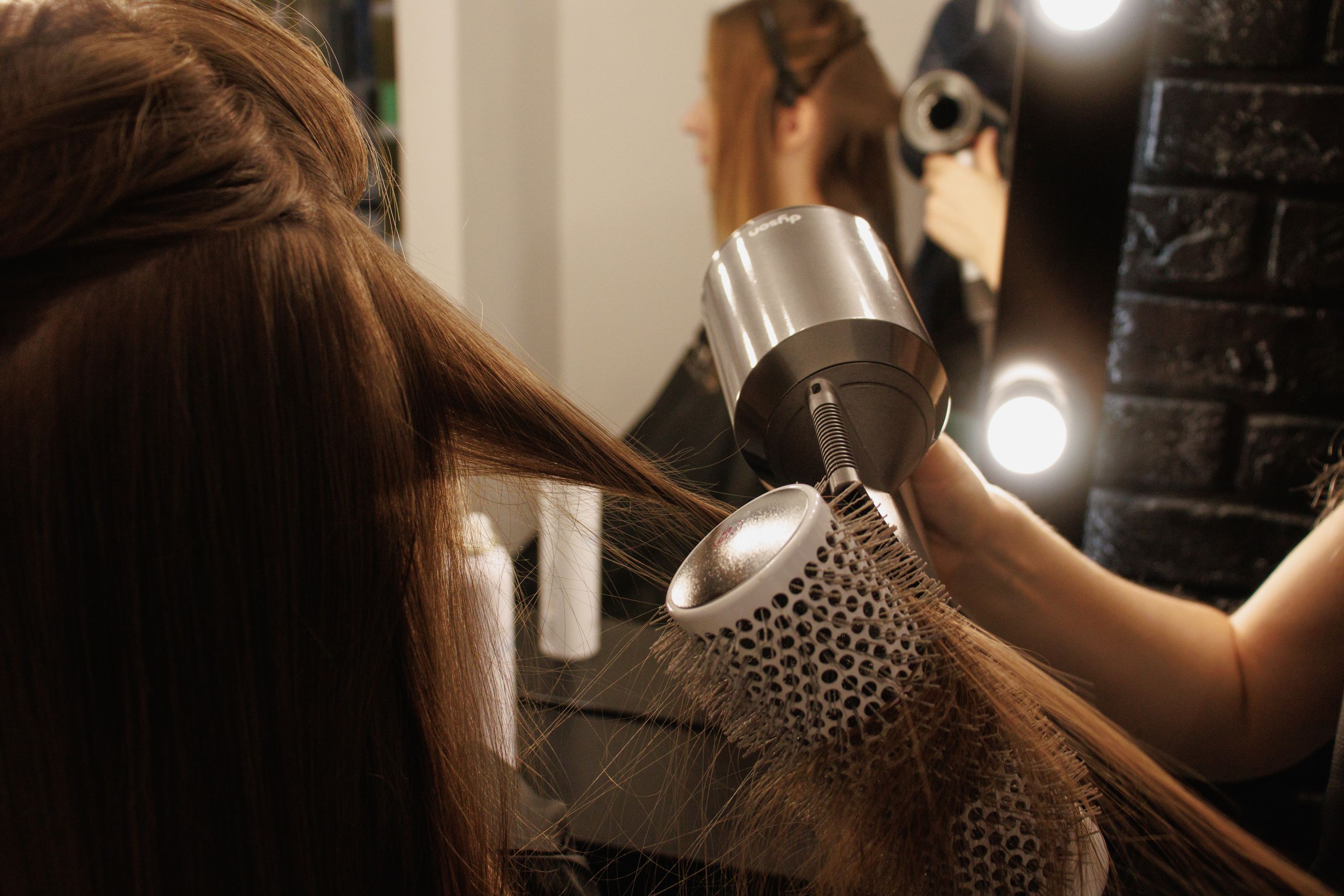
Dyson’s approach is noticeably different from that of traditional dryers. The motor is placed in the handle rather than in the head, which improves balance and reduces wrist strain. Airflow feels more controlled than forceful, and heat is regulated to avoid the harsh, aggressive feel many dryers produce.
Dyson refers to this as a combination of a digital motor, controlled airflow, and intelligent heat regulation. In everyday terms, this means the dryer maintains a more stable temperature, helping reduce unnecessary heat stress on the hair. From a hair health perspective, this matters more than speed alone.
The Technology
Without going too technical, Dyson uses a few key innovations:
- Digital motor (V9) positioned in the handle → better balance
- Air Multiplier™ technology → controlled, high-velocity airflow
- Intelligent heat control → measures temperature multiple times per second to avoid extreme heat exposure, which simply means less heat fluctuation = less cuticle damage over time.
My Experience After 5 Years (Including Client Work)
Using this dryer daily, both on myself and on clients, has shown me something that short-term reviews often miss. The most noticeable difference is not just faster drying, although that is certainly there. It is the quality of the result.
Hair feels softer, looks shinier, and styles better. There is less need to “overwork” hair with heat or tension, which I’ve always tried to avoid as a hairdresser. Clients would often comment on how their hair felt, even without knowing I was using a different tool. That, to me, is the most honest feedback you can get.
A Single Issue I Experienced
At one point, the dryer started cutting off unexpectedly. No doubt, this raised concerns. Dyson designs the dryer to protect itself from overheating when airflow is restricted. However, the cause was not a fault, but a blocked filter. And beacause there is no brush included, I usualy cleaned the filter with just my fingers, pushing the dust collected. But, I recommend using a small, soft brush, the ussue never appeared again.
Dyson itself recommends cleaning the filter at least once a month to maintain airflow and efficiency. My recommend includes just buy a soft toothbrush and keep it in the bag with your Dyson to have it on hand when needed.
How Dyson Hair Dryer Performs on Different Hair Types
One of the strongest advantages of this dryer is its consistent performance across different hair types.
For me personally, this was particularly important.
I have what I would describe as Mediterranean-type hair – coarse, thick, and naturally prone to frizz, especially in humidity. Traditionally, this kind of hair requires higher heat, more tension, and more effort to achieve a smooth finish.
With the Dyson, the difference is clear. Frizz is reduced during the drying process itself. The hair feels smoother without being overexposed to heat, and the overall result is softer and more natural.
On fine hair, I’ve noticed better control and less risk of overheating, which helps maintain volume without damaging the roots. On curly or wavy hair, especially when using a diffuser, the airflow is smoother enough to preserve the natural pattern while reducing frizz.
For thicker or longer hair, the reduced drying time is a practical advantage, and it matters not just for convenience but also for limiting total heat exposure.
Across all hair types, the key difference is control. And in hairdressing, control ultimately determines the condition of hair over time.
Why Hair Dryers Lose Performance Over Time
Something I’ve observed throughout my career is that all hair dryers, regardless of brand, gradually become less efficient. Even with regular cleaning, internal components such as heating elements, motors, and thermostats naturally degrade. Over time, this can lead to uneven heat distribution and longer drying times, which increases the risk of dryness and surface damage.
Research supports this, showing that excessive or poorly controlled heat can damage the hair shaft and reduce moisture content.
This is one of the reasons I used to replace dryers every couple of years. What stands out with the Dyson is not that it is immune to aging, but that it maintains consistent performance for much longer, provided it is properly maintained.
A Personal Reflection
I don’t see this dryer as a luxury item or a “must-have, but I see it as a well-designed tool that respects the hair’s structure. In a profession where heat styling is unavoidable, anything that reduces unnecessary damage while improving results is worth paying attention to.
After five years of use, including professional work, I can say that this dryer has remained reliable, consistent, and aligned with the way I’ve always approached hair care, practically, and with long-term results in mind.
From a Hairdresser’s Perspective:
Pros
- Noticeably faster drying time
- Reduced heat damage risk (more stable temperature)
- Hair appears smoother, softer, and shinier
- Lightweight and ergonomically balanced
- Attachments are magnetic and easy to switch
- Suitable for both professional and home use
Cons
- High price point (no avoiding this)
- Requires regular filter cleaning (so the others do)
- Slight learning curve if you’re used to traditional dryers
- Not essential, but once used, difficult to go back
Who Is Dyson Supersonic Hairdryer Really For?
From my perspective, this dryer makes the most sense for:
- People who blow-dry their hair regularly
- Those concerned with hair damage and long-term hair health
- Professionals or anyone styling multiple hair types
- Anyone wanting to reduce styling time without compromising results. If you only dry your hair occasionally, it may feel like a luxury. However, if you rely on heat styling frequently, it becomes a real investment in hair health.
If You’re Considering the Dyson Supersonic Hair Dryer
If you’re thinking about investing in the Dyson Supersonic Hair Dryer, I would simply suggest approaching it from a practical perspective.
- How often do you dry your hair?
- How important is hair condition to you?
- Do you struggle with frizz, dryness, or excessive heat damage?
If the answer to these is “often,” then this becomes less of a luxury and more of a long-term investment.
You can check current availability here:
→ Dyson Supersonic™ Hair Dryer
In summary
I don’t see the Dyson Supersonic as a “miracle product”, but I do see it as a well-engineered tool that respects the hair’s structure.
After five years of consistent use, my conclusion is simple: It doesn’t just dry hair faster, it does it more intelligently. And in a world where heat styling is often damaging, that difference is precious.
For me, both as a hairdresser and now as I step into nutrition and holistic care, it aligns with the same principle: Less damage, better results, long-term hair health.
FAQs
Is the Dyson Supersonic worth the high price?
Whether it’s worth it depends heavily on how often you blow-dry and style your hair. If you have thick, long, or frizzy hair, the powerful airflow and targeted attachments can drastically cut down your drying time. Furthermore, its ability to protect hair from extreme heat damage is a massive bonus for maintaining hair health.
Will my hair get caught in the dryer?
No. Unlike traditional hair dryers with an external fan grate on the back, the Supersonic features a unique hollow, bladeless design. You don’t have to worry about hair being sucked into the intake and tangled.
How do the magnetic attachments work?
All styling attachments, such as the smoothing nozzle, flyaway tool, and diffuser, connect via powerful magnets rather than clunky clips. They easily snap on and off and can be rotated 360 degrees mid-style.
Is it quieter than a regular hair dryer?
Yes. It features four temperature settings and a dedicated “cold shot” button to set your hair in place once it is styled. You can also control the three distinct airflow speeds.
Does it come with a travel case?
It depends on which package or retailer you buy from. Many special or gift editions include a protective presentation case. Standard models might come only with a drawstring bag or with just the dryer and attachments. Be sure to check the exact “In The Box” details on the retailer’s site.


About the Author: Dani
Gluten-Free Recipes | Gut Health | Metabolic Health
Dani is a BSc (Hons) in Human Nutrition graduate with 33 years of experience as a hairstylist across two countries.
She is passionate about health, focusing on holistic well-being that includes hair care, from strands to scalp, and nutrition, connecting her salon work with scientific knowledge.
She also shares simple recipes, nutrition tips, lifestyle experiences, and insights into living with food intolerances.