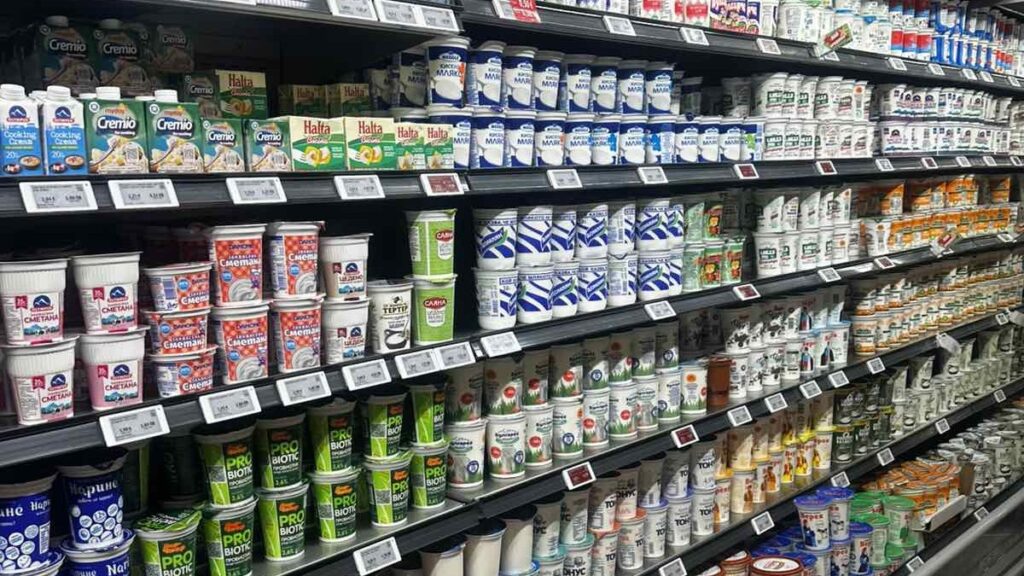
Let’s be honest: the internet is full of terrible dairy advice. Supermarkets are swamped with health claims too. The dairy aisle highlights an effective example of commercial rewriting. So, when you are searching: Greek yogurt vs. Bulgarian yogurt, you might face a distinct barrier: authentic, unstrained Bulgarian yogurt is often absent from mainstream supermarket chains.
For me, kiselo mlyako (traditional Bulgarian yogurt) isn’t just a fitness trend; it’s a part of who I am. Back in 1996, during Bulgaria’s hyperinflation crisis, baby formula disappeared from shop shelves. My mother and I had to look to our roots, and homemade Bulgarian yogurt became my newborn daughter’s very first solid food.
Now, with a BSc (Hons) in Human Nutrition, I look back at that survival choice with immense scientific awe. Our bodies don’t count calories or read numbers like calculators; our ancient physiology evolved to recognize structures. In nutrition science, we call this the food matrix, the natural, physical architecture of a whole food.
When you strip that structure away, you change how your body processes everything. True metabolic health requires an intact whole-food matrix. Stripping it away leaves your gut completely unprotected. Let’s look past corporate branding and discover what the internet is getting completely wrong about Greek yogurt vs Bulgarian yogurt.
A Bulgarian Supermarket Shelf with Bulgarian yogurt
This post may contain affiliate links. If you make a purchase through these links, I may earn a small commission at no extra cost to you. I only recommend products I personally use and trust. Thank you for your support!
I Am Sorry, Greece, What is The Microbiological Birth Certificate of Your Famous Export
If you search for the difference between Greek and Bulgarian yogurt online, you will stumble on a wild claim: Bulgarian yogurt contains unique, gut-healing bacteria, while Greek yogurt not. This is scientifically and legally impossible.
Under strict food standards, like the international Codex Alimentarius. a product cannot legally be called “yogurt” unless it is fermented by a specific symbiotic pairing of two bacteria: Streptococcus thermophilus and Lactobacillus delbrueckii subsp. bulgaricus.
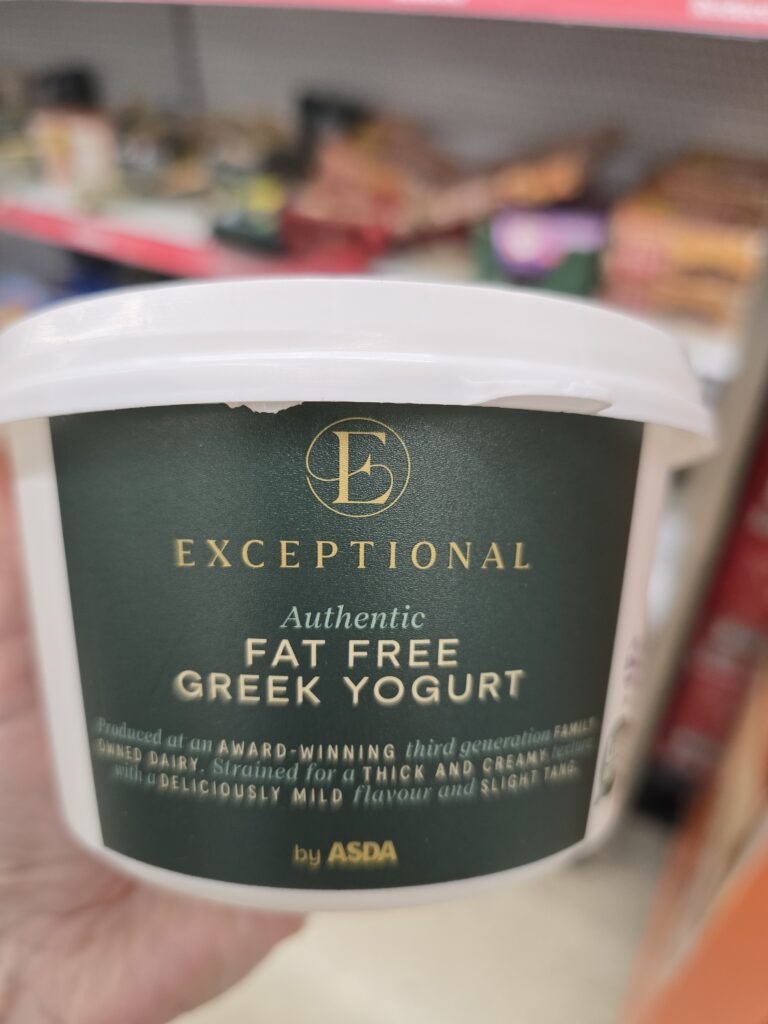
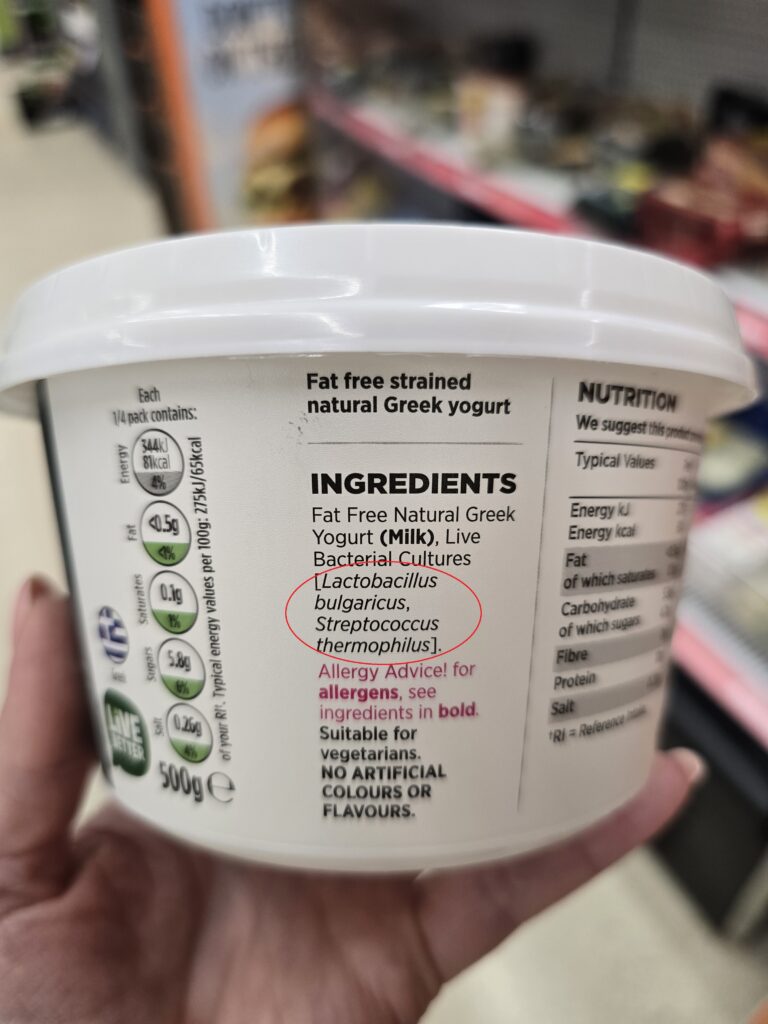
Because Greek yogurt is just regular yogurt that has been strained, it absolutely contains L. bulgaricus. To prove it, we don’t need a laboratory; we just need a quick trip to the local supermarket. Take a look at a pot of Exceptional by ASDA Authentic Greek Yogurt. Because it is imported directly from Greece, it wears that “Authentic Greek” title on the front label. But if you check the ingredients on the back, this one meets the regulatory standard to be called yogurt; it is fermented with those exact two core cultures.
The real scientific difference isn’t about whether the bacteria are there; it’s about the strain ratio. Traditional Bulgarian yogurt allows L. bulgaricus to dominate during fermentation, producing high levels of lactic acid that give it its signature sharp, tart bite. Greek yogurt blends are usually formulated to be much milder, and commercial brands sometimes toss in extra probiotic strains afterward to soften the sourness.
Dr. Stamen Grigorov: The Forgotten Pioneer of Yogurt Science
Well, you might already think: “Why is all this noise about? The name? The origin?
In 1905, Dr. Stamen Grigorov (born on 27 October 1878 in the village of Studen Izvor in western Bulgaria), sat in a Geneva laboratory and successfully isolated the specific rod-shaped bacterium Lactobacillus delbrueckii subsp. bulgaricus, essential to the fermentation of milk into yogurt.
Shortly after, Nobel Prize-winning immunologist Elie Metchnikoff took Grigorov’s work and paired it with a fascinating observation: Bulgaria had the highest number of centenarians per capita in Europe. Metchnikoff hypothesized that these villagers were living past 100 because the L. bulgaricus in their daily diet was preventing the putrefaction of harmful bacteria in the large intestine.
It was an absolute milestone in microbiology. The scientific community honored him by naming the bacteria after his (also mine) homeland, Bulgaria. Yet today, the average Western shopper knows every brand of strained “Greek” dairy but has never heard of Dr. Grigorov.
Why Japan Treats Bulgarian Yogurt Like a National Treasure
This lack of awareness, or it might be a very good marketing, is a bizarre anomaly of Western countries. If you travel to East Asia, the narrative is completely different.
In Japan, authentic Bulgarian yogurt isn’t an obscure niche product; it is a societal phenomenon. Following the 1970 World Exposition in Osaka, the Japanese dairy giantMeiji partnered directly with the Bulgarian government to source genuine live cultures. Did you know that Japan was the first to produce plain yogurt commercially?
Today, Meiji Bulgaria Yogurt dominates over 40% of the Japanese market. In fact, in Japan, Bulgarian yogurt is much more popular than Greek yogurt, and we all know about the health standards there. Millions of Asian consumers eat it daily, explicitly recognizing it as a Ministry of Health-certified functional superfood for gut microbiome health. This represents a significant divergence from Western consumer patterns.
Moreover, in Japan, Bulgaria is called the birthplace of yogurt! Which I’m not surprised at all; when I was little, I often heard Bulgarians talking about how lucky we were to be born in the yogurt’s homeland.
The Simple Reason Most Probiotic Pills and Greek Yogurts Die in Your Stomach
This brings us to a massive debate. If you read brilliant, bestselling books on the microbiome, you will find a claim that sounds like a death sentence for traditional dairy. They point to data indicating that L. bulgaricus cannot survive through our gastrointestinal tract. They call it a “transient” strain, a temporary visitor that gets wiped out by stomach acid without ever colonizing our gut wall.
When I read that, my nutritionist brain went to battle. If this bacterium is an evolutionary dead end that is obliterated by our digestion, how on earth did Metchnikoff witness absolute longevity and a massive population of active centenarians in Bulgarian villages? Were the centenarians a historical fluke? Was Metchnikoff just imagining things?
No. The history is fine. The issue is that modern nutrition has fallen into the trap of reductionism. Reductionism is the flawed trend of evaluating a food’s health potential by breaking it down into isolated parts. We treat our bodies like spreadsheets: X amount of a bacterial strain equals Y health outcome.
And yes, many gut experts claim that yogurt bacteria can’t survive your harsh stomach acid. They are right! If you are eating heavily strained Greek yogurt. In traditional Bulgarian yogurt, that clear liquid acts as a natural acid shield, safely guiding the good bacteria into your gut alive. If you want to make this real, gut-healing superfood at home without losing the whey, I recommend using an Instant Pot with a precise yogurt setting, alongside an authentic, freeze-dried heirloom Bulgarian starter culture.
What is The Healthiest Yogurt: Greek Yogurt vs Bulgarian Yogurt?
In traditional, unstrained Bulgarian yogurt, the bacteria are embedded within an intact food matrix, surrounded by its native liquid whey.If we’re talking about probiotic yogurt with live microbes that survive the harsh stomach acid, that is Bulgarian yogurt. And I will tell you now why/
In dairy science, we know that liquid whey is a highly complex biochemical fluid packed with dissolved organic phosphates, calcium, and proteins. When you eat traditional yogurt, this liquid whey acts as a literal acid shield. Because of its high buffering capacity, the whey chemically absorbs hydrogen ions in your stomach, temporarily neutralizing the harsh gastric juices exactly where the bacteria sit.
Strained Greek yogurt dumps that protective shield down the factory drain just to get a thick, marketable texture. Supplement pills don’t have a shield to begin with, either.
A whole food doesn’t need to permanently move into your gut to change your life. As that whey shield safely guides L. bulgaricus through your stomach alive, the bacteria act as a temporary postbiotic factory. It churns out lactic acid and antimicrobial peptides, clearing out pathogens and creating a pristine environment for your native gut bugs to thrive before it passes through.
The Protein Speed Limit: Why Whole Yogurt for Metabolic Health Beats Macro Tracking
If you look at the matrix of a whole, fermented dairy product, the story changes completely. Traditional Bulgarian yogurt, as well as kefir, skyr, and cheese, comes with a specific feature: The Protein Speed Limit. Because it is an unmanipulated, fluid gel, the proteins, fats, and organic acids interact to slow down gastric emptying. It delivers amino acids to your bloodstream in a steady, controlled trickle, avoiding the dangerous leucine spike altogether.
Food Matrix in Bulgarian Yogurt and The Dairy Cholesterol Paradox
We see the exact same magic when we look at milk fats. For decades, reductionist nutritionists told us to avoid whole-fat dairy because saturated fat raises cholesterol. But large-scale population studies consistently show that people who consume whole fermented dairy products don’t have an increased risk of cardiovascular disease.
Why? Because of the Milk Fat Globule Membrane (MFGM).
In an unmanipulated yogurt matrix, the milk fat is wrapped in a complex, protective membrane of phospholipids and proteins. This structure actively interferes with how your body absorbs cholesterol in the gut, helping to escort it out of your system before it ever hits your bloodstream.
Furthermore, the high levels of bioavailable calcium in an intact yogurt matrix bind to fatty acids in the small intestine, forming unabsorbable “calcium soaps.” This prevents sharp post-meal lipid surges, protecting your arteries from the inflammatory damage caused by processed fats.
Is Traditional Bulgarian Yogurt Lactose-Free?
Greek yogurt removes lactose mechanically by pouring the whey down the drain. Traditional Bulgarian yogurt does it biologically. By letting the traditional bacteria ferment slowly for a full 24 hours, they eat up almost all the milk sugars for you. This leaves you with a virtually lactose-free yogurt that keeps its nutritional integrity completely intact.
Why Bulgarian Yogurt is Better for Gut Health Than Greek Yogurt?
Let me be entirely clear again: I am not against Greek yogurt. If your personal fitness goals mean you need a massive, convenient hit of concentrated protein to recover from a heavy workout, authentic strained Greek yogurt is a fantastic, clean option.
My goal isn’t to tear Greek yogurt down. My goal is to turn the lights back on for Bulgarian yogurt and give it the credit it has been completely ignored.
Because of a massive lack of global marketing and modern health awareness, kiselo mlyako has become a forgotten relic in the Western dairy aisle. While massive corporations spent millions convincing us that ‘strained and thick’ equals healthier, the incredible biological power of the traditional, unstrained matrix was quietly neglected.
We forgot that nature already built a perfect system. Bulgarian yogurt doesn’t need to be strained to be a superfood. By leaving the matrix completely unmanipulated, it retains the vital fluid shield that keeps your gut bacteria alive. It is time to look past the corporate marketing hype, rediscover this forgotten science, and give traditional Bulgarian yogurt the legendary status it actually earned.
Homemade Bulgarian Yogurt
Because I live in the UK, I can’t just walk down to the local supermarket and buy traditional, unstrained commercial Bulgarian yogurt. So, as a nutritionist who refuses to compromise on food structure, I do what any self-respecting scientist would do: I make my own Bulgarian yogurt at home.
My setup isn’t a high-tech factory; it’s an Instant Pot on my kitchen counter and authentic, freeze-dried starter cultures imported straight from Bulgaria.
I don’t recommend the standard 8-hour factory fermentation cycle. I ferment my yogurt for a full 24 hours. This extended time gives the bacteria a full window to feast on the milk sugars, reducing lactose levels to a bare minimum. After the fermentation is complete, I transfer the jars directly into the fridge for at least another 6 hours to let the fragile casein gel cool, firm up, and lock into an intact, living matrix.
The Bottom Line: Is Greek Yogurt Healthier Than Bulgarian Yogurt?
No. While Greek yogurt contains more protein due to straining, traditional Bulgarian yogurt is healthier for gut and bone health. It retains the liquid whey matrix, preserving 60% more native calcium and potassium, and holds up to 90 billion CFUs of heirloom probiotics.
It is time to stop looking at food as a collection of isolated numbers on a back panel or individual strains in a petri dish. Bulgarian centenarians didn’t achieve world-renowned health by swallowing freeze-dried capsules or following ultra-filtered dairy trends. They survived on an intact, beautifully balanced whole-food matrix.
If you want a dense protein boost for muscle recovery, reach for a true strained Greek yogurt. But if you want to honor the science of probiotic survival and give your gut a living shield, choose traditional Bulgarian yogurt. Look past the reductionist headlines, read the actual ingredient labels, and let nature’s wisdom do the work.
Thank you for reading!
YourDani x x
FAQs
If Greek yogurt contains more protein, why choose Bulgarian yogurt?
Choose Bulgarian yogurt over Greek yogurt to preserve the live whey matrix, which shields probiotics and improves their survival through stomach acid. Traditional Bulgarian yogurt is unstrained, retaining up to 60% more native calcium, potassium, and beneficial metabolites that mechanical straining discards.
Why is my homemade Bulgarian yogurt thin or watery compared to Greek yogurt?
No need to worry, this means your yogurt is a success! Its thin texture comes from its natural, unstrained state. Big brands often use fancy machines to remove this liquid or add starches to fake thickness. That clear liquid on top is pure whey, packed with nutrients that protect your probiotics. Just stir it back in and enjoy!
If Bulgarian yogurt isn’t strained, how can it be lactose-free?
Traditional Bulgarian yogurt becomes virtually lactose-free naturally through deep, extended 24-hour fermentation. This prolonged timeline gives active L. bulgaricus and S. thermophilus strains ample time to completely consume and digest the milk sugars, rendering the whole whey matrix exceptionally gentle on the stomach.
Can I use commercial Greek yogurt as a starter culture to make Bulgarian yogurt?
No. Mass-market Greek yogurt uses industrially optimized strains tailored for a mild, sweet flavor. To achieve the authentic, high-acid matrix of traditional Bulgarian yogurt, you must use a rustic, freeze-dried heirloom Bulgarian starter culture to introduce the true, native microflora.
Why does traditional Bulgarian yogurt taste so much sourer than Greek yogurt?
The sourness comes down to bacterial strain dominance. Traditional heirloom strains of Lactobacillus bulgaricus ferment rapidly, producing large amounts of therapeutic lactic acid. Conversely, industrial Greek yogurts specifically utilize modified, milder strains to intentionally suppress this tartness for a dessert-like profile.
I see a layer of liquid on top of my yogurt. Should I pour it down the sink?
Absolutely not! That liquid is gold. It is your liquid whey shield, packed with dissolved proteins, immunoglobulins, and vital minerals like calcium and potassium. Throwing it away means losing the acid-buffering system that helps probiotics survive your stomach acid. Grab a spoon and stir that beautiful liquid right back into the gel before eating.
About the Author: Dani
Gluten-Free Recipes | Gut Health | Metabolic Health
Hi! I’m Dani, a Human Nutrition graduate with a strong interest in lifestyle medicine, gut health, metabolic health, UPF-free, whole-food, and gluten-free cooking. Your visit means the world to me!
I share simple recipes, nutrition tips, lifestyle experiences, and insights into living with food intolerances.
Petrova, P., Ivanov, I., Tsigoriyna, L., Valcheva, N., Vasileva, E., Parvanova-Mancheva, T., Arsov, A., & Petrov, K. (2021). Traditional Bulgarian Dairy Products: Ethnic Foods with Health Benefits. Microorganisms, 9(3), 480. https://doi.org/10.3390/microorganisms9030480
Tamime, A. Y., Hickey, M., & Muir, D. D. (2014). Strained fermented milks – A review of existing legislative provisions, survey of nutritional labelling of commercial products in selected markets and terminology of products in some selected countries. International Journal of Dairy Technology, 67(3), 305–333. https://doi.org/10.1111/1471-0307.12147
Consumer Affairs Agency. (2009). Food for Specified Health Use (FOSHU) approvals: Labeling parameters and health-supportive validation. Government of Japan. https://www.meijibulgariayogurt.com/en/health/
Mulet-Cabero, A-I, Torcello Gomez, M , Saha, S et al. (3 more authors) (2020) Impact of caseins and whey proteins ratio and lipid content on in vitro digestion and ex vivo absorption. Food Chemistry, 319. 126514. p. 126514. https://eprints.whiterose.ac.uk/id/eprint/157845/
Zhang, X., Kapoor, D., Jeong, S., Fappi, A., Stitham, J., Shabrish, V., Sergin, I., Yousif, E., Rodriguez-Velez, A., Yeh, Y., Park, A., Yurdagul, A., Rom, O., Epelman, S., Schilling, J. D., Sardiello, M., Diwan, A., Cho, J., Stitziel, N. O., . . . Razani, B. (2024). Identification of a leucine-mediated threshold effect governing macrophage mTOR signalling and cardiovascular risk. Nature Metabolism, 6(2), 359–377. https://doi.org/10.1038/s42255-024-00984-2
Flach, J., Van Der Waal, M. B., Van Den Nieuwboer, M., Claassen, E., & Larsen, O. F. A. (2017). The underexposed role of food matrices in probiotic products: Reviewing the relationship between carrier matrices and product parameters. Critical Reviews in Food Science and Nutrition, 58(15), 2570–2584. https://doi.org/10.1080/10408398.2017.1334624
Pan, J., Chen, M., Li, N., Han, R., Yang, Y., Zheng, N., Zhao, S., & Zhang, Y. (2023). Bioactive functions of lipids in the milk fat globule membrane: A Comprehensive review. Foods, 12(20), 3755. https://doi.org/10.3390/foods12203755
Feeney, E. L., Barron, R., Dible, V., Hamilton, Z., Power, Y., Tanner, L., Flynn, C., Bouchier, P., Beresford, T., Noronha, N., & Gibney, E. R. (2018). Dairy matrix effects: response to consumption of dairy fat differs when eaten within the cheese matrix—a randomized controlled trial. The American Journal of Clinical Nutrition, 108(4), 667–674. https://doi.org/10.1093/ajcn/nqy146
Rose, A. J., & Rusu, P. M. (2024). A leucine–macrophage mTORC1 connection drives increased risk of atherosclerosis with high-protein diets. Nature Metabolism, 6(2), 203–204. https://doi.org/10.1038/s42255-023-00952-2
Flach, J., van der Waal, M. B., van den Nieuwboer, M., Claassen, E., & Larsen, O. F. A. (2017). The underexposed role of food matrices in probiotic products: Reviewing the relationship between carrier matrices and product parameters. Critical Reviews in Food Science and Nutrition, 58(15), 2570–2584. https://doi.org/10.1080/10408398.2017.1334624
Muhammad Afzaal, Saeed, F., Hussain, M., Ismail, Z., Azhari Siddeeg, Ammar AL-Farga, & Aljobair, M. O. (2022). Influence of encapsulation on the survival of probiotics in food matrix under simulated stress conditions. Saudi Journal of Biological Sciences, 29(9), 103394–103394. https://doi.org/10.1016/j.sjbs.2022.103394
Wang, J., Wu, P., Chen, X. D., Yu, A., & Sushil Dhital. (2025). Effect of Food Matrix and Administration Timing on the Survival of Lactobacillus rhamnosus GG During In Vitro Gastrointestinal Digestion. Foods, 14(17), 3076–3076. https://doi.org/10.3390/foods14173076
Lee, J. S., Cha, D. S., & Park, H. J. (2004). Survival of Freeze-Dried Lactobacillus bulgaricus KFRI 673 in Chitosan-Coated Calcium Alginate Microparticles. Journal of Agricultural and Food Chemistry, 52(24), 7300–7305. https://doi.org/10.1021/jf040235k
Primož Treven, Paveljšek, D., Bojana Bogovič Matijašić, & Lorbeg, P. M. (2024). The Effect of Food Matrix Taken with Probiotics on the Survival of Commercial Probiotics in Simulation of Gastrointestinal Digestion. Foods, 13(19), 3135–3135. https://doi.org/10.3390/foods13193135