
Gluten-Free Chocolate Chip Cookies: Easy and Unapologetically Delicious

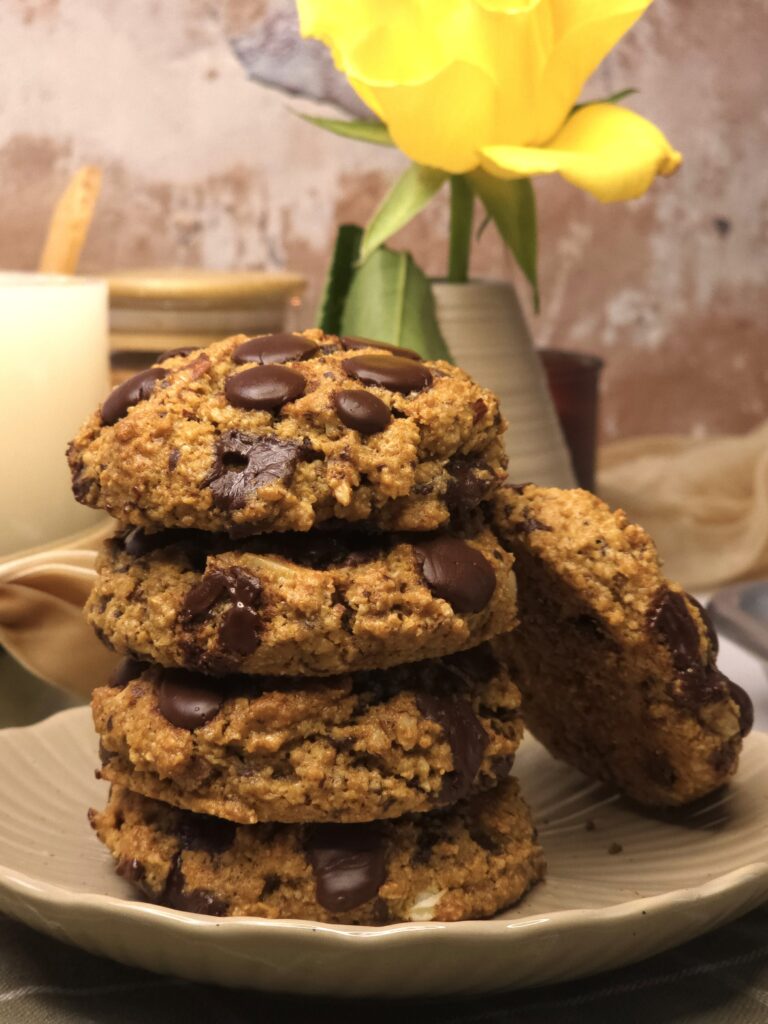
If you’re looking for gluten-free chocolate chip cookies that are soft, chewy, high in fiber, and completely UPF‑free, you’ve just found your new favorite recipe. These are the cookies I wish I had when I first went gluten‑free: simple ingredients, whole‑food texture, and zero weird aftertaste.
I’ve had my fair share of ‘experimental’ gluten-free cookies, the ones that look questionable but still get eaten because ingredients are precious and I refuse to waste good food. And then, of course, I prep the next batch, because perseverance is basically a core competency in gluten-free baking.
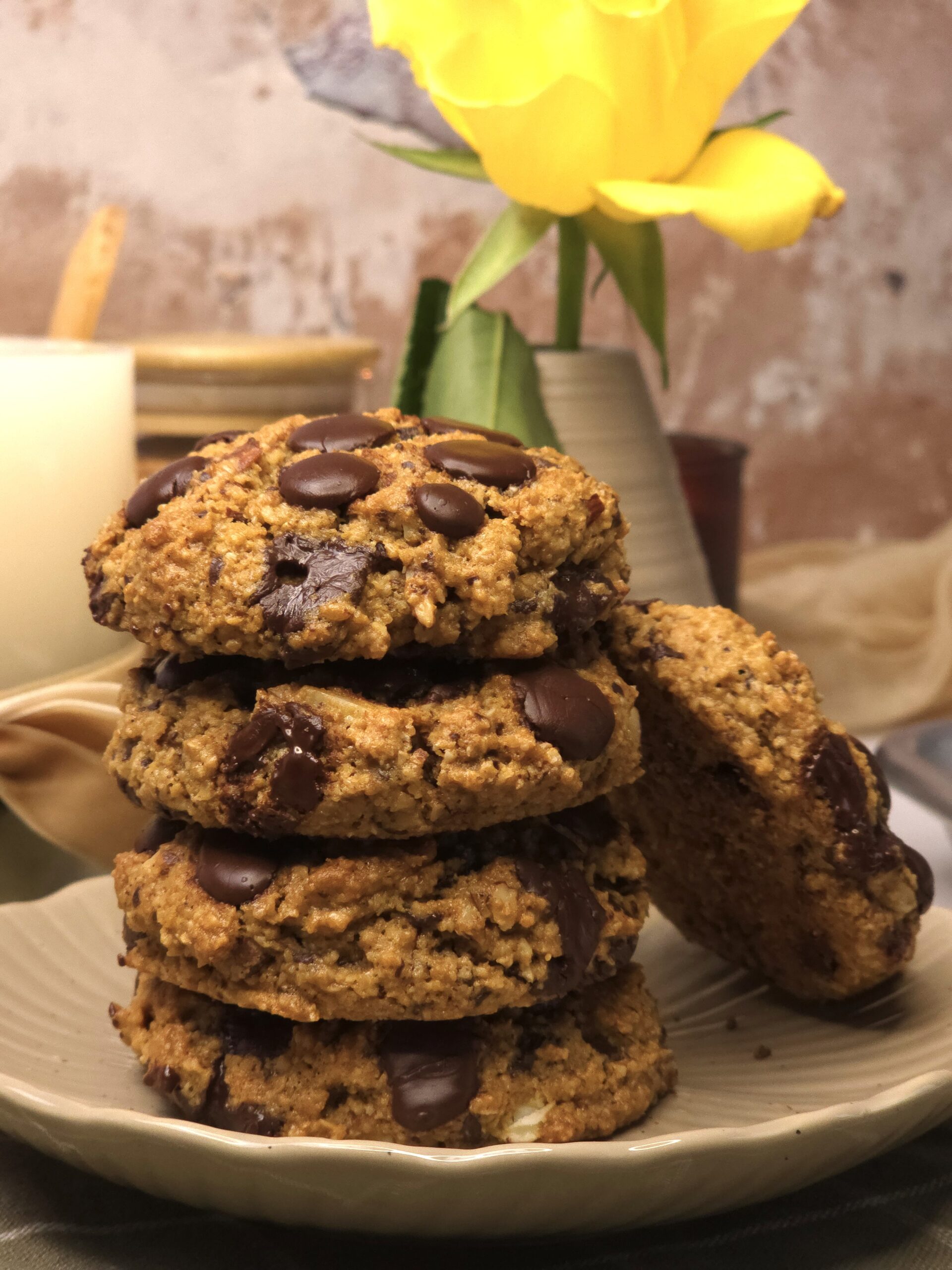
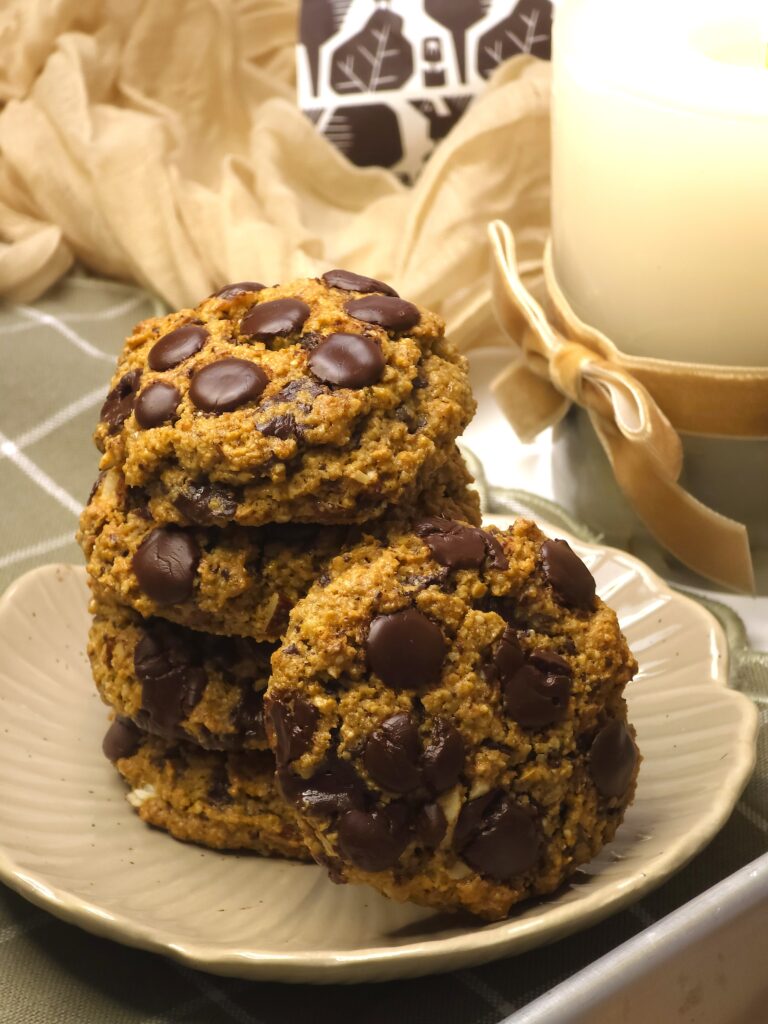
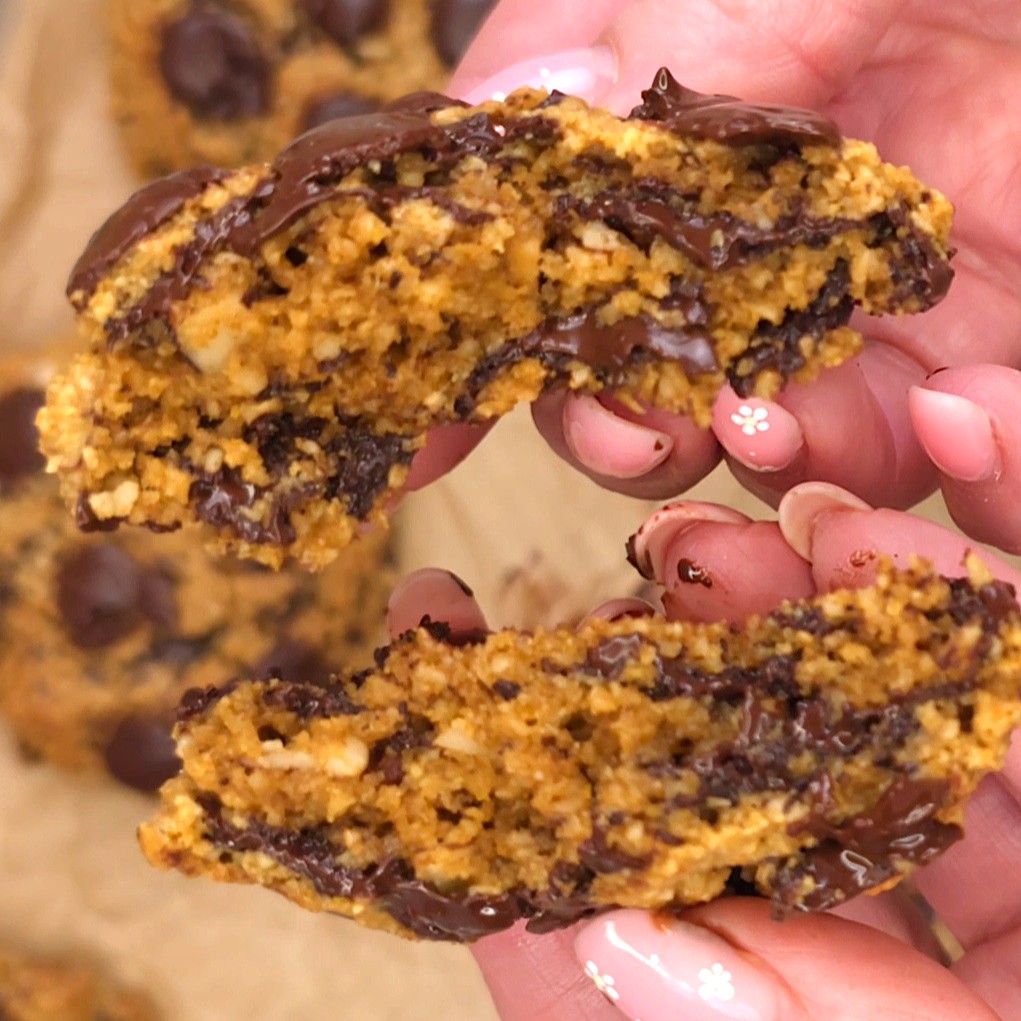
But these? These are the cookies I wish I had when I first went gluten‑free: soft in the middle, crisp at the edges, naturally sweet, high in fiber, and made entirely from whole‑food ingredients you can pronounce without a chemistry degree.
And yes, they’re not ultra-processed food from the supermarket gluten-free aisle. Because we can have cookies and good metabolic health. Revolutionary, I know.
This post may contain affiliate links. If you make a purchase through these links, I may earn a small commission at no extra cost to you. I only recommend products I personally use and trust. Thank you for your support!
Gluten-Free Chocolate Chip Cookies — At a Glance
- Difficulty: Easy
- Time: 37 minutes
- Texture: Crisp edges, chewy center
- Fiber: ~4 g per cookie
- Best for: High-fiber GF snacks, kids, lunchboxes
- Why they’re different: Made with oat flour, almond flour, flaxseed + olive oil
Why This Recipe Works
These cookies are amazing because the base is built on two flours that genuinely complement each other: gluten‑free oat flour (always make sure it’s certified gluten‑free), which gives that soft, chewy center, and almond flour, which adds moisture and a gentle richness. If you can’t find oat flour, just blitz some oats in a food processor, and you’re good to go. Same with almonds: almond meal works perfectly well if almond flour isn’t available. The color will be a bit darker, but honestly… who cares?
A little psyllium husk and ground flaxseed help the dough hold together without gums, while also adding fiber and that subtle nuttiness I love in whole‑food baking. Coconut sugar and maple syrup add sweetness and caramel notes, and help the cookies brown beautifully.
A mild extra‑virgin olive oil keeps everything soft and naturally lactose‑free, and the dark chocolate chips melt into glossy little puddles that make every bite feel like a treat.
Together, these ingredients create a cookie that’s soft in the middle, crisp at the edges, naturally sweet, and made entirely from whole‑food ingredients your gut will appreciate.
My Journey to the Perfect Nutritious Gluten-Free Cookies
These supermarket cookies stopped being an option for me. You might wonder why. I’ll tell you. While working on my dissertation on ultra-processed foods, I noticed that cookies and biscuits often contain among the highest levels of cosmetic additives, and gluten-free versions frequently rely on refined starches that provide little protein or fiber.
Even the homemade gluten-free cookie recipes rely heavily on refined starches such as rice flour, corn starch, or tapioca starch. These ingredients help create the familiar soft texture, but nutritionally, they contribute very little fiber, protein, or micronutrients. Don’t get me wrong – I use these, but rather occasionally than in a regular rotating recipe.
As someone studying and passionate about human nutrition, I could not ignore that detail. Posting another recipe based mostly on refined starch, simply to be gluten-free, didn’t align with my philosophy.
So I went back to my kitchen.
I started experimenting with ingredients that would improve both texture and nutritional value: oats, almond flour, flaxseed, and psyllium husk. After several trials, something interesting happened: the cookies not only became delicious but also more nutritious.
The combination produced cookies with crisp edges, a soft, chewy center, and a rich chocolate flavor, while also providing significantly more fiber than typical gluten-free cookies.
This is the recipe I finally felt confident sharing.
If you enjoy these high-fiber gluten-free chocolate chip cookies, you might also love my gluten-free chocolate orange cookies or these flourless hazelnut chocolate cookies.
Why Many Gluten-Free Cookies Are UPF and Low in Nutrients
During my dissertation research on gluten-free vs. gluten-containing foods, I found that cookies and biscuits often contain some of the highest levels of cosmetic additives among packaged foods. Many gluten-free versions are also low in protein because wheat flour is often replaced with refined starches. Recipes like these cookies aim to recreate familiar treats using more nutrient-dense ingredients rather than highly processed formulations.
Most conventional cookie recipes rely on wheat flour. When gluten must be removed, the flour is usually replaced with combinations of:
- rice flour
- potato starch
- tapioca starch
- corn starch
These ingredients work well structurally, but they are very low in fiber and micronutrients.
Dietary fiber intake is already insufficient in many populations. In the United Kingdom, adults consume about 18 g of fiber per day on average, far below the recommended 30 g daily intake.
Low fiber intake has been associated with reduced gut microbiota diversity and an increased risk of cardiovascular disease and type 2 diabetes.
Individuals following a gluten-free diet may be particularly affected because many gluten-free products rely heavily on refined starches.
The Secret to High-Fiber Gluten-Free Cookies
After testing several flour combinations, I discovered that the best results came from a balanced blend of nutrient-dense ingredients.
This recipe uses four key components that create the structure and chewiness gluten usually provides.
The full list of ingredients and exact measurements is in the recipe card below. Here is a closer look at the key ingredients and why they work so well in these cookies.
Gluten-Free Cookies with Oat Flour
Gluten-Free Oat Flour
Gluten-free oat flour provides the main structure for these cookies while keeping the texture soft and slightly chewy. Oats naturally contain beta-glucans, a type of soluble fiber associated with improved cholesterol levels and improved satiety.
In baking, oat flour adds gentle sweetness and a tender crumb, making it particularly well-suited to gluten-free cookies. Oat flour is one of my favorite ingredients in gluten-free baking because it improves both texture and fiber content. If you enjoy baking with oats, you might also like my gluten-free oat muffins.
Almond Flour
Almond flour adds moisture and richness while improving the cookies’ nutritional profile. It is naturally rich in monounsaturated fats, vitamin E, magnesium, and plant protein. From a culinary perspective, almond flour helps prevent gluten-free baked goods from becoming dry or crumbly and contributes a delicate, slightly nutty flavor.
It also helps keep these gluten-free chocolate chip cookies moist and tender. Almond flour adds healthy fats to gluten-free baking. If you enjoy almond desserts, try my Italian-style almond cookies or these Gluten-Free Almond Cookies, which won’t disappoint!
Oat Flour Chocolate Chip Cookies: Fiber and Structure Boosters
Ground flaxseed increases both fiber content and moisture retention. It contains dietary fiber, plant omega-3 fatty acids (alpha-linolenic acid), and lignans. In baking, flaxseed also helps bind ingredients and contributes to a soft cookie texture.
Psyllium husk is a soluble fiber that absorbs water and forms a gel-like structure. In gluten-free baking, it helps mimic some of the elasticity normally provided by gluten, improving dough structure and preventing crumbly cookies.
Flaxseed is rich in fiber and contains alpha-linolenic acid (ALA), a plant-based omega-3 fatty acid. In baking, it also improves moisture retention.
In my guide to dietary fiber and gut health, I explain the different types of fiber and why they matter.
Ingredients for Gluten-Free Chocolate Chip Cookie Recipe
For sweetness and flavor, I replaced refined sugar and butter with coconut sugar, maple syrup, and extra-virgin olive oil. Coconut sugar has a mild caramel flavor and is processed less than white sugar, though it should still be used in moderation. Maple syrup adds moisture and depth of flavor, helping create a softer cookie texture.
Extra-virgin olive oil replaces butter to keep the recipe lactose-free while contributing monounsaturated fats typical of Mediterranean dietary patterns. Egg acts as a natural binder, helping the cookies hold their shape during baking.
Finally, dark chocolate (70–85 % cocoa) provides rich flavor and cocoa polyphenols. If you’re curious about the science behind cocoa and how it differs from cacao, I explore this in my article on the nutritional benefits of cocoa.
How to Make Healthy Gluten-Free Cookies
Step 1 – Preheat the Oven. Preheat the oven to 175°C (160°C fan) and line a baking tray with parchment paper.
Step 2 – Combine the Dry Ingredients
In a large bowl, mix: oat flour, almond flour, ground flaxseed, psyllium husk, baking soda, baking powder, sea salt
Step 3 – Mix the Wet Ingredients
In a separate bowl, whisk together: egg, coconut sugar, maple syrup, olive oil, vanilla extract
Step 4 – Combine Wet and Dry Mixtures
Pour the wet mixture into the dry ingredients and mix until a soft dough forms.
Step 5 – Add Chocolate and Nuts
Fold in the dark chocolate chips and chopped almonds.
Step 6 – Let the Dough Rest
Allow the dough to rest for 10 minutes. This step allows the oat flour and psyllium to absorb moisture, improving the final texture.
Step 7 – Shape the Cookies
Scoop tablespoon-sized portions of dough onto the baking tray. Flatten slightly.
Step 8 – Bake
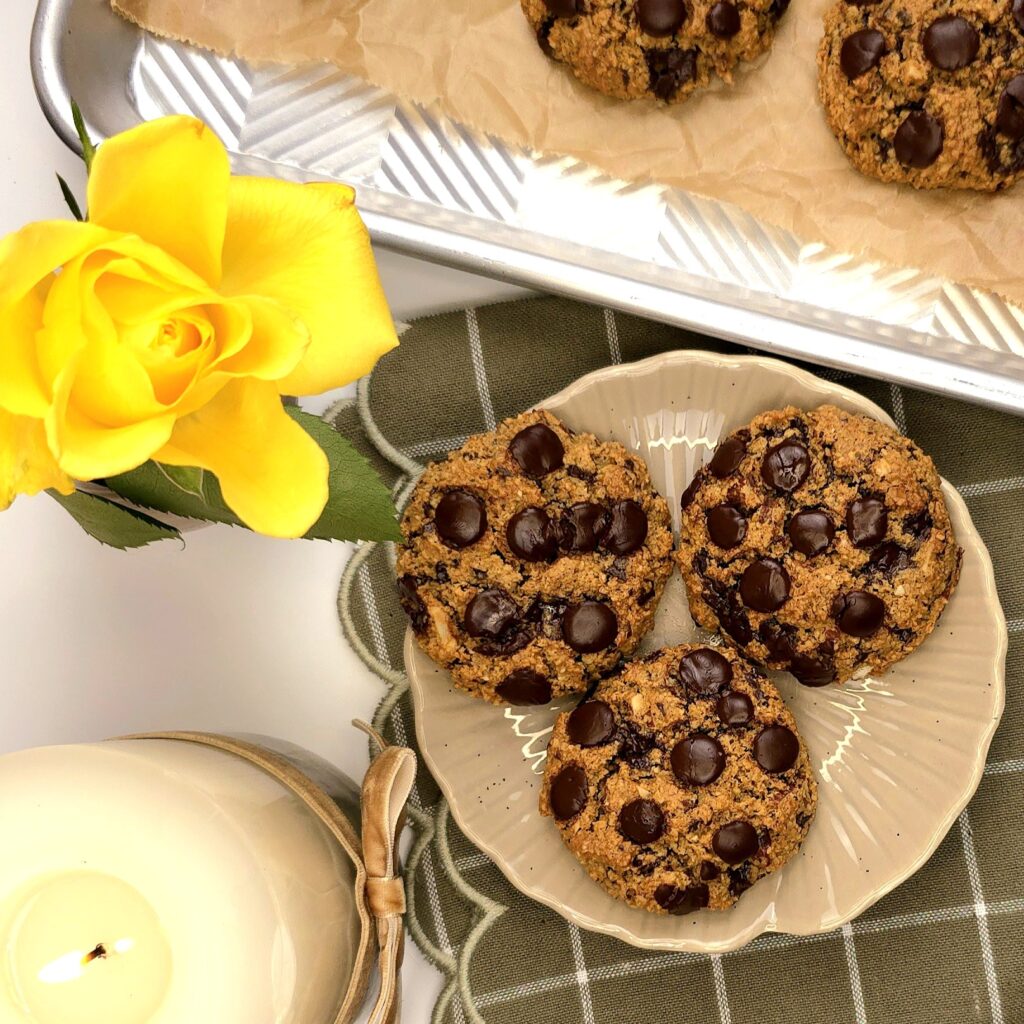
Bake for 10–12 minutes, until the edges are lightly golden.
Step 9 – Cool Completely
Allow the cookies to cool on a rack. Gluten-free cookies firm up as they cool.
Enjoy!!!
Nutritional Benefits of These Gluten-Free Chocolate Chip Cookies
Compared with typical gluten-free cookies, this recipe offers a more balanced nutritional profile.
The blend of oats, flaxseed, and psyllium significantly increases fiber, while almond flour adds healthy fats and protein.
Dark chocolate provides polyphenols that may support vascular health when consumed in moderation.
Small improvements in recipe formulation can help people following a gluten-free diet move closer to recommended fiber intake levels.
Nutrition Facts (Estimated Per Cookie)
Calories: ~199 kcal
Protein: ~4 g
Fat: ~12 g
Carbohydrates: ~20 g
Fiber: ~2 g
Many conventional gluten-free cookies contain less than 1 g of fiber, meaning this recipe provides double the fiber per serving.
Tips for Perfect Gluten-Free Cookies
- Allow the Dough to Rest
- Hydration is essential for gluten-free flours. A short rest improves structure and prevents crumbly cookies.
- Slightly Underbake the Cookies
- Gluten-free cookies continue to firm as they cool.
- Choose Quality Chocolate
- Higher-cocoa-content chocolate typically contains less sugar and more cocoa flavanols.
Variations for These Gluten-Free Chocolate Chip Cookies
Double Chocolate Version
Add 1 tablespoon unsweetened cocoa powder to the dough.
Orange Chocolate Cookies
Add 1 teaspoon of orange zest for a Mediterranean flavor.
Extra Fiber Cookies
Add 1 teaspoon of inulin powder, or use a flax egg: 1tbsp flaxseeds + 2 tbsp water; let it sit for 10 minutes, until it thickens into a gelatinous texture.
Nut-Free Version
Replace almond flour with sunflower seed flour.
Storage Tips
Store the cookies in an airtight container at room temperature for 3–4 days.
You can also freeze them for up to two months.
FAQs
Are gluten-free chocolate chip cookies healthier than regular cookies?
Gluten-free chocolate chip cookies are not automatically healthier, as many recipes rely heavily on refined starches such as rice flour or tapioca starch. However, using nutrient-dense ingredients like oat flour, almond flour, flaxseed, and dark chocolate can increase fiber, healthy fats, and micronutrients, creating a more balanced cookie.
Why do gluten-free chocolate chip cookies sometimes turn out dry?
Gluten-free cookies can become dry because gluten-free flours absorb moisture differently than wheat flour. Ingredients such as olive oil, almond flour, and psyllium husk help retain moisture and improve texture, resulting in chewy, gluten-free chocolate chip cookies rather than crumbly ones.
Can I make gluten-free chocolate chip cookies without almond flour?
Yes. You can replace almond flour with sunflower seed flour, oat flour, or a gluten-free flour blend. However, almond flour adds moisture and healthy fats, so replacing it may slightly alter the cookies’ texture.
What flour works best for gluten-free chocolate chip cookies?
Oat flour is one of the best flours for gluten-free chocolate chip cookies because it provides a soft texture and mild sweetness. Combining oat flour with almond flour and flaxseed can improve both flavor and nutritional value while helping mimic the structure normally provided by gluten.
Why add psyllium husk to gluten-free cookies?
Psyllium husk is a soluble fiber that absorbs water and forms a gel-like structure. In gluten-free baking, it helps bind ingredients, improves elasticity, and prevents cookies from becoming crumbly.
How can I increase fiber in gluten-free baking?
You can increase fiber by adding ingredients such as oat flour, flaxseed, chia seeds, psyllium husk, and nut flours. These ingredients provide more dietary fiber and nutrients than refined starches commonly used in gluten-free baking.
These high-fiber gluten-free chocolate chip cookies use oat flour, almond flour, and olive oil for a healthier twist on a classic cookie. They are chewy, rich in dark chocolate, and contain significantly more fiber than typical gluten-free cookies.

High-Fiber Gluten-Free Chocolate Chip Cookies

Equipment
Ingredients
- 120 g gluten-free oat flour
- 60 g almond flour
- 20 g Flax seeds
- 1 tsp Psyllium Husk
- ½ tsp baking soda
- ½ tsp baking powder
- ¼ tsp sea salt
- 1 large egg
- 70 g coconut sugar
- 40 g maple syrup
- 60 ml olive oil
- 1 tsp vanilla extract
- 70 g dark chocolate chips
- 30 g chopped almonds optional
Instructions
- Preheat oven to 175°C (160°C fan).
- Mix all dry ingredients in a bowl.
- Whisk wet ingredients in a separate bowl.
- Combine wet and dry mixtures.
- Fold in the chocolate and almonds.
- Rest the dough for 10 minutes.
- Shape cookies and flatten slightly.
- Bake 10–12 minutes.
- Cool before serving.
Notes
Dough hydration
Letting the dough rest for about 10 minutes allows the oat flour, flaxseed, and psyllium to absorb moisture. This improves the texture and prevents crumbly gluten-free cookies.Olive oil choice
Use a mild extra-virgin olive oil to keep the flavor balanced while adding healthy monounsaturated fats.Cookie texture
For softer cookies, slightly underbake by one minute. The cookies will continue to firm up as they cool.Gluten-free oats
Always use certified gluten-free oat flour to avoid cross-contamination if baking for someone with coeliac disease.Fiber boost option
For even higher fiber content, add 1 teaspoon of additional ground flaxseed or chia seeds to the dough.YourDani x x
Nutrition
This recipe became one of my favorite gluten-free cookie recipes. With 2 g of fiber each, these are guilt-free desserts, snacks, or whatever you prefer. If you try these high-fiber gluten-free chocolate chip cookies, I’d love to hear what you think.
Please leave a rating and a comment below; they help other readers and support the DeGlutenista community.