
Eat Dirt Book Review: We’re Too Clean, my Darling!

This Eat Dirt book review has been a long time coming. Long before I’d ever heard the word microbiome, I was a sickly child. Every winter brought another infection. Every spring, another doctor’s note. By the time I was small enough to remember it clearly, my parents had made the decision many Bulgarian families made in those years – they sent me to live with my grandmother in the village.

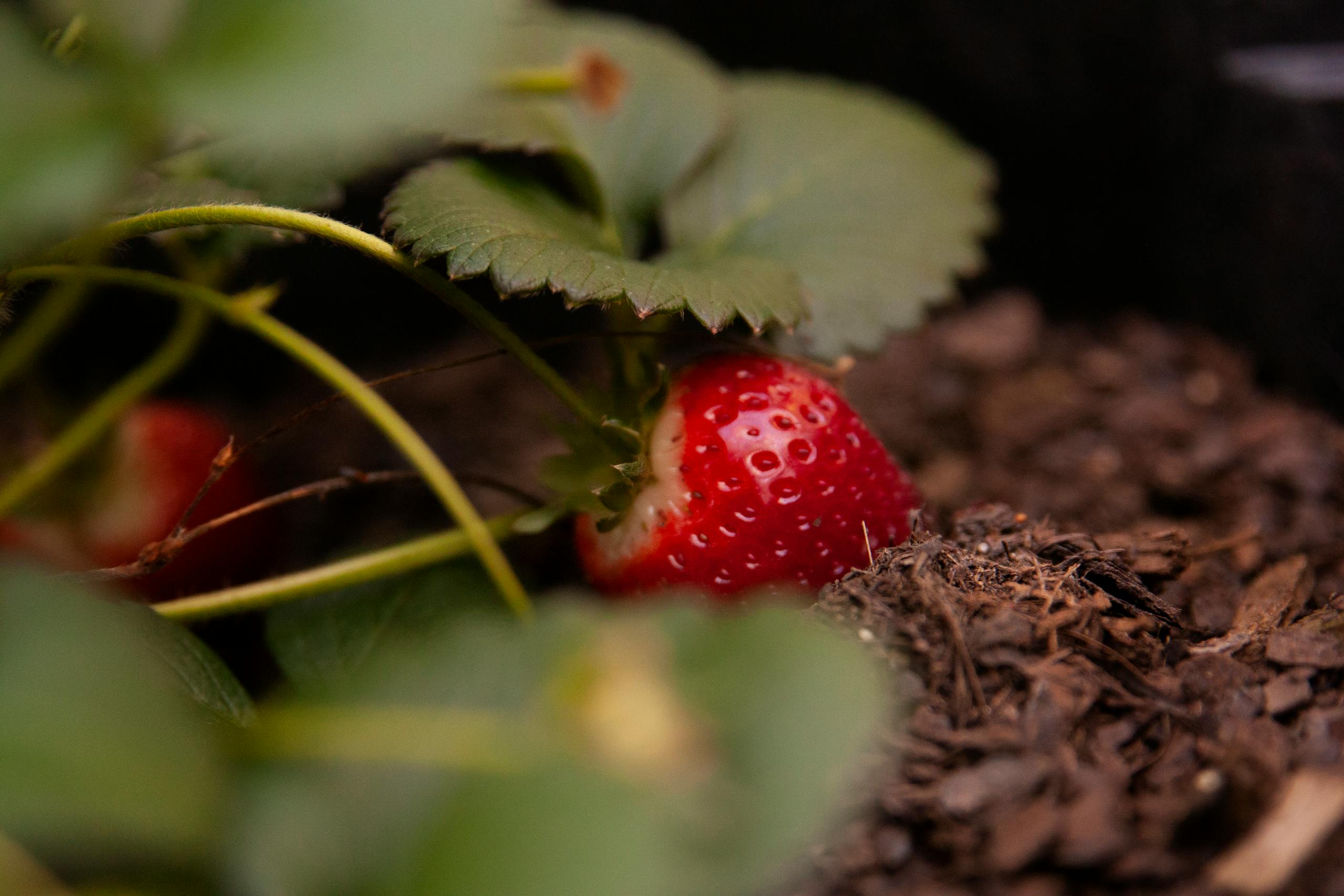
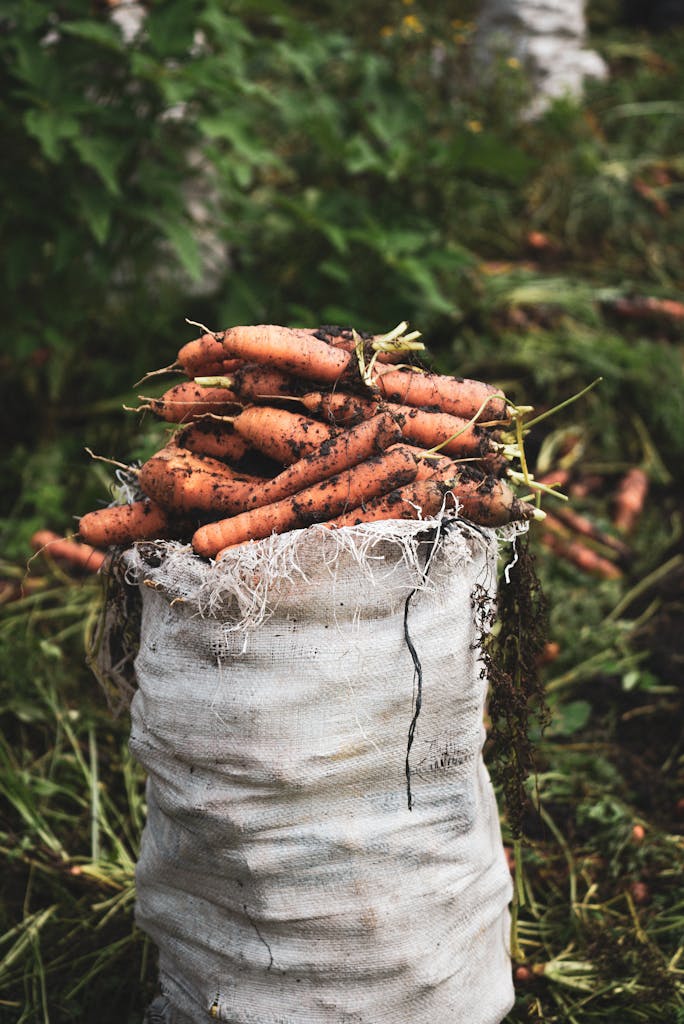
What I remember from those years isn’t medicine. It’s strawberries straight from the patch – not even rinsed. Carrots pulled from the soil with a smudge of earth on the tip and crunched under the outside tap.
A morning, a meal, a sound…still after decades, this is still a vivid memory –The first warm morning of spring, my grandmother would send me out with a small wooden bowl, and I’d come back with strawberries that hadn’t even seen a tap.
Animals. Soil. Real dirt under my nails. Yogurt, homemade cheese, yes!! Pickles in the cellar, sauerkraut on the table, garlic and dill in everything.
A few years later, I came home well. Nobody quite knew why. I was just the kid who wasn’t sick anymore.
It took me about forty years and a few thousand miles of distance from that garden to read a book that made me realise that a humble, slightly muddy carrot and a strawberry may have been one of the most important things I ever ate.
That book was Eat Dirt by Dr Josh Axe.
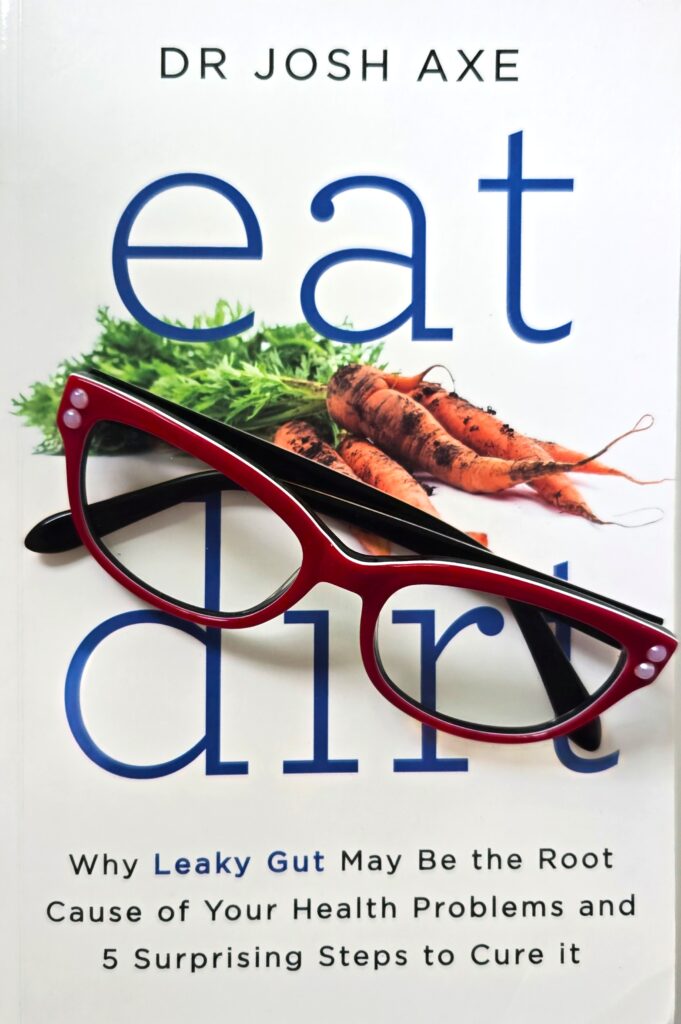
This post may contain affiliate links. If you make a purchase through these links, I may earn a small commission at no extra cost to you. I only recommend products I personally use and trust. Thank you for your support!
Why Eat Dirt by Dr Josh Axe Found Me at the Right Time
I came to Eat Dirt not as a stranger to its argument, but as someone who had unknowingly lived it. What Dr Axe describes across three hundred pages, microbial diversity, real food, outdoor exposure, fermented dairy, lower stress, and less sterilisation, was the texture of my grandmother’s village in the late 1970s.
She wasn’t a nutritionist. She just lived in a world that hadn’t yet forgotten how to feed a body.
I think this is part of why so many readers respond to this book the way they do. It isn’t really telling us anything new. It’s telling us something old, in a language modern enough that we can finally hear it again.
Leaky Gut Syndrome: The Central Idea of Eat Dirt
The central argument of Eat Dirt is one most of us have heard, at least in loose terms, by now: the gut lining is not just plumbing. It’s a finely tuned barrier, designed to let nutrients through and keep almost everything else out. Dr Axe argues that under modern pressures: chronic stress, antibiotics, ultra‑processed food, and an aggressively sterilised environment, that barrier becomes more permeable than it should be.
Food particles, microbial debris, and environmental toxins begin slipping through, and the immune system, understandably annoyed, starts firing in directions it shouldn’t.

Many things radiate outward from the gut. Mood. Immunity. Skin. Hormones. Energy. Eat Dirt is at its strongest when it reminds the reader that the gut is not a side character in your health story. It is, very often, the protagonist, and if you’d like to step further into how the gut microbiome actually works as a living ecosystem, I’ve written a longer piece on exactly that.
Axe leans on the old Hippocratic spirit. The gut sits at the centre of disease and health alike, and while that’s an overstatement scientifically, it’s a useful provocation. As a nutrition student, I’d put it more carefully: ”many things radiate outward from the gut”. Mood. Immunity. Skin. Hormones. Energy. Eat Dirt is at its strongest when it reminds the reader that the gut is not a side character in your health story. It is, very often, the protagonist.
Fibre and whole foods nourish the microbiome. And if there is one nutrient that does more for gut health than any other, it is dietary fiber and why we dreadfully heed it, which I’ve written about at length elsewhere on the blog.
The Five R’s of Gut Healing in Eat Dirt
Axe organises his protocol around five steps: Remove, Reseed, Restore, Release, Reseal. I won’t pretend this isn’t a tidy bit of branding, but as a framework, it’s actually quite useful, and at this point, every time I read one of my own ingredient labels, I hear that little alphabetical refrain in the back of my head.
– Remove the foods and stressors that inflame the gut
– Reseed with beneficial microbes through fermented foods and probiotics.
– Restore with nutrient‑dense, healing foods
– Release – the part most “gut” books skip – emotional and chronic stress
– Reseal the gut lining with collagen‑rich foods, bone broth, and amino acids.
The bit that genuinely earned my respect is ”Release”. The number of gut‑health books that talk endlessly about kefir and fibre while ignoring the fact that an unrelenting stress response can wreck your digestion in a week is too many. Axe gives stress its proper seat at the table, and as a mature student juggling deadlines, dissertation, and life, believe me, my friends, that chapter felt almost personal.
The Five Gut Types in Eat Dirt: And the One I Recognised
Axe also categorises five archetypes of disrupted gut health: ”Candida Gut, Stressed Gut, Immune Gut, Gastric Gut, and Toxic Gut”. The first time I read this list, I laughed out loud, because I could feel my own gut shifting between ”Stressed” and ”Immune” depending on the week. Final‑year stress? Stressed Gut. Coming down with something? Immune Gut. The categories aren’t perfectly clinical, but they are a useful mirror, and sometimes holding up a mirror is all a popular nutrition book can do.
Where Eat Dirt Runs Ahead of the Evidence
I came to this book wanting to love every page, because, in some sense, it tells the story of my own healing. Which is exactly why I have to be careful about it. But, I’d be a poor nutrition student if I didn’t say this out loud: not everything in ”Eat Dirt” is solid science. Dr Josh Axe is a chiropractor and naturopath, which I respect, but at times the book leans on natural‑living enthusiasm where I’d prefer a citation.
The “leaky gut syndrome” framing is more accepted in functional medicine circles than in mainstream gastroenterology, though the underlying biology of intestinal permeability is real and increasingly studied.
However, the medical literature prefers the term increased intestinal permeability, and the concept is real enough in conditions such as coeliac disease and inflammatory bowel disease, with growing interest in how modern lifestyle factors might shift it elsewhere as well. The most authoritative voice in this space is Dr Alessio Fasano of Harvard Medical School and Massachusetts General Hospital, whose 2020 review paper “All disease begins in the (leaky) gut” lays out the zonulin-mediated mechanism behind intestinal permeability and its connection to chronic inflammatory disease. If Axe is the popular communicator on this topic, Fasano is the scientist whose work makes the conversation possible at all.
Plus, some of his supplement recommendations are also more aspirational than evidence‑led, and as someone who is famously stubborn about supplement choices. You may remember from my Lifespan review that I read those pages with one eyebrow lifted.
But, and this matters, the ”spirit” of the book is right. Eat real food. Re‑introduce microbial diversity. Respect fermentation. Lower your toxic load. Manage your stress. None of this is controversial. It’s traditional eating, dressed up for a Western audience that has forgotten it.
Reading the Eat Dirt Book as a Bulgarian Granddaughter
Here is where I have to confess my bias. Reading ”Eat Dirt” as a Bulgarian woman is a slightly surreal experience because most of what Axe recommends was already on my grandmother’s table. Sauerkraut. Bone broth. Yogurt fermented for twenty‑four hours instead of four. Vegetables straight from the soil. Kefir grains passed between neighbours like a currency (Yes, I still prefer to swap this currency than buy it). Pickles in the cellar. Garlic, dill, rye, and time.
And yeah, we didn’t call it “gut health”. We called it dinner.
What Eat Dirt gave me was scientific language for an instinct I already had. The same instinct I now write about more carefully in my piece on nurturing your gut microbiome, where I describe the microbiome as a living garden that’s shaped daily by what you eat and how you live. It turns out my grandmother’s actual garden was teaching me the metaphor decades before I had the vocabulary for it.
What ”Eat Dirt” gave me was scientific language for an instinct I already had, and permission to take that instinct more seriously, not less. Every jar of fermented vegetables on my counter, every batch of Bulgarian yogurt, I make in my Instant Pot, every spoon of beetroot kvass. These aren’t trends. They’re heirlooms.
What changed in my own routine after reading the book was small but real: more bone broth in my cooking, an experiment with adaptogens during peak-stress weeks, and, perhaps most importantly, a guiltless permission to stop sterilising my kitchen as if it were a hospital. My digestion and energy have improved.
There’s something deeply emotional about reading a Western health book and finding your great‑grandmother in the footnotes. We were never wrong, my darling. We were just early.
Why Eat Dirt Is Worth Reading? My Honest Eat Dirt Book Review Verdict
So, I will stop giving you spoilers. But if you’ve ever struggled with bloating, fatigue, autoimmune flare‑ups, or a vague sense that your body is fighting something it can’t name, ”Eat Dirt” will give you a framework. It is an amazing book; it overreaches in places, and you will need to keep your nutrition‑student goggles on. But its core message is one of the most important shifts in modern wellbeing: that we, as a culture, have sterilised, processed, and antibiotic‑ed our way out of a relationship with the microbial world we evolved alongside.
Cooking from scratch isn’t the only answer. Fermenting at home isn’t the only answer. Eating food that still remembers the soil isn’t the only answer. But together, they are most of the answer. Eat Dirt: Why Leaky Gut May Be the Root Cause of Your Health Problems belongs on the shelf of anyone who suspects their gut is trying to tell them something.
And before you go. Back in time, when I eventually returned to the city, I was well. Not cured of anything specific, just no longer the kid who was always coming down with something. The ordinary miracle of childhood resilience, everyone said.
As Dr Axe said “Let your kids play in the dirt and get their little hands dirty.”
⭐ *My rating: 4.0/5. Read it with curiosity and keep the scientific filter on.
Further Reading on Gut Health, Food, and the Modern Body
If gut health and the modern food environment are your interests, you might also like:
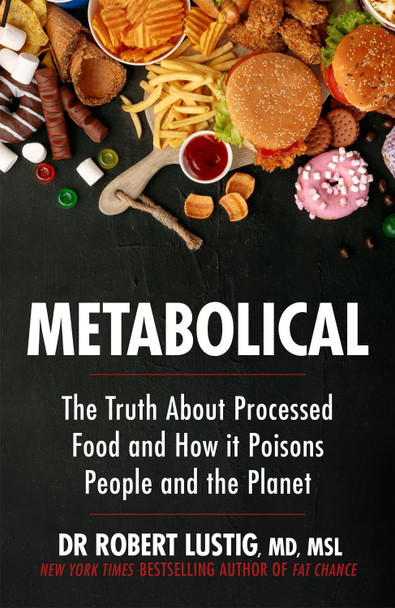
– My review of Metabolical or how processed food drives metabolic disease (and shaped my dissertation)
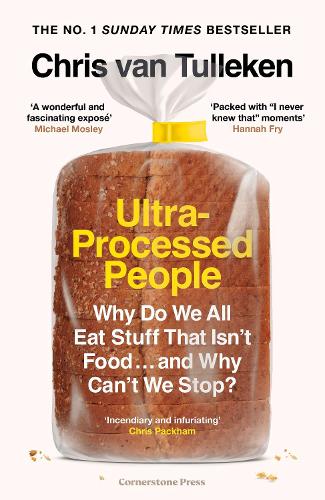
– My review of Ultra‑Processed People — the food industry’s design choices laid bare
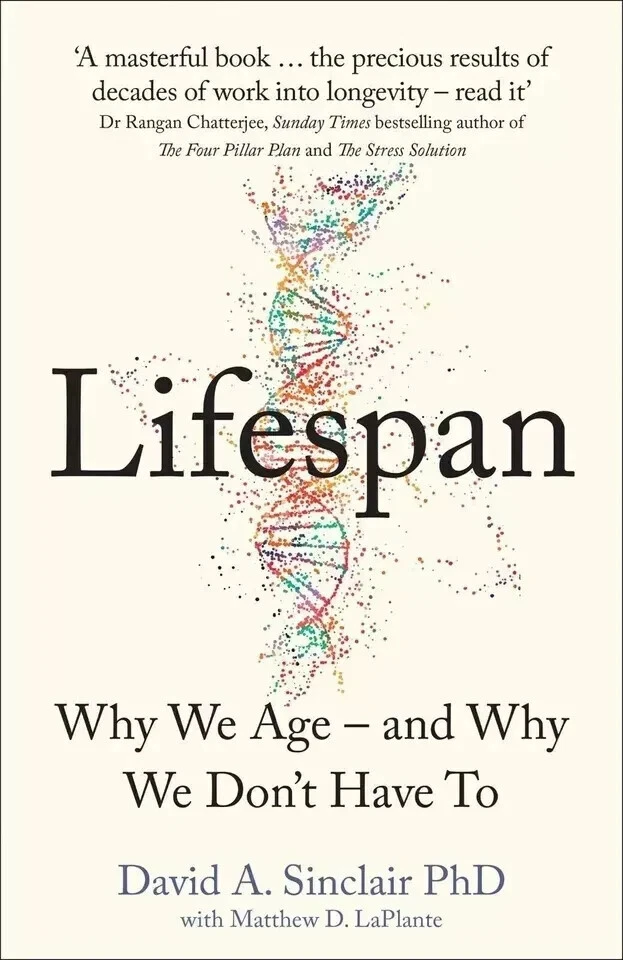
– My review of Lifespan, or how all of this connects to the deeper biology of ageing
Fancy a Freebie?
Subscribe to my newsletter
and get your FREE eBook with 7 delicious gluten-free desserts!
*We will only send you gluten-free, lactose-free, refined sugar-free emails; you can unsubscribe anytime. Read our Privacy & Cookie Policy.



About the Author
Dani
nutrition Student | healthy life promoter | gluten-free recipe developer
Hi! I’m Dani, a final-year Human Nutrition student with a strong interest in gluten-free cooking, gut health, UPF-free and whole-food living. Your visit means the world to me!
I share simple recipes, easy-to-explain nutrition and lifestyle experiences, and living with food intolerances.