
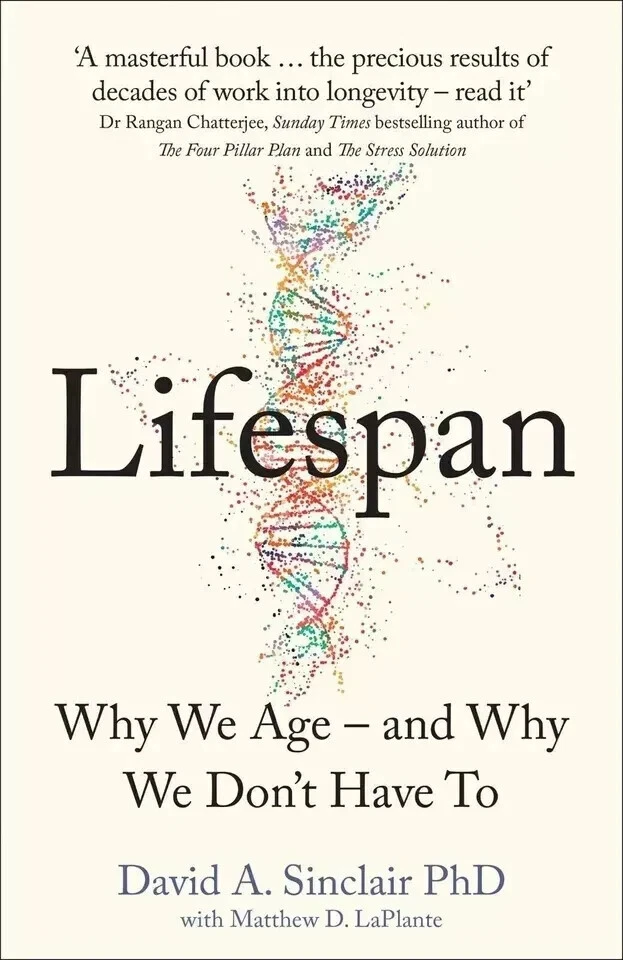
Lifespan by David Sinclair: There is a Hope, my Darling!

Look around the wellness industry today, and you will find a massive influx of best-selling health and diet books. What most readers do not realize is that the mainstream publishing world does not require these books to go through the rigorous, peer-reviewed scientific vetting process that academic journals demand. Anyone can publish a book making grand claims about reversing your age or altering your biology.
As a graduate with a BSc (Hons) in Human Nutrition, my academic training is deeply rooted in biochemistry, nutrient signaling, and systemic metabolic pathways. When I read a book like Harvard Professor Dr. David Sinclair’s with Matthew D. LaPlante, Lifespan, I am not reading it as a casual consumer looking for the next health trend. I am reading it as a scientific filter; dissecting high-level laboratory genetics, translating complex cellular data into realistic human habits, and adding the vital metabolic nuance (especially regarding female physiology) that global blockbusters often overlook.
Below is my honest, professional, and metabolic breakdown of what Lifespan gets right, what it misses, and how you can safely apply its evolutionary principles to your daily life.
This post may contain affiliate links. If you make a purchase through these links, I may earn a small commission at no extra cost to you. I only recommend products I personally use and trust. Thank you for your support!
Table of Contents
In our forties/fifties, aging stops being a distant biological concept and becomes something we feel in real time. You might not notice at first. But it may manifest with a slower recovery after long days. A dip in energy that doesn’t have a clear explanation.
A sense that the body you’ve always relied on is beginning to negotiate with you rather than simply obey. For me, working in the busy, demanding beauty industry made it harder and harder to recover. Does it sound familiar?
At the same time, inside, I still felt like the same girl I had always been, curious, ambitious, stubbornly alive, but suddenly I was living in a body that didn’t always match that feeling. Did I mention my stubbornness? So, I just can’t stop here and let the flow take me.
Then, in the middle of this shift, I did something wildly inconvenient for a midlife woman who still feels twenty on the inside: I went back to university. I walked away from a successful career and stepped into lecture halls filled with people who hadn’t yet experienced their first wrinkle.
I keep telling myself I had an entire life ahead of me: that reinvention was still possible, that I could start again. And I still believe that. But somewhere between the last assessments, the late‑night study sessions, and the looming dissertation, a realization settled in with surprising weight: time is not endless.
Reinvention is beautiful, but the clock is ticking. How sad is that? Living in an aging body and a youth spirit – it’s hard, believe me. I’m still that little girl on the swing. So, my search narrowed to how to match my lifespan with my healthspan.

Why I Reached for Lifespan Book?
This book didn’t just land in my hands; it arrived at a moment when I needed it most. So, if you found here that I talk more about myself than the book, don’t judge, I really find these books truly relevant to my current age, deep feelings, and experiences.
That’s when I reached for Lifespan – a woman navigating a dramatic life shift while starting to wonder whether her body could keep up. I picked up this book, along with a handful of other longevity titles, like someone reaching for a safe board in deep water. Somewhere behind the fear came curiosity, the need to understand more and more the deep mechanisms behind the aging process.
I wanted to know what was happening inside my cells. I wanted to know whether the future held something more empowering than simply accepting decline. I wanted reassurance that my decision to start over wasn’t naïve, that my body could carry me through the next chapter I’m determined to write.
Reading Lifespan during this season of reinvention felt almost synchronized with my own transformation. While I was learning, unlearning, and rebuilding myself academically, Sinclair was presented with a new way to think about aging, not as an inevitable slide, but as a biological process with levers we can influence. His ideas became a kind of intellectual companionship, a reminder that change is still possible, that the story isn’t over just because the body has begun yelling its limitations.
Sinclair’s Big Idea: Aging as a Loss of Information
Who Is Dr. David Sinclair? A.O., PhD. Scientist & Professor of Genetics at Harvard Medical School, and a leading researcher in aging and longevity, advocating that aging is a treatable disease and that lifespan can be extended or even reversed through genetic, chemical, and lifestyle interventions. Yes! I knew it! There is something I was dreading, but I was hoping to!
So, in general, at the heart of the Lifespan book is Sinclair’s “Information Theory of Aging,” the idea that aging happens because our epigenetic instructions, the software that tells our DNA what to do, gradually become corrupted. The metaphor is elegant, and for someone like me, who was juggling biochemistry lectures and essay deadlines, it made the science feel surprisingly accessible.
It also made aging feel less like a slow collapse and more like a system that, for now, could, in theory and in animal studies, be repaired. That makes sense, and as someone who desperately wants to believe it, it was just more than comfort.
Why Sinclair Calls Aging a Disease
Sinclair asks a bold question: why do we keep treating age-related diseases one by one when aging sits underneath so many of them? His argument is that slowing the aging process could protect several parts of the body at the same time.
This shifts the goal from simply living longer to extending healthspan; more years with strength, clear thinking, independence, and the ability to enjoy the people and plans that make life worth living.
The Science Behind Lifespan Book
Much of Sinclair’s work is grounded in solid research. His decades‑long focus on sirtuins, the proteins that regulate DNA repair, metabolism, and stress responses, is widely respected. And yes, every time he mentioned “sirtuins,” my sleep‑deprived student-menopausal brain (such a combination, ha ha?) couldn’t help imagining them as a lost tribe from the Star Wars universe. “Sirtuin 1, you are our only hope.” It was the kind of nerdy humor that kept me going through 3 a.m. study sessions.
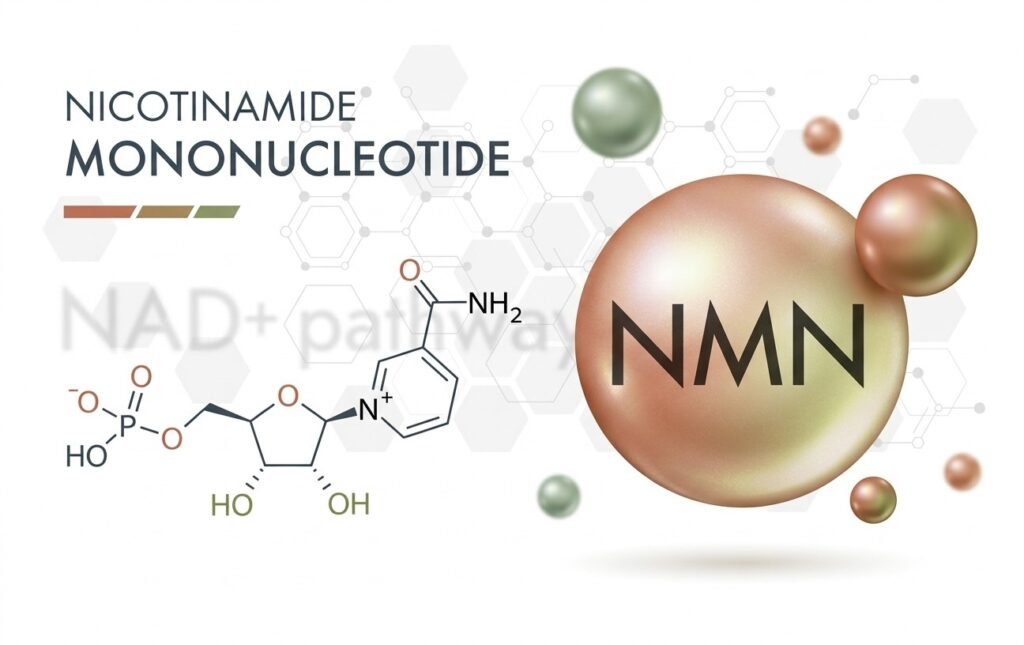
So, let’s go back to planet Earth. Sinclair’s discussion of the decline in NAD⁺ with age is also well supported. The molecule’s role in mitochondrial function and cellular repair is one of the most consistent findings in aging biology. A precursor for NAD⁺ is the NMN (nicotinamide mononucleotide)
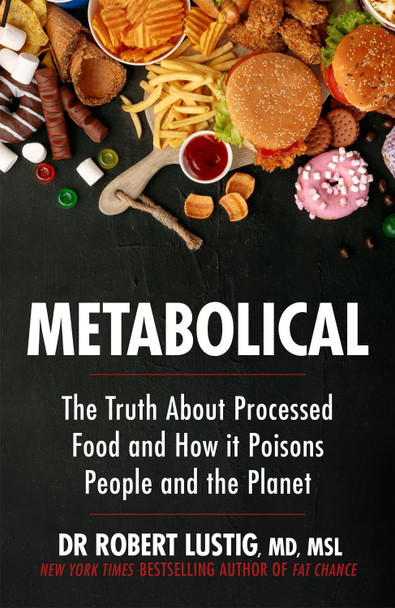
As I was diving deeper into Sinclair’s ideas about metabolism and cellular aging, I couldn’t help thinking about how our modern food environment shapes these pathways long before we notice the signs. I explored this in my review of Metabolical, a book that exposes how deeply our diets influence the very biology Sinclair writes about.
And when he talks about fasting, exercise, heat exposure, and other hormetic stressors, he’s not selling magic; he’s explaining mechanisms we already know support metabolic resilience.
These parts of the book felt like a warm reassurance: there are things we can do, right now, that meaningfully support our health as we age.
Evolution and the Trap of Modern Comfort
As a human nutrition graduate, I look at Dr. Sinclair’s research through an evolutionary lens. Our ancestors didn’t evolve complex cellular repair systems while lounging in climate-controlled rooms with endless food delivery. We evolved by running, surviving climate shifts, and enduring periods of scarcity.
When environmental conditions are too “comfortable,” our cells turn off their internal repair crews and focus purely on reproduction. If using mild, intentional discomfort to bring it back into our lives, like cold exposure or longer windows between meals, we are actively hacking our ancient evolutionary programming, tricking our bodies into fixing themselves at a cellular level.
Skip the Snacks, Not the Meals
While Lifespan frequently champions caloric restriction and intermittent fasting, my nutritional background forces me to add some necessary nuance here.
Strict, prolonged fasting protocols can be highly disruptive to female biochemistry, particularly when navigating hormonal shifts in our forties and fifties. Instead of extreme fasting windows, I advocate for a simpler, evolutionary approach to metabolic health: eliminate the grazing and skip the snacks.
By consciously extending the clean windows between our main, nutrient-dense meals, we give our insulin levels a chance to drop and allow our body’s natural cellular cleanup processes (autophagy) to activate, without throwing our hormones into a state of panic.
Where the Research Is Still Emerging
Ok, I must agree that not everything in Lifespan is ready for real‑world application. However, the cellular reprogramming, for example, is breathtakingly promising but still experimental. Sinclair’s optimism sometimes runs ahead of the evidence, and as someone who values nuance, I held onto that awareness.
We have to admit that celebrating these is still early, as human research is still in its primary stages. Early studies are encouraging, especially around NAD⁺ pathways, yet long‑term outcomes remain unknown. Still, as someone who understands the science and feels the pull of wanting to support my body as I age, I found myself reading these chapters with a blend of curiosity and hope.
Reading Lifespan as Someone Reinventing Herself
What Lifespan ultimately gave me was not a prescription, but a sense of agency. It reminded me that aging is not a passive slide but a dynamic process influenced by lifestyle, environment, and emerging science. It gave me language for what I’m experiencing and a framework for thinking about the future with more optimism than fear.
It also gave me something I didn’t expect: companionship. A sense that while I’m navigating university deadlines, career reinvention, and the quiet shock of realizing I’m not twenty anymore, science is moving too. And perhaps, just perhaps, there is more ahead of me than I once feared.
But you might already ask – what would longer, healthier lives change? The book also made me think beyond cells and laboratories. From my perspective, where mid age makes time looks more precious than everything: A longer healthspan could reshape careers, retirement, family life, healthcare, and access to new treatments. The science is exciting, although the social questions may become just as important. Living longer would reshape far more than our bodies and I hope for the best.
Why Lifespan by David Sinclair Is Worth Reading
If you’re feeling even a fraction as curious as I was, Lifespan is absolutely worth bookmarking for your next deep‑dive read. It’s the kind of book you don’t rush through – you sit with it, underline it, argue with it, and occasionally close it just to stare into space and think, “What if this really is possible?”
David Sinclair writes with the rare combination of scientific authority and genuine human warmth. He’s not just a Harvard geneticist; he’s someone who has spent decades trying to understand why we age and what we can do about it. His research on sirtuins, NAD⁺, and epigenetic aging has shaped the entire longevity field, and whether you agree with all his conclusions or not, his work is undeniably influential.
What I appreciated most is that Sinclair doesn’t talk down to the reader. He brings you into the lab, into the debates, into the future he believes is possible, and he does it with a storyteller’s instinct. If you’re navigating your own questions about aging, reinvention, or simply trying to understand what’s happening inside your body as the years unfold, this book is a steady, reassuring companion.
So yes, save it, read it, return to it. It’s one of those books that stays with you long after you’ve turned the last page. David Sinclair’s longevity book: Lifespan, or why we age and why we don’t have to.
Why Longevity Breakthroughs May Arrive Sooner Than We Think
When I think about why all of this might be possible – why the science in Lifespan doesn’t feel like distant science fiction – I only have to look back at my own lifetime. In my twenties, there were no mobile phones, no internet, no Wi‑Fi, no tiny computers we now carry in our pockets. I lived through the moment the world shifted from analog to digital, from landlines to smartphones, from dial‑up to fiber.
I watched entire technologies appear, evolve, and become ordinary. If all of that could happen within a few decades, why shouldn’t biology follow the same trajectory? Why shouldn’t we be standing at the edge of another revolution – one happening inside our cells, along with on our screens? I like to think that if I’ve already witnessed one era transform beyond recognition, I might just be lucky enough to witness the next one too.
And maybe, just maybe, I’ll be here long enough to benefit from it.

About the Author: Dani
Integrative nutritionist | BSc (Hons) Human Nutrition | Metabolic and gut Health
Hi! I’m Dani, BSc (Hons) Human Nutrition with a strong interest in lifestyle medicine, gut health, metabolic health, UPF-free, whole-food, and gluten-free cooking. Your visit means the world to me!
I share simple recipes, nutrition tips, lifestyle experiences, and insights into living with food intolerances.
My story
My philosophy
Further Reading on Health, Aging, and the Modern Body
If you enjoy science‑based books that challenge how we think about health and longevity, you might also like my other book reviews:
• Metabolical – how our food system shapes metabolic aging
• Eat Dirt – the microbiome, resilience, and modern immune health
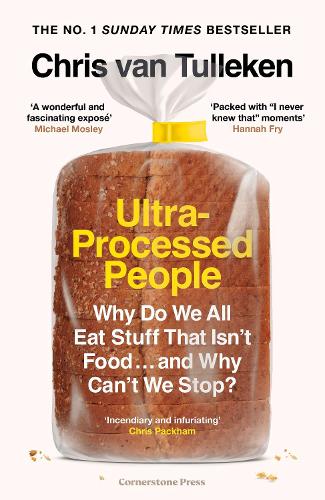
• Ultra‑Processed People – the hidden forces behind the modern food industry