


Best Magnesium Supplement: What Form to Choose?

People search for the “best magnesium supplement,” but magnesium forms have different uses. The best choice depends on why someone wants magnesium, how their digestion responds, and whether the main goal is sleep, muscle function, bowel regularity, blood sugar support, stress, or overall intake.
Magnesium is an essential mineral and chemical element (Mg, atomic number 12) that your body needs to function. It acts as a cofactor in over 300 biochemical reactions, is vital for muscle and nerve function, energy production, blood pressure regulation, and bone strength.
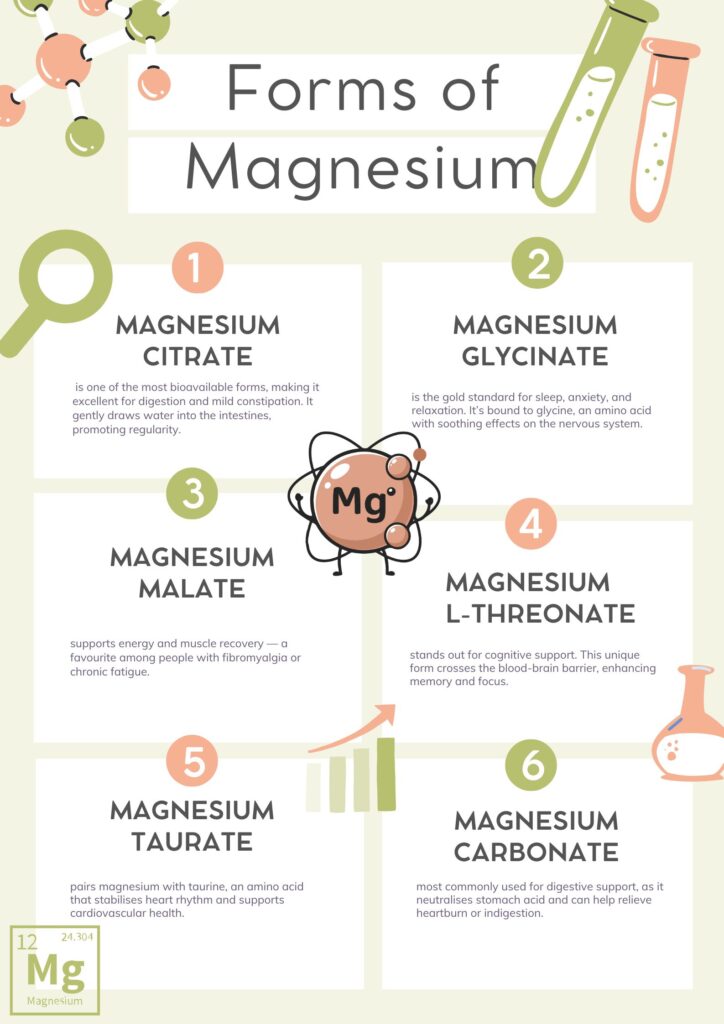
Not all magnesium supplements are created equal. Each form behaves differently in the body, and the best choice depends on your goals, your digestion, and your sensitivity level. Think of magnesium forms as different “personalities” — each with its own strengths.
This post may contain affiliate links. If you make a purchase through these links, I may earn a small commission at no extra cost to you. I only recommend products I personally use and trust. Thank you for your support!
Quick Answer: What Are Magnesium Supplements
The right magnesium supplement depends on the job you want it to do.
Magnesium glycinate or bisglycinate is often chosen for sleep, stress support, nervous system calm, and sensitive digestion. Magnesium citrate is commonly used when bowel regularity is the main concern. Magnesium malate is often linked with energy metabolism and muscle function, so it may suit daytime use.
Magnesium taurate is usually positioned around heart rhythm, nerve signaling, and calm support. Magnesium oxide and hydroxide are cheaper and stronger on the bowel, but they are not usually the gentlest daily options for general magnesium support.
For blood sugar and metabolic health, the bigger picture matters most. Magnesium supplements could support glucose metabolism and insulin action, but they work best alongside steady meals, enough protein, fiber-rich carbohydrates, sleep, movement, and lower added sugar intake.

Why Magnesium Form Matters
Magnesium supplements come in different forms. Magnesium is often bound to other compounds. That pairing affects how the supplement is absorbed, how it behaves in the gut, and how well someone tolerates it.
The front label can be misleading. A product may say “high strength magnesium,” but the useful detail is the exact form and the amount of elemental magnesium per serving. Elemental magnesium tells you how much magnesium the supplement actually provides. The form tells you how that magnesium is likely to behave.
For example, citrate may be useful when constipation is part of the picture, while glycinate or bisglycinate may suit someone who wants an option for an evening routine. Malate may fit better when the focus is on daytime energy and muscle function. A magnesium complex can be useful when the formula is transparent, but it can also hide cheaper forms behind an attractive label.
Magnesium Supplements and Their Popular Forms
Magnesium Glycinate and Bisglycinate: Sleep, Stress, and Sensitive Digestion
Magnesium glycinate and magnesium bisglycinate are closely related magnesium supplements, and many supplement labels use the terms almost interchangeably. In simple language, magnesium is bound to glycine, an amino acid involved in calming signals in the nervous system.
This form is often chosen by people who want magnesium for sleep, stress support, muscle tension, or a sensitive stomach. It tends to be lighter on digestion than citrate, oxide, or hydroxide, so it may suit people who want daily magnesium support without a strong bowel effect.
For evening routines, magnesium glycinate or bisglycinate often makes the most sense. Magnesium supports normal nerve signaling and muscle relaxation, while glycine gives this form its calm, bedtime-friendly reputation. It fits naturally when the body feels wired, tense, restless, or unable to settle after a busy day.
For midlife sleep problems, this form may be especially relevant. Waking through the night often connects with stress hormones, blood sugar swings, nervous system tension, and changing hormonal patterns. Magnesium supports the systems involved in relaxation, glucose handling, and muscle comfort.
Magnesium supplements of glycinate or bisglycinate may be a good fit when the main goal is:
- sleep support
- stress and nervous system calm
- muscle tension
- sensitive digestion
- daily magnesium intake without a strong laxative effect
Magnesium Citrate: Digestion and Bowel Regularity
Magnesium citrate is magnesium bound to citric acid. It is one of the most common magnesium supplements and is often used when bowel regularity is a reason for taking magnesium.
This form can draw more water into the bowel, which may explain why it loosens stools. For someone who feels constipated or sluggish, that can be helpful.
Magnesium citrate can still support overall magnesium intake, but its digestive effects place it in a different category from glycinate or bisglycinate. It is less likely to be the first choice for someone primarily looking for sleep support, and more likely to suit someone who wants magnesium with a focus on bowel regularity.
Magnesium citrate may be a good fit when the main goal is:
- constipation-prone digestion
- bowel regularity
- occasional digestive sluggishness
- a magnesium form that is easy to find and usually affordable
Timing depends on the person. Some people prefer to take citrate earlier in the day or with food because they can gauge how their digestion responds. Starting with a smaller amount makes sense, especially if your stomach or bowels react quickly to supplements.
Magnesium Malate: Muscles, Energy, and Daytime Support
Magnesium malate combines magnesium with malic acid, a compound involved in energy metabolism. For that reason, magnesium malate is often chosen by people who are more interested in daytime energy, muscle function, and physical tiredness than bedtime relaxation.
Magnesium already plays a central role in ATP activation, the process that helps the body turn food energy into usable cellular energy. Malate gives this form its daytime reputation because it connects naturally with energy pathways rather than a sleepy evening routine.
This form may suit people who feel physically drained, muscle-heavy, or low in energy during the day. It can also fit active people because magnesium supports muscle contraction, relaxation, and recovery.
Magnesium malate may be a good fit when the main goal is:
- daytime energy support
- muscle function
- active bodies
- physical tiredness
- a supplement that does not feel too bedtime-focused
I would usually place magnesium malate earlier in the day, often with breakfast or lunch. For people who are sensitive to supplements, taking them with food may feel easier on the stomach.
Other Magnesium Supplements Forms
Magnesium taurate is often chosen when the focus is on heart rhythm, nerve signaling, stress support, and steady calm. It sits in a different place from citrate because it is not primarily bowel-focused, and in a different place from glycinate because it is often associated more with heart and metabolic support than with bedtime routines alone.
Magnesium threonate is usually marketed for brain health, memory, and cognitive support. It is more expensive than many other forms, so I would see it as a specialist option rather than the first place to start if sleep, stress, blood sugar, and food intake still need attention.
Magnesium oxide is common and affordable, but it is usually less gentle and less well absorbed than forms such as glycinate, citrate, or malate. It can still have a place, especially where a stronger bowel effect is wanted, but it would not be my first choice for daily magnesium support.
Magnesium chloride is often found in liquid drops, sprays, and topical magnesium products. It may suit people who dislike tablets or want a simple mineral form, but the dose still needs attention, especially with liquids, where it is easy to take more than intended.
Magnesium Complex
A magnesium complex can work well when the label clearly lists the forms and the amount of elemental magnesium. When the blend hides behind vague wording or relies mostly on oxides, the front label may sound more impressive than the formula really is.
Magnesium Supplements and Health
Magnesium Supplements for Women
Magnesium becomes especially interesting for women when sleep, stress, cravings, muscle tension, constipation, and midlife energy changes all start overlapping. I see this as a “whole-body support” mineral rather than a quick fix. The form still depends on the reason: glycinate or bisglycinate may suit evening calm and sleep routines; citrate may help when bowel regularity is the main issue; and malate may fit better when daytime energy and muscle function need more support.
Magnesium Supplements and Blood Sugar
Magnesium has a real place in the blood sugar conversation because it supports glucose metabolism and insulin action. When magnesium intake is low, the body may find it harder to manage glucose levels smoothly, especially alongside high stress, poor sleep, low fiber intake, and frequent added sugar intake.
Magnesium Supplements, Cravings, and Weight Management
Magnesium belongs in the weight-management conversation through the systems behind it: blood sugar control, insulin sensitivity, sleep quality, stress response, muscle function, and energy metabolism. I prefer this angle because it avoids the silly “fat-burning supplement” promise and looks at what the body actually needs to regulate appetite, cravings, energy, and recovery.
For the Heart
Magnesium helps regulate the electrical impulses that keep your heart beating steadily. It supports healthy blood pressure by relaxing the smooth muscles lining your arteries. Emerging research suggests that low magnesium levels may be associated with a higher risk of arrhythmias, heart attacks, and stroke. While magnesium is not a treatment, maintaining adequate levels supports overall cardiovascular health.
For the Mind
If you’ve ever felt calmer after an Epsom salt bath, you’ve experienced magnesium’s influence on the nervous system. Magnesium helps regulate neurotransmitters such as GABA, which promotes relaxation. Low magnesium levels have been linked in research to increased stress sensitivity, anxiety, and low mood — partly because magnesium helps regulate cortisol, the body’s primary stress hormone.
For Energy and Muscle Performance
Every muscle contraction, from blinking to lifting weights, relies on magnesium. It helps regulate calcium inside muscle cells, ensuring smooth contraction and relaxation. Magnesium also supports ATP production, the body’s main energy currency. Athletes are often advised to use magnesium to support recovery and reduce muscle cramps.
For Bones
Magnesium is a cornerstone of bone health. Around 60% of the body’s magnesium is stored in bone, where it helps regulate calcium metabolism and activates vitamin D. Without adequate magnesium, calcium cannot be properly integrated into bone tissue, which may contribute to weaker bones over time.
For Sleep
One of magnesium’s most appreciated benefits is its ability to support deeper, more restful sleep. Magnesium activates the parasympathetic nervous system — the body’s “rest and digest” mode — and plays a role in melatonin production. Forms such as magnesium glycinate are well‑tolerated and often used to support relaxation and sleep quality.
Tiredness
Tiredness can have many causes, but magnesium is worth considering when low energy comes with muscle heaviness, poor sleep, stress, or blood sugar swings. Midlife fatigue often has more than one layer: changing hormones, lighter sleep, higher stress load, muscle loss, blood sugar swings, and lower recovery all start pulling in the same direction.
Non-Oral Forms of Magnesium Supplements
For some people, oral magnesium supplements aren’t well tolerated. Digestive sensitivity, whether from IBS, chronic diarrhea, low stomach acid, or general gut fragility, can make certain forms uncomfortable or difficult to absorb. In these cases, non‑oral approaches may offer gentle support.
Magnesium Baths (Epsom Salt Baths)
Magnesium sulfate (Epsom salts) dissolved in warm water can help relax muscles and soothe the nervous system. While research on transdermal absorption is still evolving, many people find magnesium baths deeply calming; a simple ritual that supports both body and mind.
Topical Magnesium (Sprays, Oils, Creams)
Topical magnesium chloride can be applied directly to areas of tension or soreness. It may be better tolerated by those who cannot use oral supplements, and it offers a targeted approach to relaxation.
When to Take Magnesium Supplements
The best time to take magnesium supplements depends on the form and the reason you are using it. Consistency matters more than chasing a perfect schedule, but timing can make the supplement easier to tolerate.
| Magnesium form | Timing that often fits best | Why |
|---|---|---|
| Magnesium glycinate / bisglycinate | Evening or with the last meal | Often used for sleep, stress support, muscle tension, and sensitive digestion. |
| Magnesium citrate | Earlier in the day or with food | Can loosen stools, so timing depends on bowel response. |
| Magnesium malate | Morning or lunchtime | Often chosen for daytime energy and muscle function. |
| Magnesium taurate | Morning, afternoon, or evening | Fits steady support for nerves, heart rhythm, stress, and metabolic health. |
| Magnesium threonate | Earlier in the day or split dose | Often marketed for cognitive support and may not suit everyone close to bedtime. |
| Magnesium oxide / hydroxide | According to bowel need and product instructions | More bowel-focused and less gentle for daily magnesium support. |
| Magnesium complex | Depends on the main forms inside the blend | Check the label first, then match the timing to the strongest purpose of the formula. |
Magnesium Supplements Side Effects and Safety Considerations
Magnesium is generally well tolerated, especially when taken in bioavailable forms and within appropriate doses. The most common side effect is loose stools or mild digestive upset, particularly with forms such as magnesium citrate or oxide. Adjusting the dose or switching to a gentler form often resolves this quickly.
While hypomagnesemia (low magnesium levels) is by far the most common issue, hypermagnesemia (excessive magnesium in the blood) is relatively rare. In healthy individuals, the kidneys are highly efficient at excreting excess magnesium, making food-related toxicity virtually impossible.
Hypermagnesemia typically occurs only with impaired kidney function or with prolonged use of very high-dose magnesium supplements or laxatives. Symptoms may include nausea, low blood pressure, muscle weakness, and slowed heart rate, underscoring the importance of using magnesium thoughtfully and within appropriate guidelines.
Although magnesium is safe for most people, excessive intake from supplements can cause diarrhea, nausea, and cramping, especially from poorly absorbed forms. People with kidney disease should be cautious, as magnesium is excreted through the kidneys and can accumulate if kidney function is impaired.
Magnesium can also interact with certain medications, including antibiotics, diuretics, and thyroid treatments. If you’re on medication, it’s wise to check with your healthcare provider before supplementing.
Magnesium Supplements: My Choice
I know, choosing a magnesium supplement can be overwhelming, the market is saturated, and not all formulas are created with science in mind. I tend to trust products developed by researchers who understand biochemistry, absorption, and how different forms of magnesium behave in the body.
This particular blend was formulated by a PhD founder with a strong research background, and it combines well‑studied forms of magnesium designed for calm and relaxation. It’s a science‑led option in a very crowded space, a rare treasure.
So, when I find that my life gets a bit too… life‑y, I add a gentle magnesium blend to my evening routine. It’s my little “Oh!Mg” moment before bed, this is the one I take and recommend*.
*This product is a food supplement and is not intended to treat, cure, or prevent any disease.
FAQs
What are magnesium supplements used for?
Magnesium supplements are used to support magnesium intake when food intake may not be enough. People often choose them for muscle function, sleep routines, stress support, bowel regularity, blood sugar support, or general mineral intake.
Which magnesium supplement is easiest on the stomach?
Magnesium glycinate, bisglycinate, lactate, and gluconate are often gentler options for sensitive digestion. Citrate, oxide, and hydroxide are more likely to loosen stools, especially at higher doses.
Which form of magnesium is usually used for sleep?
Magnesium glycinate or bisglycinate is often chosen for sleep routines because it is generally gentle and well-suited to evening use. Sleep still depends on the wider pattern: stress, blood sugar, light exposure, meal timing, and nervous system rhythm.
Which form of magnesium is usually used for constipation?
Magnesium citrate is commonly used when bowel regularity is the main concern. Magnesium oxide and hydroxide can also have a stronger bowel effect, but they are less gentle for some people.
Is magnesium malate good for muscles?
Magnesium malate is often chosen for muscle function and daytime energy support. Magnesium supports muscle contraction and relaxation, as well as ATP activation, so malate may suit people who want a daytime-focused form.
Is magnesium good for blood sugar?
Magnesium supports glucose metabolism and insulin action. For blood sugar support, the wider pattern matters too: enough fiber, protein, sleep, movement, stress recovery, and lower added sugar intake.
Is a magnesium complex better than one form?
A magnesium complex can be useful when the forms and elemental magnesium amount are clearly listed. A single-form supplement can be easier to understand when you want one specific purpose, such as glycinate for an evening routine or citrate for bowel regularity.
What time of day should I take magnesium?
Timing depends on the form and the reason. Glycinate or bisglycinate often fits evening use, malate often fits morning or lunchtime, and citrate timing depends on bowel response. Taking magnesium with food may improve tolerance for sensitive stomachs.



About the Author: Dani
Integrative nutritionist | BSc (Hons) Human Nutrition | Metabolic and gut Health
Hi! I’m Dani, BSc (Hons) Human Nutrition with a strong interest in lifestyle medicine, gut health, metabolic health, UPF-free, whole-food, and gluten-free cooking. Your visit means the world to me!
I share simple recipes, nutrition tips, lifestyle experiences, and insights into living with food intolerances.