
Why Do We Need Iron? The Surprising Truth About Your Body’s Energy Transporter

If you open a standard health blog or scroll through a generic wellness feed, iron is always talked about in the exact same way. You are told it “helps your blood” and stops you from feeling exhausted. If you have ever wondered why do we need iron to survive, the answer goes far beyond basic fatigue.
But if you are just tracking iron as a boring number on a nutrition label, you are missing the most fascinating story inside your own body.
Iron isn’t just a passive vitamin floating through your system. It is a highly active, heavy metal. Your biochemistry treats it like a piece of structural electrical equipment. Here is the uncompromised, everyday truth about how your body uses this living element to keep your system running.
The Internal Courier: Carrying Your Body’s Oxygen Supply
Think of your body as a massive, bustling city, and your individual cells as tiny factories that require a continuous delivery of oxygen to stay open. Your red blood cells are the delivery trucks, but oxygen cannot simply sit loosely in the back of a truck; it would blow away.
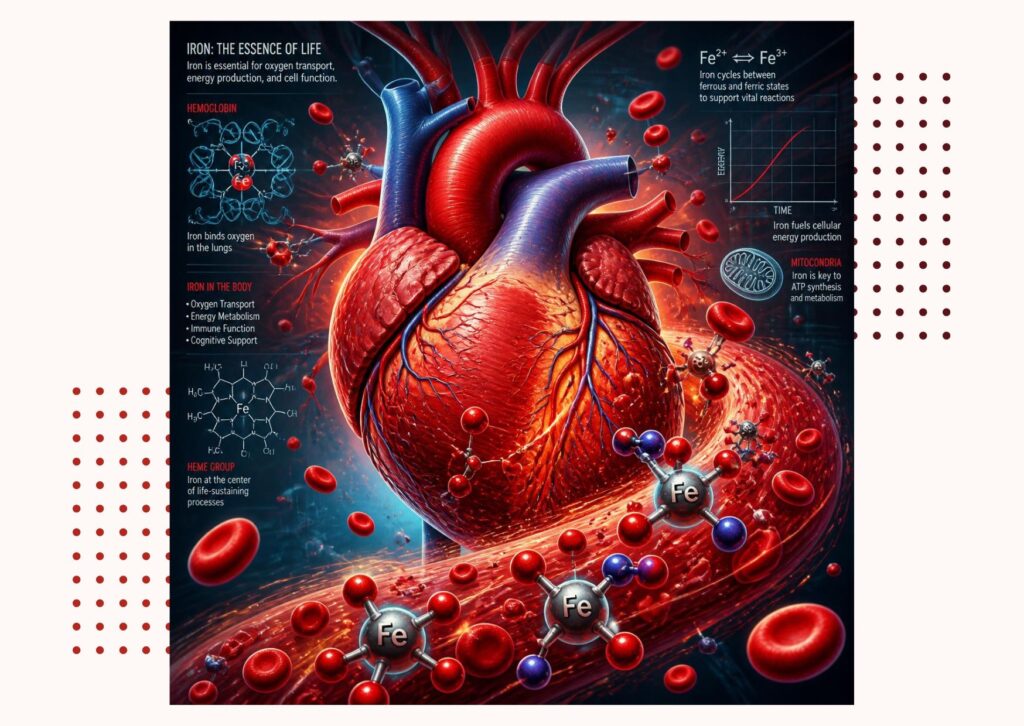
This is the primary reason why we need iron. Your body takes individual iron molecules and uses them to build a highly specialized magnetic cage called hemoglobin.
Oxygen molecules physically lock onto these iron cages inside your lungs. As your blood flows, the iron holds onto the oxygen with a perfect grip; firm enough to carry it through your arteries, but gentle enough to drop it off precisely when your hungry tissues and muscles need to breathe. Without iron, your delivery trucks are empty, and your internal city goes into a blackout.
For example, If you notice a unexplainable hair loss, low iron might be the hidden reason. You can read my full clinical breakdown of how this metabolic triage system impacts your hair follicles in my guide on Hair Loss Nutrition: The Real Reasons and Solutions.
The Micro-Batteries: Fueling Your Daily Energy Grid
Most people assume that iron deficiency makes you tired simply because you have less oxygen moving around. But there is a second, hidden reason that happens directly inside your cells.
Deep inside your tissues sit microscopic power units called mitochondria. These are the tiny batteries that turn your breakfast, lunch, and dinner into energy for your physical movement and mental focus.
To create energy, these micro-batteries pass electrons down a molecular assembly line. The essential links in that assembly line are tiny, iron-dependent proteins.
- When your iron is optimal: Your internal assembly line moves rapidly, creating sharp focus and physical stamina.
- When your iron drops: The assembly line grinds to a halt. Your batteries cannot hold a charge, and you experience deep, heavy fatigue, even if you are getting eight hours of sleep a night.
However, when this energy drop happens during transitional phases of life, it is frequently misdiagnosed as standard aging or hormonal shifts. If you are struggling with persistent exhaustion, check out my deep dive on Menopause Fatigue Causes: 7 Reasons You Feel Exhausted to see how to restart your internal power grid.
The Dangerous Treasure: Why Your System Locks Iron Away
Because iron is a highly reactive metal, it behaves much like raw steel left out in the rain: if exposed to the wrong fluids, it rusts.
If free, loose iron molecules are allowed to bounce around your bloodstream unguarded, they cause violent inflammation, damaging your organs and irritating your gut lining. Your body knows this danger, so it treats iron like a dangerous treasure.
It never leaves iron floating around alone. It packs it tightly into specialized biological storage vaults called ferritin.
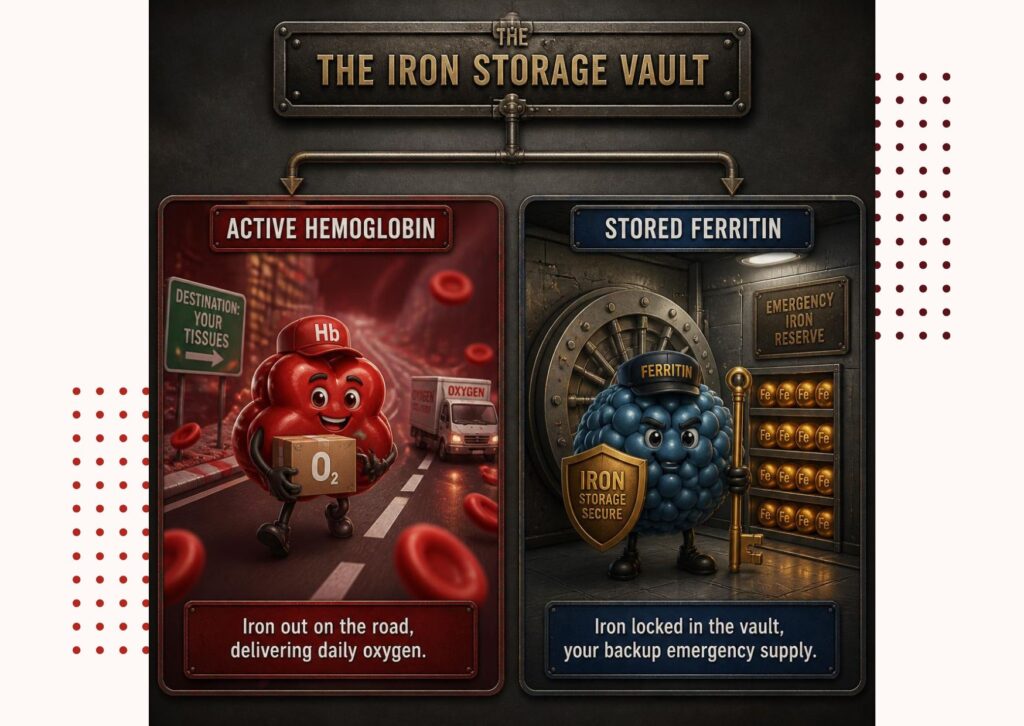
When a doctor tests your blood, checking your “iron levels” only shows what is currently being driven out on the road. Checking your ferritin levels tells you exactly how much backup treasure you have left inside the vault.
However, your liver isn’t the only thing that can close this gate. When an underlying autoimmune condition such as Celiac Disease causes chronic inflammation, the physical structures of your digestive tract are fundamentally altered.
The Two Forms of Dietary Iron: Fueling Your Matrix
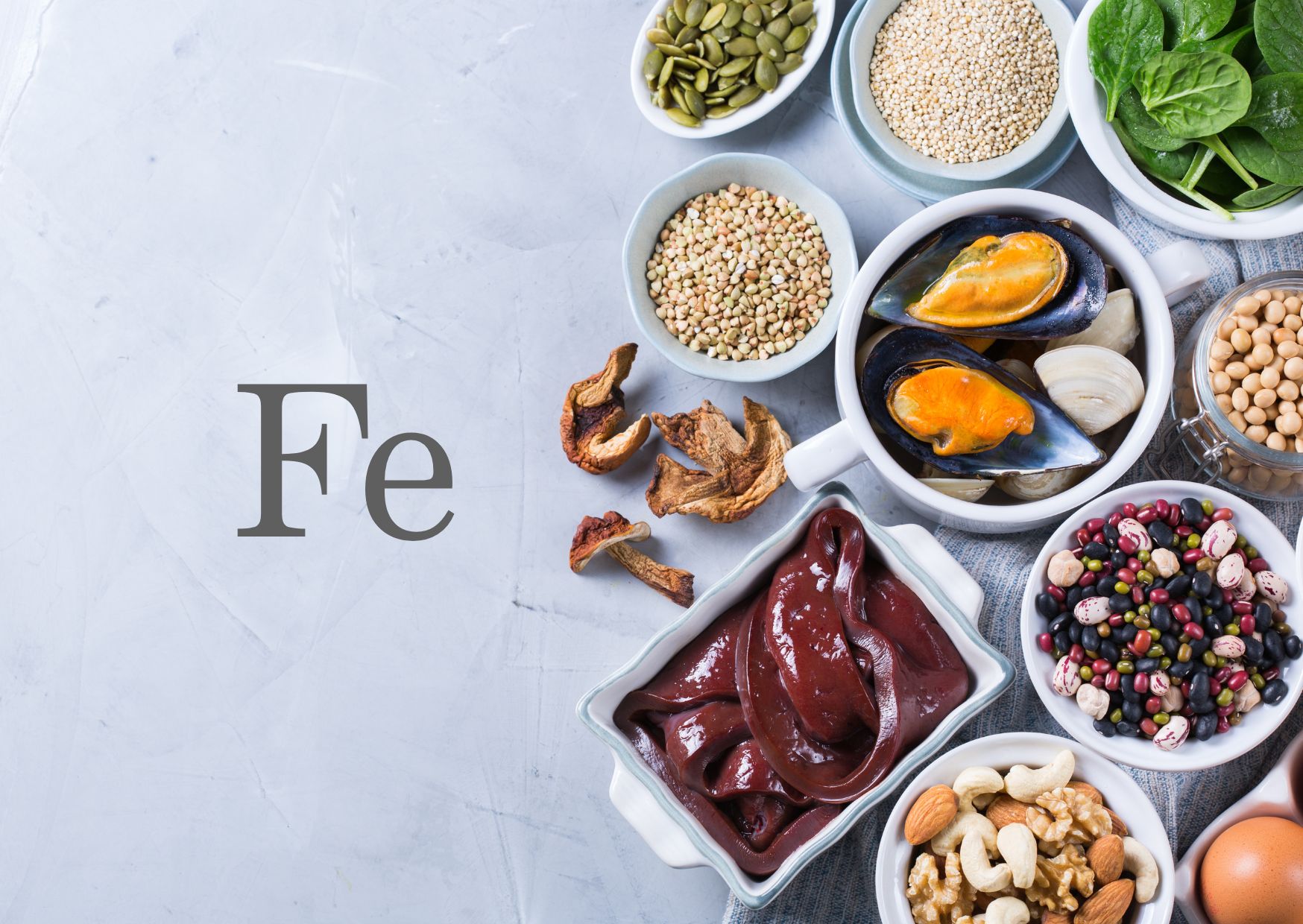
To replace the iron your body loses daily, you must source it from your plate, but your gut handles plant and animal foods completely differently. Animal sources like red meat, liver, and oily fish deliver heme iron, which arrives pre-packaged in a highly soluble form that your gut absorbs effortlessly, like an express delivery.
On the other hand, plant sources like lentils, pumpkin seeds, and spinach deliver non-heme iron, which wears a chemical disguise that makes it highly insoluble and difficult for your body to absorb on its own.
FAQs
Why do we need iron in our daily diet?
Your body cannot manufacture iron from scratch, and it loses small amounts every day through normal cell shedding. Because iron controls your oxygen delivery and cellular energy production, you must replace it through food to keep your internal power grid from shutting down.
What are the main symptoms of running low on iron?
When your internal iron stores start running low, the classic warning signs include persistent fatigue that sleep won’t fix, sudden brain fog, brittle nails, feeling unusually cold, and diffuse hair shedding as your body channels its remaining resources away from your scalp.
Is iron an animal or a plant nutrient?
Iron exists in both, but they behave differently. Animal iron (heme) comes pre-packaged in a highly soluble form that your gut absorbs easily. Plant iron (non-heme) wears a structural disguise that requires strong stomach acid and helper nutrients like Vitamin C to unlock.
What happens to my body if my iron levels are low?
Your body struggles to transport oxygen, which gradually drains your energy and leads to a condition called iron deficiency anemia.
What are the most common symptoms of an iron deficiency?
You will typically experience extreme fatigue, lethargy, shortness of breath, dizziness, heart palpitations, and a noticeably pale complexion.
Are there any hidden signs of low iron?
Yes, severe deficiency can cause brittle nails, hair loss, mouth sores or ulcers, difficulty concentrating, and itchy skin.


About the Author: Dani
Gluten-Free Recipes | Gut Health | Metabolic Health
Hi! I’m Dani, a Human Nutrition graduate with a strong interest in lifestyle medicine, gut health, metabolic health, UPF-free, whole-food, and gluten-free cooking. Your visit means the world to me!
I share simple recipes, nutrition tips, lifestyle experiences, and insights into living with food intolerances.