
B12 Deficiency: Symptoms, Causes, and Foods

Vitamin B12, also known as cobalamin, might be small, but its impact on our overall health is enormous. From energy production and brain function to mood regulation and nerve health, Vitamin B12 plays an essential role. Today, we’re exploring why B12 matters, what happens if you don’t get enough, and how to ensure your diet provides adequate amounts.
What Is Vitamin B12 and Why Is It Important?
Vitamin B12 deficiency can affect energy, red blood cells, nerves, memory, mood, and everyday concentration. Low B12 can be easy to miss at first because the symptoms often build slowly and may look like stress, poor sleep, low iron, thyroid issues, or general burnout.
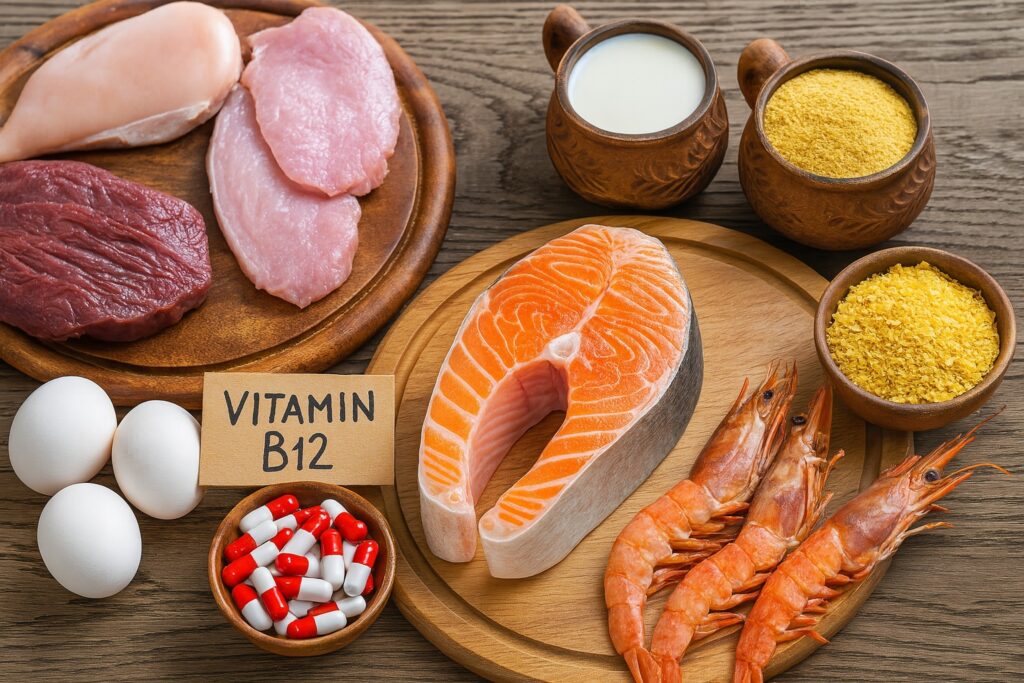
Vitamin B12 is naturally found in animal foods such as fish, meat, eggs, poultry, and dairy. It can also be added to fortified foods such as breakfast cereals, plant milks, and nutritional yeast. According to the NIH Office of Dietary Supplements, B12 supports red blood cell formation, DNA production, and normal nervous system function.
This article explains vitamin B12 deficiency symptoms, common causes, how B12 is absorbed, the best vitamin B12-rich foods, and when testing may be necessary. However, if tiredness is part of the bigger picture for you, my guide to midlife fatigue and possible causes may also help you look beyond one single nutrient.
This post may contain affiliate links. If you make a purchase through these links, I may earn a small commission at no extra cost to you. I only recommend products I personally use and trust. Thank you for your support!
What Is Vitamin B12?
Vitamin B12, also called cobalamin, is a water-soluble vitamin involved in red blood cell formation, DNA production, and normal nerve function.
Your body does not make vitamin B12, so it has to come from food, fortified foods, or supplements. Animal foods are the main natural sources. Fish, seafood, meat, poultry, eggs, milk, yogurt, and cheese all provide B12 in different amounts.
One important point needs correcting: although B12 is water-soluble, the body can store it, mainly in the liver. The NIH Office of Dietary Supplements explains that the body stores around 1–5 mg of vitamin B12, which is why deficiency symptoms can take several years to appear.
This slow timeline is one reason low B12 can be confusing. You may not notice a sudden change. Instead, symptoms can creep in as tiredness, brain fog, tingling, low mood, mouth soreness, or reduced stamina.
Vitamin B12 Deficiency Symptoms
Vitamin B12 deficiency can affect the blood, nerves, brain, mouth, digestion, mood, and energy. The symptoms can develop gradually and may overlap with other nutrient deficiencies or health conditions.
Low B12 may contribute to physical symptoms:
- tiredness and weakness
- pale or slightly yellow skin
- shortness of breath or palpitations linked with anemia
- sore tongue
- mouth ulcers
- reduced appetite
- unintentional weight changes
Also, B12 supports normal nerve function. When levels fall, some people notice:
- numbness or tingling in the hands and feet
- pins and needles
- balance problems
- muscle weakness
- difficulty walking normally
- memory changes
- confusion or brain fog
- vision changes
Low B12 may also show through mood and mental clarity, and concentration symptoms:
- low mood
- irritability
- difficulty concentrating
- feeling mentally slower than usual
These symptoms do not prove B12 deficiency on their own. Low iron, folate deficiency, vitamin D deficiency, thyroid issues, medication effects, sleep problems, chronic stress, and blood sugar swings can create similar patterns. If sleep and tiredness are also part of your picture, you may find my article on midlife sleep problems and solutions a useful starting point.
What Causes Vitamin B12 Deficiency?
Vitamin B12 deficiency usually develops through one of two routes: low intake or poor absorption.
Low intake is more likely when someone follows a vegan or vegetarian diet without reliable fortified foods or supplements. B12 is naturally found in animal foods, so plant-based diets need a planned source.
Poor absorption can happen even when the diet contains enough B12. The Cleveland Clinic explains that stomach acid helps release B12 from food, and intrinsic factor helps the body absorb it. If stomach acid, intrinsic factor, or the small intestine is affected, B12 status can fall.
Common causes and risk factors include:
- vegan or vegetarian diets without reliable B12 sources
- older age
- reduced stomach acid
- gastritis
- pernicious anemia
- celiac disease
- Crohn’s disease
- gastrointestinal surgery, including weight-loss surgery
- long-term metformin use
- long-term use of proton pump inhibitors or H2 blockers
- high alcohol intake
- pregnancy or breastfeeding with low B12 intake
The Mayo Clinic also notes that B12 is found in poultry, meat, fish, and dairy, and that some foods are fortified with it.
How Vitamin B12 Absorption Works
B12 absorption is more complicated than simply eating a B12-rich food. First, stomach acid helps release vitamin B12 from the protein in food. Then B12 binds to intrinsic factor, a protein made in the stomach. This B12–intrinsic factor complex travels through the digestive tract and is absorbed later in the small intestine.
This mechanism explains why some people can eat enough B12 but still develop low levels. The issue may lie in digestion and absorption rather than in food choices. For example, pernicious anemia affects intrinsic factor.
Be aware of the following:
- Celiac disease and Crohn’s disease can affect the small intestine
- Long-term acid-reducing medication, such as omeprazole, can reduce stomach acid
- Metformin can also affect B12 status in some people
Vitamin B12 Foods
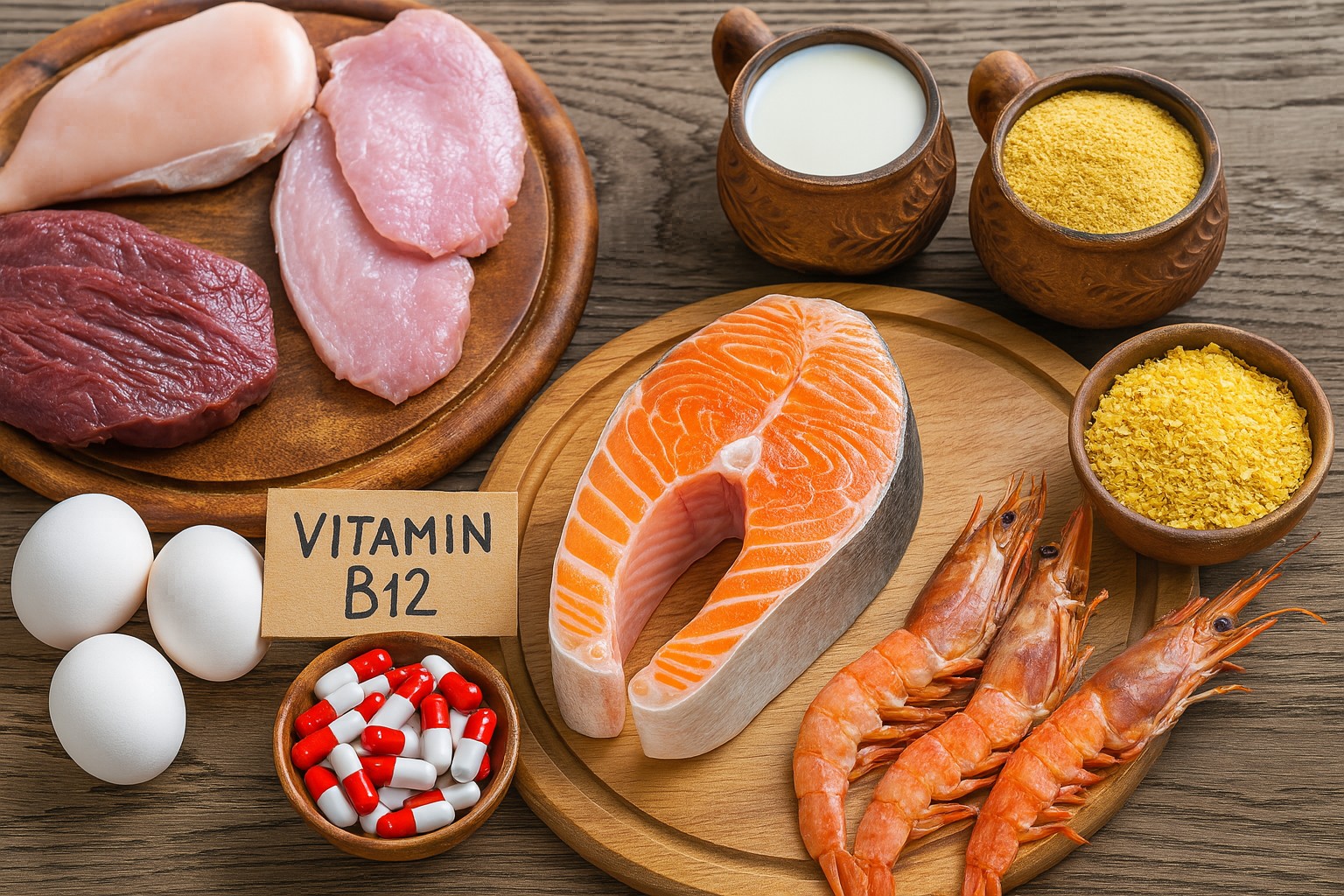
The best natural sources of vitamin B12 come from animal sources. Useful options include fish, seafood, meat, poultry, eggs, milk, yogurt, and cheese.
For a food-first diet, I would focus on real meals rather than chasing one isolated nutrient. A B12-supportive plate could include eggs at breakfast, fish for dinner, chicken or turkey in soups and stews, yogurt if tolerated, or small amounts of liver eaten occasionally.
If you are lactose intolerant but not dairy-allergic, lactose-free yogurt, hard cheese, and long-fermented yogurt may still work, depending on your tolerance. My Bulgarian yogurt recipe shows how fermented dairy can fit into a low-lactose life.
If you follow a vegan diet, B12 needs more planning. Use reliable fortified foods such as fortified plant milks, fortified breakfast cereals, or fortified nutritional yeast, or speak with a healthcare professional about supplementation. Nutritional yeast provides B12 only if it’s fortified, so always check the label.
Vitamin B12, Celiac Disease, and a Gluten-Free Diet
This matters most in celiac disease. Before diagnosis, damage to the small intestine can reduce nutrient absorption. In my Newly Diagnosed Celiac Guide, I include vitamin B12 and folate among the nutrients worth checking in the first year after diagnosis.
The main gluten-free issue is food quality. Many gluten-free packaged foods rely on refined starches and may not offer the same nutrient profile as whole-food meals. While these foods are convenient and perfectly fine occasionally, the foundation of a gluten-free diet should focus on nutrient-dense foods: eggs, fish, poultry, meat, yogurt (if tolerated), legumes, vegetables, fruit, nuts, seeds, and naturally gluten-free whole grains.
Food-First Ways to Support Vitamin B12 Intake
1. Add eggs to simple meals
Eggs are an amazing food, and in a gluten-free kitchen, they bring protein, structure, and vitamin B12 into quick meals. For breakfast, brunch, or a light lunch, my gluten-free mini quiche and shakshuka recipe are practical options when you want something savory, warm, and filling.
2. Include fish and seafood when you can
Fish and seafood are natural sources of vitamin B12 and provide protein and other micronutrients. If you want something more special than a plain fillet, my creamy garlic prawns with mushrooms can work as a higher-protein dinner with plenty of flavor.
3. Use poultry and meat in proper meals, not just snacks
Chicken, turkey, pork, and beef can all contribute to B12 intake. Meals such as Bulgarian moussaka give you a more complete plate with protein, vegetables, and comfort-food satisfaction.
4. Consider liver occasionally, not daily
Liver is one of the richest natural sources of vitamin B12, iron, folate, and vitamin A. My chicken liver with rice and vegetables is a good example of using liver as a traditional, nutrient-dense meal rather than a supplement-style food. Liver is very high in vitamin A, so it belongs in the diet occasionally and in sensible portions.
5. Use yogurt if it suits your tolerance
For people who tolerate lactose-free or long-fermented dairy, yogurt can provide small amounts of B12, along with protein, calcium, and the benefits of fermented foods. My 24-hour Bulgarian yogurt is part of my rotating recipes, and it gives me live bacteria that support a healthy gut.
6. Keep plant-based diets honest about B12
A plant-based diet can be rich in fiber, polyphenols, legumes, vegetables, nuts, and seeds, but it still needs a reliable B12 source. Fortified foods and supplements are the practical route. If you use fortified nutritional yeast, check that the label clearly lists vitamin B12, and choose gluten-free options when needed.
Foods and Ingredients That Affect Vitamin B12 Absorption
Certain dietary choices can enhance or impair Vitamin B12 absorption:
- Enhancers:
- Vitamin C-rich foods can indirectly help maintain stomach acid levels, which are necessary for B12 absorption.
- Fermented foods like kefir, sauerkraut, and kimchi help improve gut health, thereby enhancing overall nutrient absorption.
- Suppressors:
- Alcohol consumption can negatively affect B12 absorption.
- Due to tannins, a high intake of coffee or tea may interfere with absorption, especially when consumed close to meals.
When to Ask for a B12 Blood Test
Ask your healthcare professional about testing if you have:
- persistent tiredness or weakness
- numbness, tingling, or pins and needles
- balance changes
- memory problems or confusion
- a sore tongue or repeated mouth ulcers
- anemia
- diagnosed with celiac disease, Crohn’s disease, or other digestive conditions
- a vegan diet without reliable fortified foods or supplements
- long-term metformin use
- long-term use of acid-reducing medication
- a history of gastrointestinal surgery
Testing may include serum B12, a full blood count, folate, ferritin, and sometimes methylmalonic acid or homocysteine, depending on symptoms and local practice. Your healthcare professional can advise what is appropriate for your situation.
Vitamin B12 Supplements: What to Know
Vitamin B12 supplements can be helpful when intake is low, especially in vegan diets and vegetarian diets with low dairy or egg intake. I always recommend testing your levels and consulting a professional before taking supplements.
B12 may also be prescribed or recommended when absorption is the issue. In some cases, B12 injections or high-dose oral B12 may be used under medical guidance.
I sometimes use fortified nutritional yeast as a savory pantry ingredient because it adds a cheesy flavor to soups, sauces, salads, and egg-free meals.
FAQs
What are the first symptoms of vitamin B12 deficiency?
Early symptoms can include tiredness, weakness, brain fog, low mood, tingling in the hands or feet, mouth ulcers, or a sore tongue. These symptoms can overlap with other issues, so testing is the safest route.
Can vitamin B12 deficiency cause tingling?
Yes. Low B12 levels can affect the nervous system and may cause tingling, numbness, pins and needles, balance problems, or difficulty walking. These symptoms should not be ignored.
Can you have B12 deficiency without anemia?
Yes. Neurological symptoms can appear even when anemia is not obvious. This is one reason B12 status should not be judged only by tiredness or a blood count.
What foods are highest in vitamin B12?
Vitamin B12 is naturally found in fish, seafood, meat, poultry, eggs, milk, yogurt, and cheese. The liver is especially rich in B12 and also high in vitamin A, so it is best eaten occasionally.
Do vegans need vitamin B12 supplements?
A vegan diet requires a reliable source of B12, either from fortified foods or supplements. Plant foods are not dependable natural sources of vitamin B12.
Does gluten-free eating increase the risk of low B12?
Yes, some gluten-free products are less fortified, untreated celiac disease can cause nutrient malabsorption, and heavy reliance on refined gluten-free starches can strip minerals and vitamins during processing.
If you are gluten-free because of celiac disease, previous small-intestinal damage may reduce B12 absorption. A strict gluten-free diet supports gut healing, but it’s worth checking B12, folate, iron, and zinc if fatigue, anemia, tingling, mouth soreness, or brain fog persist.
Can vitamin B12 give me more energy?
B12 may help with tiredness if it is linked to low B12 or deficiency. Taking extra B12 when levels are already normal is unlikely to work like an energy booster. Persistent tiredness needs a wider look at B12, iron, folate, vitamin D, thyroid function, sleep, stress, and overall food intake.
Further Reading: A Book That Made Me Look More Closely at B12
I recently read Could It Be B12? An Epidemic of Misdiagnoses, and it stayed with me because it highlights how easily low B12 can be overlooked when symptoms are vague, slow-building, or scattered across different parts of the body.
Fatigue, tingling, numbness, mouth soreness, memory changes, low mood, and anemia can each have multiple possible causes. That is exactly why B12 is worth taking seriously and why testing matters.
I treat this book as a thought-provoking read. For me, its value lies in the case-story style and the reminder that symptoms deserve proper investigation, especially when they don’t fit neatly into one box.
If you enjoy health books that prompt you to ask better questions about your own well-being, this is a useful one to add to your reading list.
In Summary
Vitamin B12 is a small nutrient with a wide reach. It supports red blood cell production, DNA synthesis, nerve function, mood, memory, and everyday energy. The route is simple: include reliable B12-rich foods if they fit your diet; use fortified foods or supplements if you are plant-based; check labels if you are gluten-free; and ask for testing if you have symptoms or risk factors.
Thank you for reading!