
Artificial Sweeteners: The Sugar-Free Health Halo We Need to Question

Artificial sweeteners are one of the cleverest tricks of modern food technology: a sweet taste with little or no sugar, little or no energy, and usually no direct rise in blood glucose.
On paper, it looks perfect. In reality, the human body sees things in biochemical language.
For most of human history, sweetness was found within food structures. The body had to chew, digest, absorb, and respond to the whole package. Taste came together with texture, water, fiber, organic acids, minerals, and other compounds that shaped digestion and appetite. Artificial sweeteners change that pattern completely. They deliver a strong sweet signal without the same food matrix, which alters the metabolic response.
While artificial sweeteners may be a genuine replacement for people managing diabetes or reducing high sugar intake, they may help someone move away from sugary drinks. They may make occasional sweet foods easier for someone who needs tighter glucose control. That is a really safe board, and it deserves respect.

But The Modern “Sugar-Free” Halo Has Gone Too Far
Keto snacks, diet drinks, protein bars, low-carb desserts, and “zero sugar” products often make artificial sweetness look like a health upgrade. Many sugar-free products are also ultra-processed, which makes the choice even more mindful. For healthy people using them daily, the long-term benefit is much harder to justify.
The World Health Organization reviewed the evidence and advised against using non-sugar sweeteners as a long-term strategy for weight control or for reducing the risk of chronic disease in the general population. The recommendation does not apply to people with existing diabetes, because diabetes management was outside the scope of that guideline.
The problem with the sugar-free health halo is that it narrows the conversation to sugar and calories. In contrast, metabolic health is shaped by a much wider pattern: blood glucose, insulin, liver metabolism, appetite, cravings, sleep, movement, and daily food habits.
Quick Answer: Are Artificial Sweeteners Healthy?
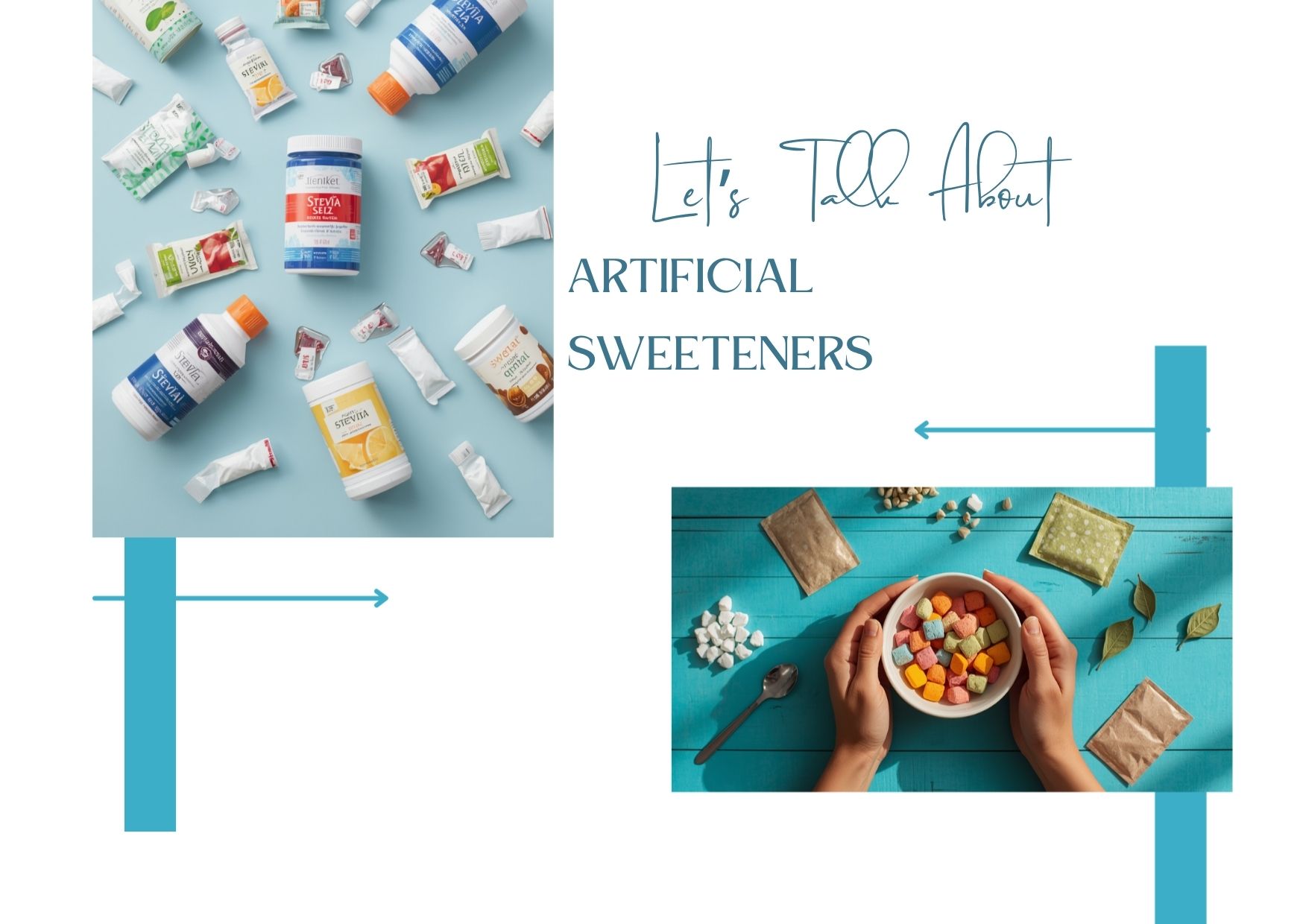
Artificial sweeteners, also called non-nutritive sweeteners, low-calorie sweeteners, or non-sugar sweeteners, are used to replace sugar while keeping a sweet taste.
Most do not raise blood glucose directly like sugar, which is why they can be useful for some people with diabetes. The FDA says sweeteners such as aspartame, sucralose, and stevia-derived substances contribute few or no calories and generally do not raise blood sugar levels.
The long-term picture is less comfortable. WHO found no clear long-term benefit for body fatness and reported possible undesirable long-term associations with type 2 diabetes, cardiovascular diseases, and mortality in adults. The evidence is of low certainty, so it does not prove a direct cause. It still challenges the idea that daily artificial sweetness is a harmless health strategy.
My position is simple: artificial sweeteners can be useful tools in specific situations, especially diabetes management or short-term sugar reduction, for healthy people using them daily, because a product is “keto,” “diet,” or “sugar-free,” the health halo needs to be questioned.

What Are Artificial Sweeteners?
Artificial sweeteners are ingredients added to foods and drinks to create sweetness without the same amount of sugar or energy as table sugar.
Common names include:
- aspartame
- sucralose
- saccharin
- acesulfame potassium
- cyclamate, depending on the country
- neotame
- steviol glycosides
- monk fruit extracts
- sugar alcohols such as erythritol, xylitol, sorbitol, and maltitol
Technically, sugar alcohols are a slightly different group because they can contain carbohydrates and calories. Polyols, including erythritol and xylitol, have fewer calories and less effect on blood glucose than sucrose, but they are still handled differently from non-nutritive sweeteners. Diabetes UK also notes that “non-nutritive” and “artificial” sweeteners are often used interchangeably.
Some sweeteners are synthetic, while some come from plants but are purified, concentrated, or processed into food additives. These are marketed as “natural” because of their origin, but the body still processes them as intense sweeteners rather than as whole foods. In these cases, however, the word “natural” can be misleading.
Sweetness Without the Food Matrix
The food matrix is the natural structure of food: texture, water, fiber, protein, fat, minerals, organic acids, plant compounds, and physical form working together. From a food matrix perspective, artificial sweeteners are unusual because they deliver sweetness without the natural structure that normally accompanies it in food. That is where they connect with the wider metabolic health conversation, especially appetite, cravings, insulin response, and long-term eating habits.
A whole sweet food arrives with structure. It has volume and requires chewing. It reaches the gut via multiple signals and involves digestion.
This is the part that “sugar-free” marketing usually ignores. A product can contain no sugar and still train the palate toward intense sweetness. A drink can avoid glucose yet still taste sweet and be consumed several times a day. A keto dessert can avoid refined sugar and still keep the habit of needing dessert-level sweetness after every meal.
The human body did not develop around this kind of isolated sweetness. The mouth tastes sweet. The gut may encounter a substance it does not process, such as sugar, and the microbiome may respond differently. The brain may keep expecting strong sweetness as normal. Appetite and food choices can follow that signal.
How the Body Manages Artificial Sweeteners
Artificial sweeteners do not all follow the same route through the body. Some are absorbed and leave the body in the urine, mostly unchanged. Some remain mainly in the gut and are excreted in stool. Some are broken down into smaller compounds before absorption. Some require gut bacteria before the body can process and clear them.
You might think that you can trick your body with “no sugar,” “no biological interaction.” There is the truth.
Aspartame is broken down during digestion into smaller compounds before absorption. Sucralose is not absorbed to a large extent, so a large amount passes through the gut. Steviol glycosides require gut bacteria to be converted before absorption and excretion. Erythritol behaves differently again because it is a sugar alcohol; most of it is absorbed into the bloodstream and leaves mainly unchanged in urine.
Most artificial sweeteners do not raise blood glucose levels directly like sugar does, which is why they can look attractive through a narrow glucose lens. But blood glucose is only one part of the story, and the glycemic index and glycemic load explain why carbohydrate response depends on more than sweetness alone.
The body also works through taste receptors, appetite signals, gut hormones, microbial metabolism, liver handling, insulin sensitivity, and long-term food habits. This is where the “it has zero sugar, so it is fine” message becomes too shallow.
Safety Approval and Nutritional Value Are Different Questions
The sugar conversation starts with refined sugar vs. natural sugar, as the body responds to the whole-food structure around sweetness. Artificial sweeteners push the same question into sharper territory: what happens when the sweetness stays, but the food matrix disappears?
Food safety authorities assess approved artificial sweeteners, and acceptable daily intake levels are set for their regulated use. But nutrition asks a different question: what does this ingredient contribute to the body and to long-term food habits? Artificial sweeteners can reduce sugar and calories. They can support short-term sugar reduction. They can help people avoid a sharp rise in blood glucose when replacing sugar.
Artificial sweeteners can remove sugar from the label, but they do not replace the food matrix that normally comes with sweetness in whole foods. The body may process, absorb, or excrete them differently from sugar, yet the sweet signal still has biological meaning. When used often, especially in highly processed products, they can keep sweetness at the center of the eating pattern without improving the food’s quality.
WHO About Artificial Sweeteners: Long-Term Use
This is the interesting part. In 2023, the WHO recommended that non-sugar sweeteners not be used for weight control or to reduce the risk of noncommunicable diseases in the general population. The recommendation was conditional because the overall certainty of the evidence was low.
Short-term randomized trials showed some reduction in sugars, energy intake, body weight, and BMI, with most trials lasting three months or less. These trials did not show significant effects on several intermediate cardiometabolic markers, including fasting glucose, fasting insulin, and blood lipids.
Long-term prospective observational studies show something different. Higher intakes of non-sugar sweeteners were associated with higher BMI, incident obesity, type 2 diabetes, cardiovascular diseases, cardiovascular mortality, and all-cause mortality in adults, with average follow-up around 13 years.
People with higher weight, prediabetes risk, or existing metabolic concerns may be more likely to choose diet drinks and sweeteners. That can create reverse causation. WHO acknowledged this uncertainty and still took a conservative position because the long-term benefits were not convincing and the possible adverse associations were serious.
Artificial Sweeteners and Blood Glucose
Most artificial sweeteners do not raise blood glucose levels as sugar does. For instance, people with diabetes can use most artificial sweeteners, as they provide sweetness without the calories of sugar and do not affect blood sugar in the same way sugar does.
The sweetener is the only ingredient. A “sugar-free” product may still contain refined starches, fats, emulsifiers, gums, or other ingredients that shape the overall metabolic response. A food label can say “zero sugar” even if the product still fits a highly processed eating pattern.
This is why glycemic index and glycemic load help explain one piece of the story, but they cannot answer the whole question. GI and GL focus on blood glucose response to carbohydrate-containing foods. Artificial sweeteners raise a different question: what happens when sweet taste keeps arriving without sugar and without food structure?
Artificial Sweeteners and the Gut Microbiome
The gut microbiome turns this topic from simple into fascinating. For years, many artificial sweeteners were described as metabolically inert. That word sounds clean, but the gut is not an empty pipe. It is full of microbes, receptors, immune signals, fermentation pathways, and chemical conversations.
A 2022 randomized controlled trial in Cell studied 120 healthy adults who did not typically consume non-nutritive sweeteners. Participants consumed saccharin, sucralose, aspartame, or stevia for two weeks, at doses below the acceptable daily intake.
The study reported sweetener-specific changes in the oral and gut microbiome. Saccharin and sucralose also impaired glycemic responses in some participants, and the effects appeared personalized and microbiome-dependent. It means artificial sweeteners are not always biologically silent.
The same sweetener may interact differently depending on a person’s existing microbiome. This fits directly with the gut microbiome conversation, because gut microbes help shape digestion, immune communication, short-chain fatty acid production, and metabolic signaling.
For me, this is the real warning: the long-term daily use of artificial sweeteners is outpacing our understanding of how repeated exposure affects the gut ecosystem.
Erythritol and Cardiovascular Risk
Erythritol has its own section because it is widely used in keto and sugar-free products.
Erythritol is a sugar alcohol, or polyol. It usually has little direct effect on blood glucose, which makes it attractive in low-carb and keto products. The cardiovascular concern lies elsewhere: blood levels, platelet activity, and clotting potential.
A 2023 Nature Medicine study found that higher circulating erythritol levels were associated with a higher three-year risk of major adverse cardiovascular events, including death, nonfatal heart attack, or stroke. In validation cohorts, people in the highest erythritol quartile had a higher risk compared with those in the lowest quartile.
The same paper reported that erythritol enhanced platelet reactivity and thrombosis formation in experimental work, and that a pilot intervention in eight healthy volunteers raised blood erythritol levels above thresholds linked with heightened platelet reactivity.
A 2024 Cleveland Clinic-led human study also reported a higher risk of blood clotting after healthy participants consumed a drink sweetened with 30 g of erythritol compared with a drink sweetened with glucose.
Higher circulating erythritol can come from diet, but the body can also produce erythritol internally through metabolic pathways. People with existing metabolic disruption may already have higher circulating erythritol. So this is not final proof that eating erythritol causes cardiovascular disease.
Still, the signal is too important to brush away. A sweetener can look excellent through a blood-glucose lens and still raise questions through a cardiovascular lens. That is why erythritol-heavy keto products should not be sold to healthy people as a free pass.
Artificial Sweeteners and Diabetes
For people living with diabetes, artificial sweeteners are a life-saving necessity. They are an essential tool that allows sweetness without the same glucose load as sugar.
A sugary drink, dessert, or sweetened product can quickly raise blood glucose. A non-nutritive sweetener can provide sweetness while reducing carbohydrate intake, making everyday food choices more manageable for someone who has to monitor blood glucose levels repeatedly.
Diabetes UK states that non-nutritive sweeteners can help reduce overall carbohydrate and calorie intake when used instead of sugar in normal life without the same immediate glucose burden.
So, here the message is not addressed to people using sweeteners for diabetes management. It is aimed at the health halo around “sugar-free,” “keto,” and “zero calorie” products, which healthy people use daily as if they are automatically supportive of gut health, metabolic health, and long-term food quality.
Keto Products and the Sugar-Free Health Halo
The keto trend is everywhere, and marketing often uses sugar-free sweeteners as proof that a product is healthy. The logic sounds neat: no sugar, low carb, no glucose spike, therefore better.
Human biology does not follow marketing logic. When keto desserts, zero-sugar chocolate bars, and low-carb snacks become daily habits, the issue is no longer only sugar or carbohydrates. The sweet taste remains highly present, the palate stays trained for intensity, and packaged products can become the default answer to cravings.
A sweetener may avoid glucose, but it can still influence taste preferences, gut exposure, appetite signals, and eating rhythms.
A person with diabetes may use artificial sweeteners for a clear glucose-management reason. A healthy person eating erythritol-sweetened snacks every day because “it’s keto” is a choice. The health halo turns a tool into a habit. And that is the part I would cut through without apology.
The Long-Term Question
The strongest warning is simple: we do not know enough about the effects of decades of daily exposure to artificial sweeteners in modern eating patterns. The human body has evolved and adapted over millions of years.
We know approved sweeteners are assessed for safety within intake limits. We know many do not raise blood glucose directly. We know they can reduce sugar and calories in short trials.
We also know that longer-term prospective cohort studies showed a different pattern: higher non-sugar sweetener intake was associated with higher BMI, a 76% higher risk of obesity, a 23% higher risk of type 2 diabetes, a 12% higher mortality risk, and a 19% higher stroke risk.
These are associations, so they cannot prove direct cause, but they were strong enough for the WHO to advise against using non-sugar sweeteners as a long-term weight-control or disease-prevention strategy in the general population. That is enough reason to question the “harmless sugar-free”.
Nutrition history is full of ingredients that looked clever in one narrow measurement but proved messier when the whole-body picture came into view. Artificial sweeteners may reduce sugar. They do not replace the biological intelligence of food structure.
The Food Matrix View
From a food-matrix perspective, artificial sweeteners are modern sweetness without the original biological package. For occasional use, that may be fine. For medical use, it may be helpful. For daily use in healthy people, it deserves scrutiny.
The body may clear many artificial sweeteners without turning them into glucose, but the mouth, gut, brain, microbes, and appetite system still receive a signal. And believe me, your body recognizes your tricks.
My Position
I would not present artificial sweeteners as poison, nor as harmless. They have engineered helpful tools for people in need. Not for healthy people to follow trends.
For diabetes management, reducing high sugar intake or moving away from sugary drinks can have a practical place. For healthy people using them every day under the “keto,” “diet,” or “sugar-free” halo, the long-term case is weak.
The better direction is to reduce the need for intense sweetness and rebuild the diet around food structure. The body understands structure more than labels.
Thank you for reading!
YourDani x x
FAQs
Are artificial sweeteners bad for you?
Approved artificial sweeteners are considered safe within regulated intake limits, but safety approval does not make them nutrition upgrades. The main concern is long-term daily reliance, especially in healthy people using sugar-free or keto products without a medical need.
Do artificial sweeteners raise blood sugar?
Most artificial sweeteners do not raise blood glucose levels directly as sugar does. This can be useful for some people with diabetes. The complete question is: how does repeated exposure to sweet taste affect appetite, gut microbes, insulin sensitivity, and daily food habits?
Do artificial sweeteners affect the gut microbiome?
Some human research suggests they can. A controlled trial found that saccharin, sucralose, aspartame, and stevia changed the oral and gut microbiome in sweetener-specific ways, with saccharin and sucralose affecting glycemic response in some people.
Is erythritol safer than sugar?
Erythritol usually has little direct effect on blood glucose, but recent cardiovascular research has raised questions about circulating erythritol, platelet reactivity, and clotting risk. The evidence is not definitive proof of harm from dietary erythritol, but it is sufficient to avoid treating erythritol-heavy keto products as inherently safe for daily use.
Should healthy people use artificial sweeteners every day?
I would not recommend daily reliance for healthy people. The stronger long-term goal is to reduce the need for intense sweetness and improve the overall food pattern, rather than keeping the same sweet habit under a sugar-free label.



About the Author: Dani
Integrative nutritionist | BSc (Hons) Human Nutrition | Metabolic and gut Health
Hi! I’m Dani, BSc (Hons) Human Nutrition with a strong interest in lifestyle medicine, gut health, metabolic health, UPF-free, whole-food, and gluten-free cooking. Your visit means the world to me!
I share simple recipes, nutrition tips, lifestyle experiences, and insights into living with food intolerances.