

Detox Myths and Facts or How Amazing Your Body Is

Have you ever been tempted by a detox recipe, a green smoothie, or even a bottle of green pills promising to “cleanse” your body after a few days of indulgence, just like after your holiday or after Christmas?
I certainly have. At one point, the idea of undoing food “sins” with a quick reset felt comforting, almost logical. But the deeper I dig into nutrition science, the clearer it becomes that this promise doesn’t align with how the body actually works, and that real support for health looks far less dramatic than the detox industry suggests. So, let’s go down the rabbit hole to find out what detox is and debunk some myths.
What is The Human Body Detoxification?
“How do I detox?” and “Are my detox organs and pathways supported well enough to do their job?” are two different things. Health organizations consistently point out that commercial detox diets tend to overpromise, use vague language about “toxins,” and are not grounded in robust science.
The British Dietetic Association notes that many detox diet claims are exaggerated and that any benefits are usually short-lived, whereas a healthy, varied diet and lifestyle are the sustainable foundation. The British Heart Foundation similarly states that, as there’s no evidence that toxins “build up” as detox marketing suggests, restrictive detox approaches can miss essential nutrients your body needs. The British Liver Trust goes further: you cannot “physically detox your liver,” and some “liver detox” diets can be dangerous, particularly for people with liver disease.
So if you are looking for detox in an evidence-based way, the most accurate frame is this: your body already detoxifies via the liver, kidneys, gut, lungs, and skin, supported by blood flow, enzymes, and adequate nutrition. Your role is not to “flush toxins” but to reduce avoidable burdens and supply the raw materials these systems need.
What is Liver Detox Function?
The Liver: Your Master Chemist, Not a Filter You Can “Cleanse”
The liver is often described as a filter, but it is better understood as a biochemical processing hub. It transforms compounds so they can be safely used, stored, neutralized, or excreted. That includes alcohol, medications, environmental chemicals, and normal metabolic by-products.
Phase 1 and Phase 2 Detoxification
So, there is some science. A key concept here is biotransformation, typically discussed in terms of Phase I and Phase II reactions. Phase I reactions include oxidation, reduction, and hydrolysis and are heavily associated with the cytochrome P450 enzyme family, which helps convert fat-soluble compounds into more reactive intermediates. Phase II reactions then “conjugate” those intermediates by attaching polar groups (e.g., glucuronic acid, sulfate, or glutathione) to make them more water-soluble, thereby supporting elimination via bile or urine.
Ok, Let’s Talk About How Food Supports Liver Detox Function
In The Disease Delusion, Dr. Jeffrey Bland explains that certain whole foods can support liver detoxification by influencing specific biochemical pathways, rather than by “cleansing” the liver. He highlights foods such as cruciferous vegetables, soy, kale, cranberries, green tea, and culinary herbs and spices, including turmeric and rosemary, noting that these contain bioactive compounds that enhance glucuronidation, a key Phase II detoxification process.
This pathway helps the liver package substances for safe excretion via bile or urine. Dr. Bland emphasizes that these foods work by communicating with genes involved in detoxification, selectively activating enzyme systems rather than forcing toxin removal, reinforcing the idea that liver support is about providing the proper nutritional signals, not performing a cleanse.
This is why simplistic “liver cleanse” narratives miss the point. Your liver is not a sponge that gets clogged with toxins. It is an adaptive organ that runs enzyme-driven pathways that depend on overall health, adequate energy and protein intake, micronutrient sufficiency, and a manageable exposure load. The British Liver Trust explicitly cautions that “detoxing the liver” is not a real physiological process and that these diets can be risky.
Detox Myths and Facts Liver Cleansing Edition
Myth: The liver stores toxins and needs to be cleansed or flushed.
Fact: The liver does not store toxins as detox marketing suggests. It continuously transforms substances through enzyme-driven processes so they can be safely excreted.
The more practical liver-support message is boring in the best way: maintain a healthy weight, be physically active, eat a balanced diet, and keep alcohol within low-risk guidance. The British Liver Trust highlights the importance of weight and lifestyle for liver health, including the risk of fatty liver.
The Kidney Detox Function: A Precision Filtration and Balance
If the liver is the chemist, the kidneys are the quality-control and waste-management team. They continuously filter blood, remove waste products and extra fluid, and produce urine. The National Kidney Foundation summarises kidney function as eliminating waste and excess fluid, balancing minerals, supporting blood pressure regulation, and more. The NIDDK explains that healthy kidneys filter blood continuously, removing waste and excess water to make urine that flows to the bladder.
It is tempting to translate this into “drink more water to flush toxins,” but the real physiology is more nuanced. Hydration matters, yet excessive fluid intake does not “supercharge” detoxification in a healthy person; it mainly increases urine volume. Kidney support is better framed as avoiding chronic strain: keeping blood pressure and blood glucose in healthy ranges, moderating sodium and alcohol intake, maintaining a healthy weight, and avoiding unnecessary exposure to substances that can harm the kidneys (including certain medications when misused).
Where kidney function is impaired, the NHS describes dialysis as a method of removing waste products and excess fluid when kidneys cannot do so adequately, which underscores that “detox” is a medical reality only when organs fail, not a wellness trend.
Detox Myths and Facts Kidneys Flushing Edition
Myth: Drinking large amounts of water “flushes toxins” from the kidneys.
Fact: Healthy kidneys filter the blood continuously and regulate waste removal with precision. Excessive fluid intake does not enhance detoxification and may dilute electrolytes. Consistent hydration, blood pressure control, and metabolic health are what protect kidney function.

The Gut and Microbiome: What Leaves Via Poo Matters, Too
A large portion of what your body wants “out” is eliminated through the gastrointestinal tract. The liver packages certain compounds into bile, which enters the gut and is excreted in stool. Fiber plays a meaningful role here because it supports regular bowel movements and helps bind bile acids and other compounds, influencing what is excreted versus what is reabsorbed.
This is also where “detox” language sometimes gets close to something real: if a person is constipated, under-eating, or living on low-fiber, ultra-processed foods, they may feel sluggish, bloated, and uncomfortable. Improving fiber intake, hydration, meal regularity, and overall diet quality can improve symptoms and support regular elimination. That is not toxin “flushing”; it is restoring normal physiology.
Probiotics are often marketed as a detox tool. The NHS position is appropriately cautious: there is some evidence that probiotics may help in specific cases (such as easing certain IBS symptoms), but little evidence supports many broad health claims made about them. Probiotics may be useful for targeted situations, but they are not a universal detox shortcut.
Detox Myths and Facts – Gut Cleansing Edition
Myth: The gut accumulates toxins that need to be purged through detox teas or cleanses.
Fact: The gut eliminates waste through regular bowel movements supported by fiber, fluids, and normal digestive function. Laxative-style detox products do not improve detoxification and may disrupt gut balance over time.
There is no scientific evidence that colon cleansing improves detoxification or health. The colon already eliminates waste naturally, and alternative cleansing procedures may carry risks, including dehydration, electrolyte imbalances, infections, bowel perforation, and worsening of existing digestive conditions. Medical experts advise caution and do not recommend colon cleansing for detox purposes.
Lungs and Skin: Detox is Also Exhalation and Barrier Function
Your lungs eliminate carbon dioxide, a metabolic waste product, every time you breathe. Your skin provides a barrier, supports immune defense, and helps regulate body temperature through sweating. Sweat contains small amounts of minerals and metabolic by-products, but sweating is not an effective route for “detoxing” environmental toxins compared with liver metabolism and kidney excretion.
The most important takeaway: movement, sleep, and stress regulation support healthy breathing patterns, circulation, and inflammatory balance, which, in turn, help the organs do the heavy lifting.
Did you know?
Having spent years working with hair, I’ve always been fascinated by how much it can reveal about the body. As hair grows, it can incorporate trace elements, heavy metals and toxins from the bloodstream. When it naturally sheds or is cut, those substances leave with it.
Even, hair can be a diagnostic tool in medicine. Isn’t it facinating? This is another small example of how intelligently the body handles what has already passed through its systems.
What “Supporting Detox” Looks Like in Real Life: Nutrition Edition
When you strip out the marketing, the evidence-based detox-support plan looks like standard, unglamorous health guidance. The difference is that you explain it through the lens of liver enzymes, kidney filtration, bile flow, and elimination.
A common question at this point is: if the body detoxifies so well, does it really matter what we eat? The answer is yes, not because the body suddenly stops working, but because detoxification has a limit. The liver and kidneys are strong and adaptable. Still, they are not designed to cope with a constant stream of additives, refined sugars, alcohol, and residues from highly processed foods on top of everyday demands.
A balanced dietary pattern matters because detoxification pathways require energy, amino acids, vitamins, and minerals. Extreme restriction, juice cleanses, and very low-calorie plans may reduce protein intake and overall nutrient density, which is counterproductive when Phase I/II metabolism depends on enzyme systems built from amino acids and supported by micronutrients. This is one reason credible organizations warn that detox diets often fail to provide what the body needs.
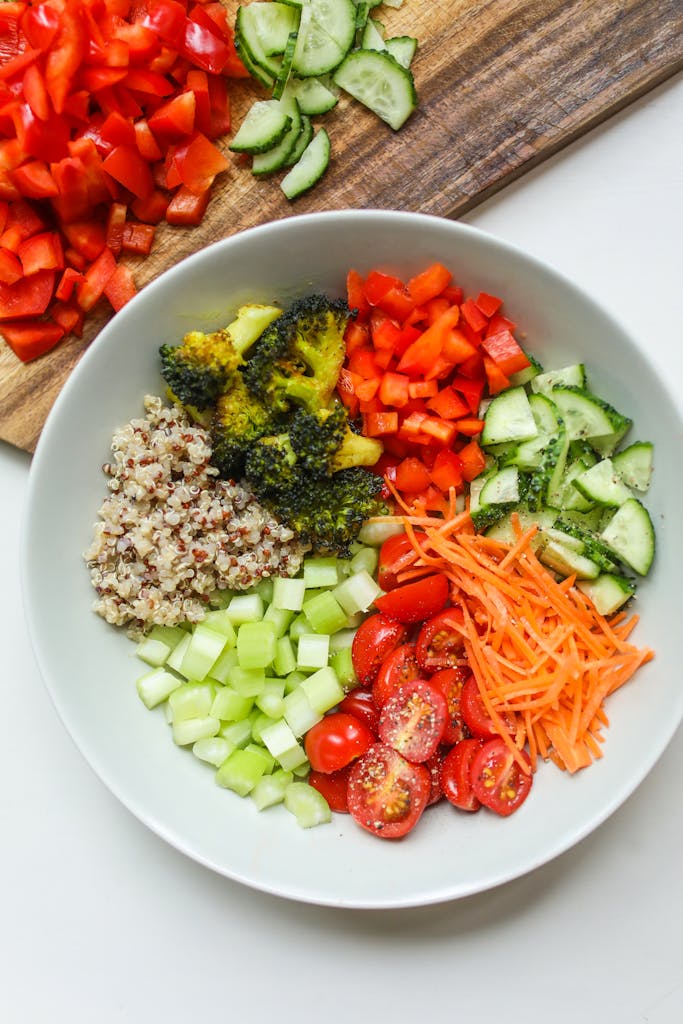
A simple UK-aligned anchor is “5 a day” plus overall balance. The NHS explains what counts toward 5 a day, including typical portion sizes such as 80g fresh/frozen/canned fruit and veg as one portion. Government guidance also reinforces eating at least five portions of a variety of fruit and vegetables daily, aligned with broader healthy eating patterns such as the Eatwell Guide.
From a detox-function angle, this variety matters because plant foods bring fiber and a spectrum of micronutrients and phytochemicals that support normal metabolism and antioxidant defenses, while also improving bowel regularity and overall dietary quality.
Protein deserves a specific mention. While detox trends often push “light eating,” your liver’s metabolic machinery is protein-dependent in the most literal way: enzymes are proteins. Adequate protein also supports glutathione-related pathways, tissue repair, immune defense, and the maintenance of lean mass during weight-loss efforts.
Then there is alcohol, which is one of the most direct, modifiable burdens on liver metabolism. The NHS low-risk drinking guidance advises men and women not to regularly exceed 14 units per week, spreading intake over three or more days if drinking near that level and including drink-free days. For a “detox,” this is one of the most honest pieces of advice: if someone wants to feel clearer-headed and support liver function, reducing alcohol is far more evidence-based than any cleanse.
When Supplements Are Useful, and When “Detox Supplements” Are a Red Flag
Supplements sit in a tricky space. They can be genuinely helpful when there is a diagnosed deficiency, a life stage with increased needs, limited dietary intake, or a clinical indication guided by a professional. They can also be harmful, misleading, or simply expensive urine when used as a substitute for dietary improvements.
A critical consumer protection point is that, in the UK, supplements are regulated as foods in many contexts and are not required to demonstrate effectiveness before marketing. The UK Food Standards Agency explicitly notes that food supplements are not required to demonstrate efficacy before marketing (and are not subject to prior approval unless they are classed as “novel” or otherwise regulated). NHS Specialist Pharmacy Service similarly states manufacturers are not required to prove safety or efficacy before placing supplements on the market and encourages reporting safety concerns to the appropriate bodies. This is why “detox supplement” claims should immediately prompt scrutiny.
It is also important to say clearly that supplements can cause liver injury. The NIDDK’s LiverTox resource provides information on drug-induced liver injury from medications, as well as herbal products and dietary supplements. LiverTox further discusses how some herbal and nutritional supplements have been implicated in liver toxicity, and that issues such as contamination or unlabeled ingredients can occur. In other words, the supplement aisle is not automatically “gentler” than conventional medicine.
What About Supplements?
Vitamin D is a good example of “supplementation when appropriate” in the UK context. The NHS states that if you choose to take vitamin D supplements, 10 micrograms daily is enough for most people, and it provides upper-limit guidance to avoid harm from excessive intakes over time. This is not a detox supplement, but rather pragmatic, evidence-based support for a common nutritional gap.
Minerals such as selenium illustrate why “more” is not better. The NHS notes that most people can obtain selenium from a varied diet and cautions that high supplemental intakes can be harmful, while providing figures for typical needs and safe upper amounts. This is relevant because many “detox” products bundle minerals at high doses without personalized justification.
Probiotics, as noted earlier, have limited evidence for broad claims. The NHS position is that there is some evidence of benefit in some instances, but little evidence for many health claims. In practice, a time-limited trial may be reasonable for specific symptoms in otherwise healthy individuals, but it should not be framed as detoxification.
Milk thistle is probably the most marketed “liver detox” supplement. The US National Center for Complementary and Integrative Health (NCCIH) posits that there isn’t enough high-quality evidence to reach definite conclusions about its effects on health conditions in people. In summary, if someone enjoys using it and has no contraindications, it may be low risk for some people, but it is not a proven liver cleanse. Anyone with a medical condition or medications should be cautious and discuss it with a pharmacist or clinician.
Finally, it can be helpful to identify the situations in which supplements are most defensible: medically diagnosed deficiencies, restricted diets where meeting needs is difficult, pregnancy-specific guidance, older age with known risks, malabsorption conditions, or clinician-directed use.
A “Detox-Supportive” Day That Isn’t a Cleanse:
And at the end, if you ask me about something practical. I don’t recommend doing this in a day, just healthy habits in everyday routine and mindset.
It starts with regular meals that provide enough protein to support enzyme function and appetite regulation, along with fiber-rich carbohydrates and colorful plants that nourish the gut and support elimination.
Hydration is steady, not extreme; you drink to thirst and include fluids with meals.
Movement is daily and realistic because muscle activity improves insulin sensitivity and supports healthy circulation.
Alcohol, if included, stays within low-risk guidance, and you build in alcohol-free days.
Sleep is protected as much as possible, because sleep disruption tends to worsen cravings, stress hormones, and perceived fatigue, all of which people often mislabel as “toxicity.”
Over time, this approach accomplishes what detox marketing promises but cannot deliver: steadier energy, less bloating for many people, improved digestion, better mood stability, and a relationship with food that does not swing between overindulgence and punishment.

When To Treat “Detox” As a Medical Question
A responsible detox post should also include a safety line: if someone suspects an actual toxin exposure, medication overdose, alcohol dependence, liver disease, kidney disease, or unexplained symptoms such as jaundice, severe fatigue, dark urine, pale stools, persistent itching, swelling, or abdominal pain, this is not a blog-level detox situation. It is a clinical assessment situation.
It’s important to note that liver and kidney problems can be silent until advanced, which is why prevention through everyday habits beats periodic so-called ”cleanses”
FAQs
Does the body really need a detox?
No. The human body detoxifies itself continuously through the liver, kidneys, gut, lungs, and skin. In healthy individuals, these systems work efficiently without the need for detox diets or cleanses.
How does the liver remove toxins from the body?
The liver transforms substances through enzyme-driven processes known as Phase 1 and Phase 2 detoxification. These reactions make compounds easier to excrete via bile or urine rather than “storing” toxins in the body.
Are detox diets effective?
There is no strong scientific evidence that detox diets improve toxin removal. Many detox diets are very low in calories and nutrients, which may temporarily reduce bloating but can impair normal detoxification processes in the long term.
Do detox teas help detox the body?
Detox teas mainly act as laxatives or diuretics. They do not improve liver or kidney detoxification and may lead to dehydration or electrolyte imbalance if used frequently.
Are detox supplements safe?
Not always. Some supplements marketed for detox or liver health have been linked to liver injury. Supplements are not required to prove effectiveness before sale, and safety varies widely depending on dose, quality, and individual health status.
What foods support natural detoxification?
A balanced diet with enough protein, fiber, fruits, vegetables, and fluids supports normal detoxification. These nutrients help fuel liver enzymes, promote regular bowel movements, and support kidney filtration.
Can you detox faster by drinking more water?
Adequate hydration supports kidney function, but drinking excessive amounts of water does not “flush toxins” faster. The kidneys continuously regulate waste removal, regardless of extreme fluid intake.
In Summary – Detox Myths and Facts
Myth: The body needs regular detox resets to cope with modern life.
Fact: Detoxification is a natural physiological process. Restrictive detox plans can impair nutrient intake and stress the body rather than support it. Long-term dietary quality and lifestyle habits are far more effective.
Human body detoxification is a continuous physiological process governed by coordinated organ function and enzyme activity, primarily within the liver, kidneys, and gastrointestinal system. In individuals without underlying organ disease, these systems are highly effective and do not require external cleansing interventions. Claims that detox diets, cleanses, or alternative procedures enhance toxin removal are not supported by robust scientific evidence and may, in some cases, pose health risks.
Current evidence indicates that optimal detoxification is best supported through fundamental lifestyle measures, including adequate energy and protein intake, sufficient dietary fiber, appropriate hydration, moderation of alcohol consumption, and targeted supplementation only where clinically indicated. From a health perspective, maintaining metabolic and nutritional adequacy remains the most reliable strategy for supporting the body’s inherent detoxification capacity.
Thank you for reading!
YourDani x x



About the Author: Dani
Integrative nutritionist | BSc (Hons) Human Nutrition | Metabolic and gut Health
Hi! I’m Dani, BSc (Hons) Human Nutrition with a strong interest in lifestyle medicine, gut health, metabolic health, UPF-free, whole-food, and gluten-free cooking. Your visit means the world to me!
I share simple recipes, nutrition tips, lifestyle experiences, and insights into living with food intolerances.
My story
My philosophy
You Might Also Like:
How to Supercharge Your Body with Gut-Loving Fiber
How To Nurture Your Gut Microbiome For Better Health & Well-Being
The Ultimate Guide to Cooking Methods – How to Keep Most Nutrients?