
Ultra-Processed People by Dr. Chris van Tulleken – A Book Review

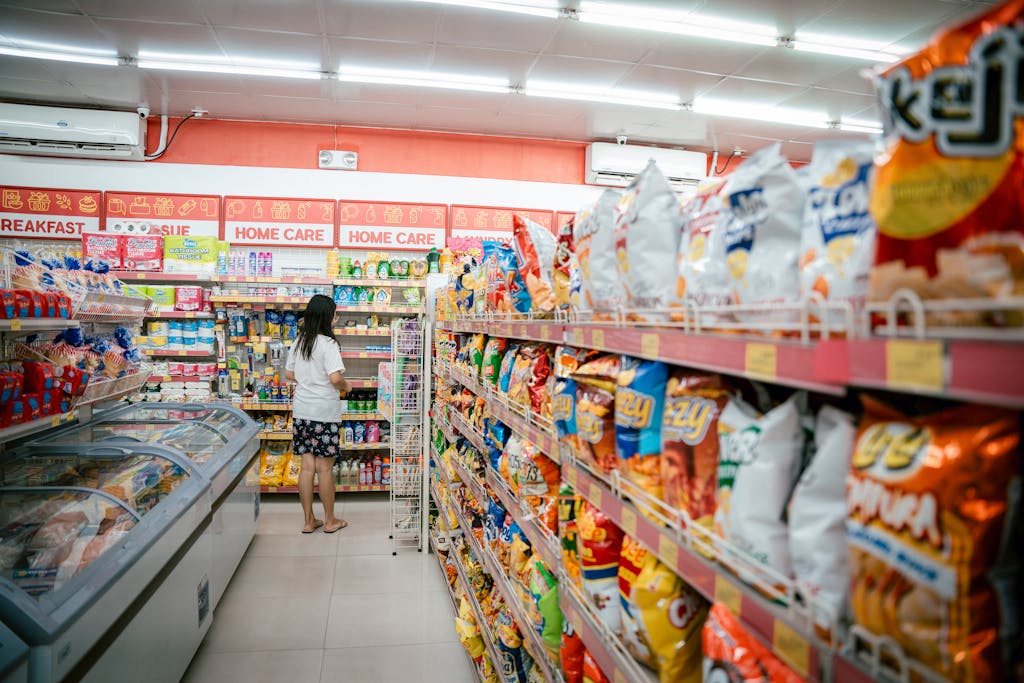
Living and doing my groceries at UK supermarkets for long enough, and you start noticing what’s in the shells. Giants bags of crisps, bars, fizzy drinks, ready meals, puffy bread, biscuits in three sizes, you name it…Then you walk outside and see the new McDonald’s opening on the high street while chronic disease statistics climb the wall behind the GP receptionist. Then you stop at a motorway service station and realize there is no fresh food. Not a single piece.
Well, the harsh truth is that around 60% of what the average Brit and American eat is now ultra-processed food, and that wasn’t an accident. It was engineered: taste, texture, crave, and priced by people paid very well to construct the best, appealing taste… I’d been thinking about all of this for months before someone, a doctor with a slightly mischievous streak and a willingness to harm himself for science, sat down and named it.
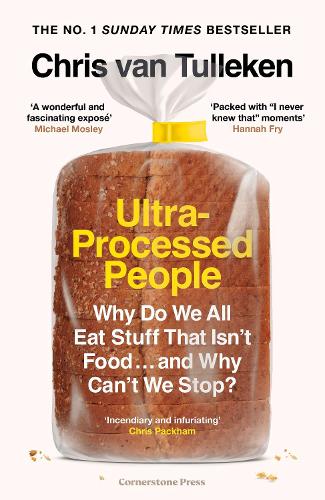
That doctor is Dr. Chris van Tulleken, and the book is Ultra-Processed People: Why Do We All Eat Stuff That Isn’t Food … and Why Can’t We Stop? I picked it up in the middle of my dissertation research, somewhere between paper number forty and paper number fifty, when my brain needed a narrative break from the methods sections. What I got instead was the most uncomfortable book of my final year, and I mean that as the highest compliment.
This post may contain affiliate links. If you make a purchase through these links, I may earn a small commission at no extra cost to you. I only recommend products I personally use and trust. Thank you for your support!
Table of Contents
Why I Reached for Ultra-Processed People by Chris van Tulleken
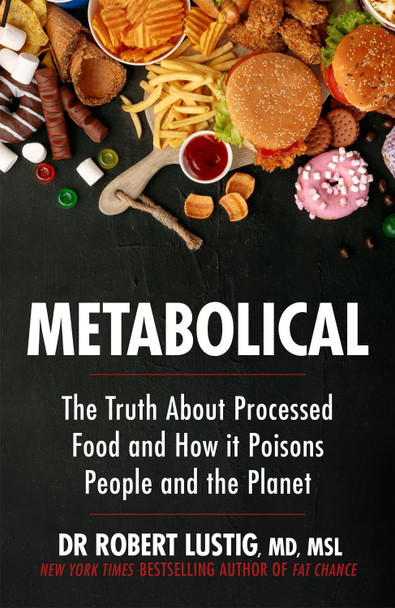
If you’ve read my Metabolical book review, you’ll know that Dr. Robert Lustig’s book is what helped me commit to my dissertation topic. Ultra-Processed People is what kept me there once I had committed.
By the time I started reading van Tulleken, I was deep in the literature. I had spreadsheet tabs full of citations. I had read enough about the NOVA classification system to argue about it at parties (I do not get invited to many parties. lol). What I needed was someone to translate all of that abstract evidence into something I could actually feel. Van Tulleken does this in the most direct possible way, by putting his own body on the line.
The 28-Day UPF Experiment at the Heart of the Book
For four weeks, van Tulleken eats a diet made up of 80% ultra-processed food, roughly the average for British teenagers. He documents what happens. The weight gain, yes, but also the things you don’t expect: changes in his sleep, his mood, his thinking, the quiet way his brain begins anticipating the next snack before the previous one is finished. He describes UPFs as “engineered to drive excess consumption,” and once you read this line, you cannot un-read it. It explains so much of what we usually call “willpower failure” but is actually product design success.
This is the part of the book that nearly all readers remember, and rightly so. It’s one thing to read in a journal article that ultra-processed foods are associated with weight gain and metabolic dysfunction. It’s another thing to watch a doctor, eating exactly what supermarket shelves recommend, describe the strange, slightly haunted feeling of being chemically out-maneuvered by his own kitchen cupboard.
What Ultra-Processed Food Actually Is? And Why NOVA Matters?
Van Tulleken does an excellent job of explaining the NOVA classification system (this is a PDF file with NOVA Groups you can download if interested), which categorizes foods by the degree and purpose of their processing rather than by their nutrient content.
Group 1 consists of unprocessed or minimally processed foods (an apple, a chicken thigh, dried lentils).
Group 2 is culinary ingredients (oil, salt, butter). Group 3 is processed foods made by combining the first two (cheese, fresh bread, tinned tomatoes).
And Group 4: the one we’re really talking about, is ultra-processed: industrial formulations made largely from substances extracted from food, plus additives engineered for shelf life, mouthfeel, color, and craving.
The clarity of this framework was a revelation for me as a student. It moved my thinking away from “carbs vs fat vs protein” and toward something more honest: who designed this product, and what were they trying to make me do?
The Free-From Aisle Is a UPF Aisle: Ultra-Processed People‘s Bombshell
Now we come to the part of the book that hit me right between the eyes, and pushed me to look at my own pantry.
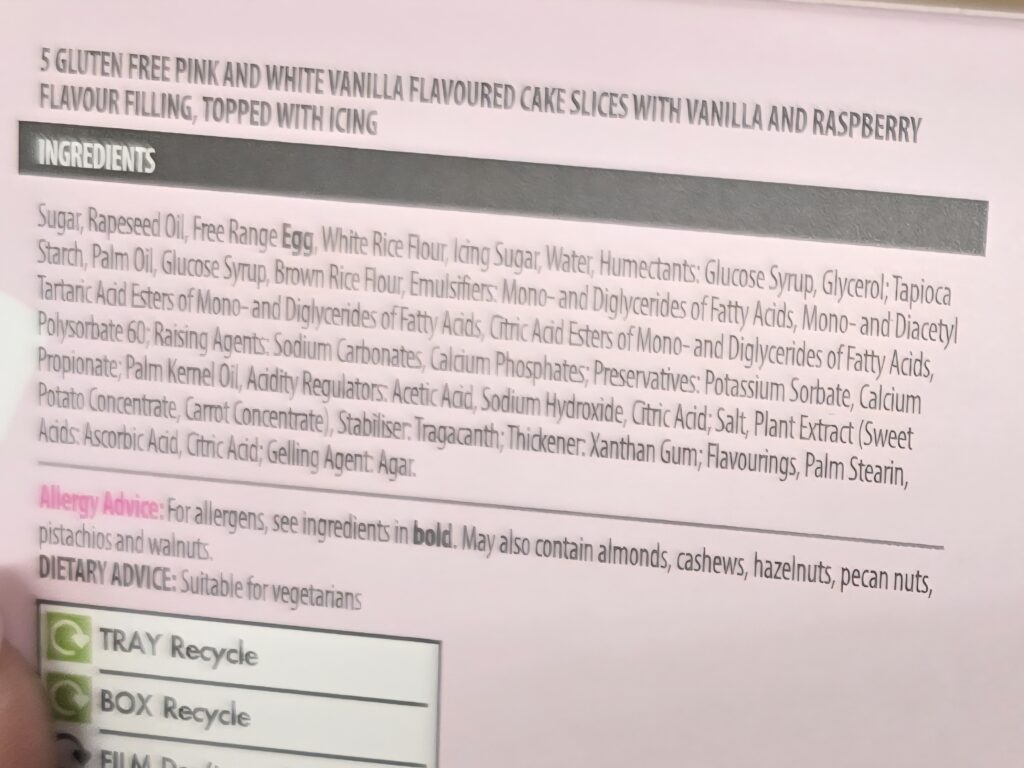
Van Tulleken doesn’t single out the free-from aisle (he’s broader than that, and rightly so), but once you understand what UPF actually is, you can’t unsee it anywhere. Somewhere in the middle of the book, I realized I needed to dig deeper into the hole and find out what on earth gluten-free products are actually made of. So I did.
I have lived gluten-free and lactose-free for years. I have considered myself, with mild smugness, a careful shopper. The smugness did not survive contact with my own ingredient lists. So much of what is marketed as a healthier alternative: gluten-free biscuits, lactose-free desserts, “high-protein” bars, dairy-free spreads, is exactly the same ultra-processed industrial design dressed in a clean-label costume. Stripped of one ingredient, rebuilt with twenty.
That moment changed the way I shop, the way I cook, and frankly, the way I write recipes. A gluten-free cookie made from almonds, eggs, and a little honey is one kind of food. A gluten-free cookie made from maize starch, modified maize starch, vegetable oil emulsion, hydrolyzed maize protein, gum acacia, glycerine, and “natural flavor” is an entirely different kind of food, and pretending otherwise just because it’s gluten-free is exactly the kind of marketing trick this book exists to expose.
Reading that chapter is a large part of why every recipe on this blog now starts with real ingredients, like my almond-cranberry no-bake bars and my gluten-free chocolate chip cookies, whose ingredient list reads like something from a kitchen rather than a laboratory.
Where the Ultra-Processed Food Argument Faces Pushback
Of course, no good nutrition student takes any single book as gospel, and Ultra-Processed People has its critics. Some argue that the NOVA framework is too broad, lumping artisan sourdough in with industrial cake under categories that feel arbitrary at the edges.
Others worry that demonizing “processed” food risks stigmatizing affordable convenience products that some families genuinely rely on. These are reasonable concerns, and van Tulleken doesn’t entirely escape them; though he is careful to argue for systemic change rather than for shaming individuals.
There’s also the question of mechanism. The associations between UPF and ill health are now well replicated in epidemiology, but exactly why UPF makes us overeat? Additives? Texture? Hyper-palatability? Speed of consumption? All of the above? Is still being teased out in clinical research. Van Tulleken is honest about this. The science is converging, but it isn’t settled. As a student, I appreciated that honesty more than any single thesis.
Reading Ultra-Processed People as a Nutrition Student
I read this book during the loneliest part of my dissertation work. The bit where you’ve done enough reading to know how complicated the topic is, but not enough writing to feel like you’re making progress. Van Tulleken’s book restored my conviction. It actually modeled how to think honestly about food: with curiosity, with self-experimentation, with humility about what we don’t yet know, and with a refusal to let the food industry off the hook for what it has clearly done.
It also reminded me, on the days when I doubted my topic, that ultra-processed food is not a niche concern. It is now the majority of what is consumed in the UK. We are, very literally, becoming the people the title describes. That is a story worth writing about, and writing about well.
Why Ultra-Processed People Is Worth Reading
If you’ve read my Metabolical review, you’ll know that Lustig’s book is the physiological case, a pediatric endocrinologist explaining what ultra-processed food and sugar do to your liver, your gut, your hormones, your metabolism.
Van Tulleken writes the behavioral case: why we eat UPF, why we can’t stop, and how the food industry engineered taste, texture, and craving to ensure we wouldn’t. Lustig explains what UPFs do to your body; van Tulleken explains why you keep eating them anyway.
Read together, they are devastating. It is funny in places. It is sobering in others. It will definitely make you read the back of every packet on every grocery trip.
Add this book to your bookshelf: Ultra-Processed People: Why Do We All Eat Stuff That Isn’t Food and Why Can’t We Stop?. It is one of the most important food books of the decade, and I expect to be citing it long after my dissertation is bound and submitted.
⭐ My rating: 4.7/5 — the book that made me suspicious of my own free-from aisle, and grateful for it.
Ultra-Processed People Book Review FAQs
Is Ultra-Processed People worth reading?
Yes, especially if you’ve ever felt outmaneuvered by your own snack cupboard and wanted a clear, honest explanation of why. Van Tulleken’s lived experience, backed by solid science, results in one of the most readable, most quotable food books of the decade.
Who is Dr. Chris van Tulleken?
Chris van Tulleken is a British infectious-diseases doctor at University College London Hospitals, an academic at UCL, and a BBC broadcaster. Ultra-Processed People is his first major book and was a Sunday Times bestseller.
What counts as ultra-processed food?
Van Tulleken uses the NOVA classification: ultra-processed foods are industrial formulations made mostly from substances extracted from foods (oils, starches, isolates) plus additives designed to extend shelf life, improve mouthfeel, and curb cravings. His simplest test: if an ingredient on the packet isn’t one you’d normally find in a home kitchen, it’s a UPF.
Is gluten-free food ultra-processed?
Often, yes. Most commercial gluten-free biscuits, breads, and bars are textbook UPF — built around modified starches, emulsifiers, gums, and flavorings to mimic gluten’s structure. That’s why the DeGlutenista approach is to cook gluten-free from real ingredients rather than to swap one ultra-processed aisle for another.
About the Author: Dani
Integrative nutritionist | BSc (Hons) Human Nutrition | Metabolic and gut Health
Hi! I’m Dani, BSc (Hons) Human Nutrition with a strong interest in lifestyle medicine, gut health, metabolic health, UPF-free, whole-food, and gluten-free cooking. Your visit means the world to me!
I share simple recipes, nutrition tips, lifestyle experiences, and insights into living with food intolerances.
My story
My philosophy
Further Reading on Food and Health
If you enjoy science-based books that challenge how we think about food and the food system, you might also like:
- Metabolical: Dr. Robert Lustig’s manifesto on why chronic disease is foodable, not druggable
- Eat Dirt: the gut-health book that took me back to my grandmother’s garden
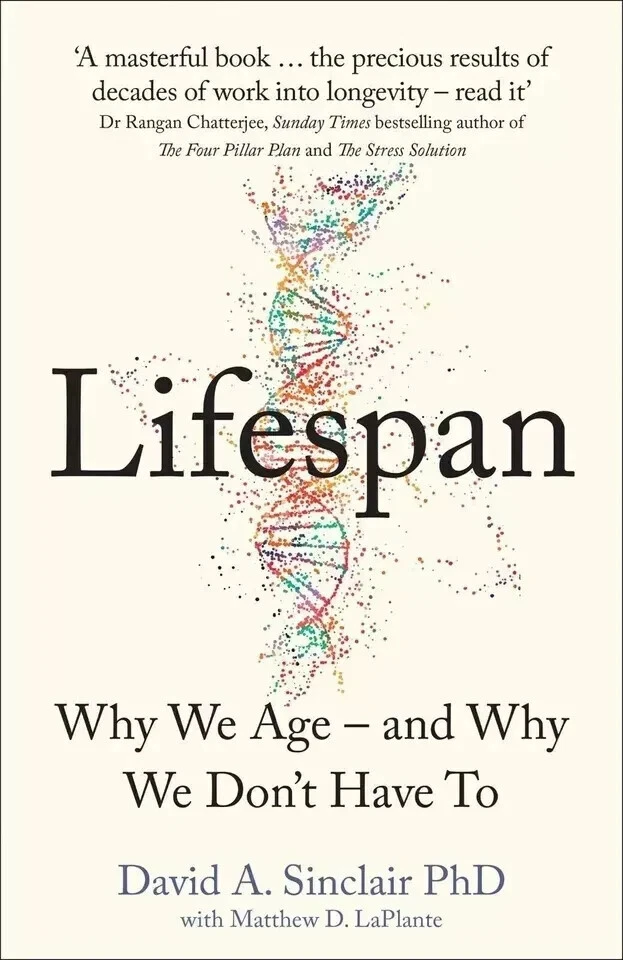
- Lifespan: how all of this connects to the deeper biology of aging