
The Truth About Weight Loss Peptides: How They Work

Imagine if your body already had a perfect natural volume dial for hunger. The truth is, it does. Our physiology is brilliantly designed to regulate appetite, control blood sugar, and maintain its weight. The trouble isn’t our biology; it’s the modern, altered food environment. All of these modified products bypass our internal satiety brakes.
How do peptides help with weight loss? If you are looking to taper off or stop your GLP-1 medications, understanding your body’s internal biology is essential. In this article, I’ll show you today that you do not need to rely on synthetic injections to control your hunger. Your gastrointestinal tract is equipped with a highly efficient, built-in mechanism designed to release these exact appetite-suppressing hormones naturally.
In other words, if you eat the right nutrients, you can activate this system, known as the ileal brake, and support the body’s natural weight-management process.
At a Glance: What Are Weight Loss Peptides?
A peptide is a short chain of amino acids, the basic components that form proteins. They’re naturally made in the body and work as signaling molecules, directing cells and organs to carry out specific tasks. Hormones, enzymes, and neurotransmitters are all examples of peptides or proteins.
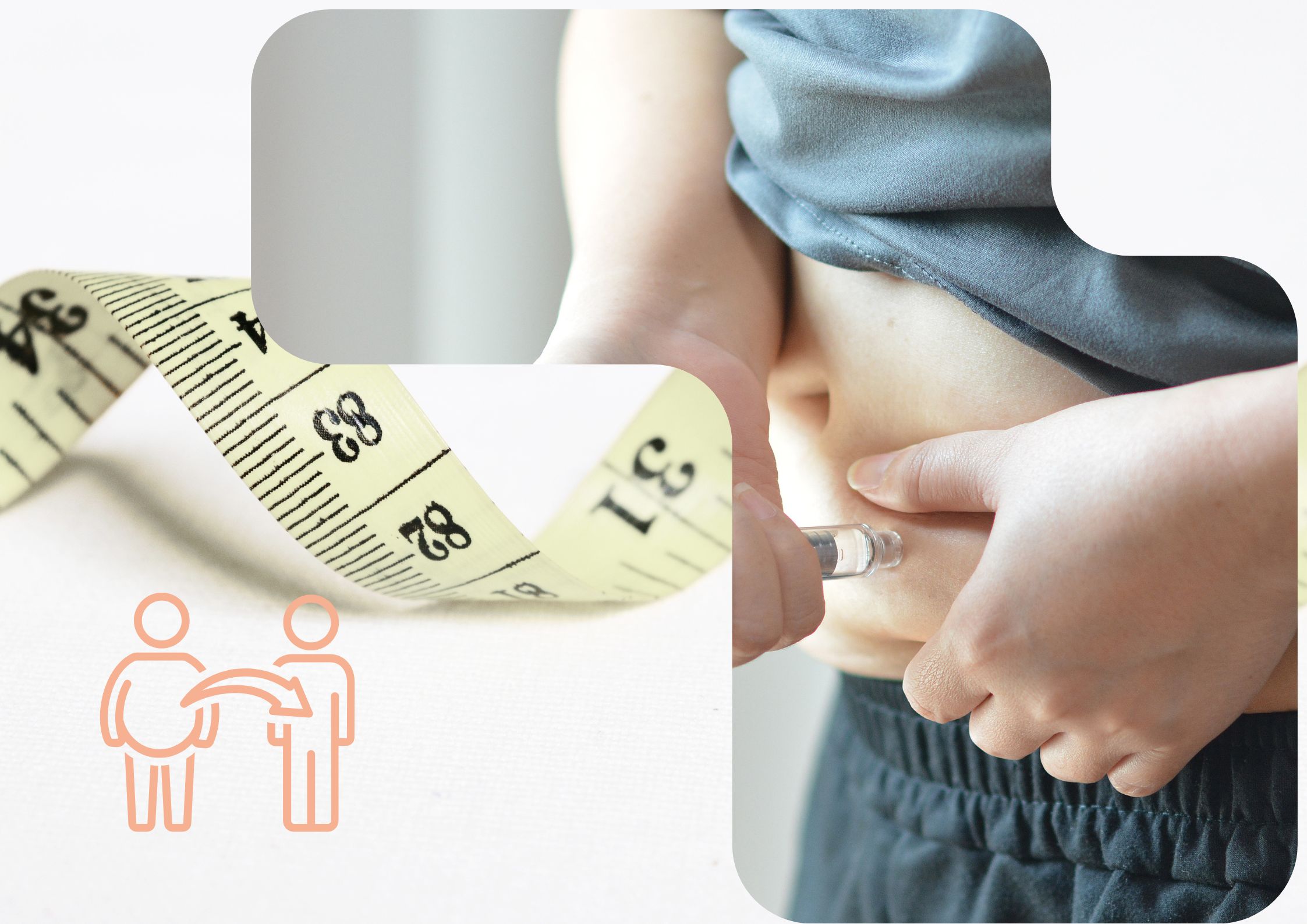
Peptides for weight loss act as cellular ‘text messages’, mimic natural gut hormones to control appetite, slow digestion, and improve blood sugar, which leads to weight loss, improved metabolic health and prevent the chronic diseases.
Common GLP-1 Medications
| Generic Peptide | Core Brand Names | Primary Uses | Frequency |
|---|---|---|---|
| Semaglutide | Ozempic, Wegovy | Diabetes, Weight Loss, Cardiovascular health | Once-weekly injection |
| Tirzepatide | Mounjaro, Zepbound | Diabetes, Weight Loss (dual GLP-1/GIP action) | Once-weekly injection |
| Liraglutide | Victoza, Saxenda | Diabetes, Weight Loss | Once-daily injection |
How GLP-1 Peptides Work
GLP-1 peptides modulate your appetite and brain signaling so you conciously chooce to eat less. They target multiple organs to regulate metabolism and weight:
- In the Brain: Targeting the hunger centers of the brain to increase satiety (fullness) and reduce “food noise”, the constant thoughts about eating.
- In the Stomach: Delaying gastric emptying, which slows down digestion. This keeps food in your stomach longer, physically extending the feeling of fullness.
- In the Pancreas: Triggering insulin release only when blood sugar rises and block the release of glucagon (a hormone that raises blood sugar).
GLP-1 Medications’ Potential Side Effects
Because these peptides slow down your entire digestive tract, they commonly cause gastrointestinal side effects:
- Nausea and vomiting
- Diarrhea or constipation
- Muscle mass loss
- Hair loss
GLP-1 Sourcing and Regulation
Due to past manufacturing shortages, many individuals turned to unapproved “compounded” GLP-1 peptides from online med-spas or clinics. However, changes in the regulatory landscape have caused the FDA to crack down on large-scale compounding facilities. This makes it more critical than ever to source these medications through a licensed healthcare provider and a traditional, regulated pharmacy to guarantee safety, proper dosing, and sterility.
How UPFs Bypass Human Senses or How We Get There?
Human physiology evolved over millennia eating the complex, intact food structure: the food matrix. Our digestive tract relies on the physical and chemical breakdown of these cellular structures to time the release of metabolic signals, in this case, which tell us that we are not hungry.
Modern industrial food manufacturing of ultra-processed foods (UPFs) systematically disrupts this natural matrix. Whole ingredients are stripped, fractionated, and reconstituted into highly refined starches, isolated powders, and free sugars.
Most of these engineered UPFs dissolve rapidly in the upper gastrointestinal tract, saturating the bloodstream with glucose too quickly.
As a result, this rapid breakdown completely fails to trigger the stomach’s mechanical stretch receptors or the early hormonal signaling required to communicate fullness to the brain. This leads to metabolic disruptions and later chronic diseases and conditions.
The Metabolic Cost of Taking Weight Loss Peptides
When you use these peptides to suppress your appetite, you might experience nausea. But here is the real problem: if you don’t fix what you eat, you just end up eating tiny portions of the same junk food. This starves the body of essential nutrients. Instead of losing just fat, your body starts burning through metabolically active lean muscle for energy, completely wrecking your metabolic health.
Another Real Problem Is the Energy Crisis as Catch-22:
The goal of taking these peptides is to modulate the apetite, create a calorie deficit to force the body to burn stored fat. But in reality, this severe drop in calories paired with a lack of nutrients causes a massive crash in daily energy and physical stamina.
To protect muscle mass during weight loss is very important to ”tell” your body that the muscle is still needed with resistance training (lifting weights).
However, because your body is nutrient-deprived and fatigued, the natural body reaction is to keep this insufficient energy , thus leads to stop moving. Without that physical “use it or lose it” signal, your body burns muscle instead of fat.
How to Trigger Natural GLP-1 Production Without Medication
The human body possesses a highly efficient, built-in system for creating satiety peptides like GLP-1 (Glucagon-Like Peptide-1) and PYY (Peptide YY). To be activated and work, these peptides require the correct biochemical data, eg., food and digestion. This physiological mechanism is called the “ileal brake.”
The ileal brake is a primary digestive feedback loop located in the distal ileum (the final section of the small intestine) and the colon. Its function is to optimize nutrient absorption and regulate energy intake by controlling the speed of digestion.
When specific nutrients reach this lower portion of the gut, the system slows gastric emptying, keeping food in your stomach longer and delaying intestinal transit. Crucially, it triggers the secretion of these peptides into the bloodstream, which travel to the brain to suppress appetite.
The Biochemical Pathway: How Nutrients Turn on the Brake
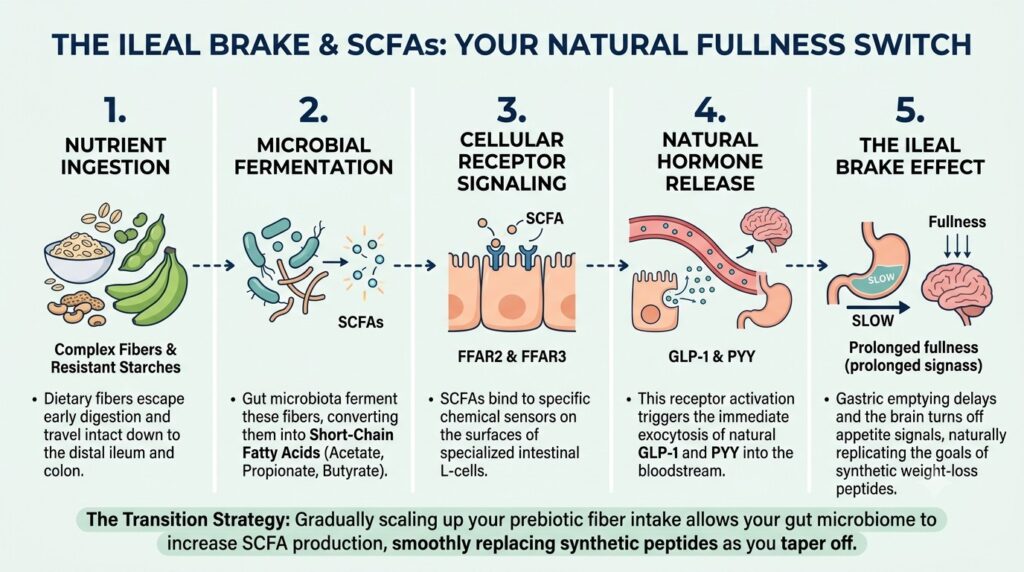
There is another way to switch on these pathways. You can activate this loop naturally and get the effects of weight-loss medications. You just need to feed your gut microbiome with the necessary dietary fiber, which will produce for you Short-Chain Fatty Acids (SCFAs).
How this will happen. When you consume complex carbohydrates, resistant starches, and other dietary fibers, they reach your colon to become food for your gut bugs. They ferment these fibers, breaking them down into metabolic byproducts called SCFAs (primarily acetate, propionate, and butyrate).
As you can see in the image below, the lining of your lower intestine has specialized endocrine cells called L-cells. The surfaces of these cells contain specific chemical sensors known as Free Fatty Acid Receptors 2 and 3 (FFAR2 and FFAR3).
Next, when these SCFAs bind to the FFAR2 and FFAR3 receptors, it triggers an intracellular signaling cascade that forces the L-cells to release natural GLP-1 and PYY directly into circulation. Or this is your internal production of the natural weight loss peptides, if your body has the right elements to produce them.
How to Reclaim Your Natural Fullness State
Restoring your natural body functions requires conscious dietary changes. You can do that by just these three dietary principles:
- Choose whole foods: whole, intact foods that require mechanical chewing and maintain their natural cell walls to ensure steady nutrient release.
- Pick Viscous, Gel-Forming Fibers: Use foods rich in soluble fiber, like psyllium husk, chia seeds, and oats, to physically slow gastric emptying naturally. Don’t forget the insoluble fibers; they are important too.
- Optimize the Gut Microbiome: Introduce unpasteurized fermented foods and diverse plant foods to nurture the microbial populations mentioned earlier, which are important for the natural GLP-1 signals.


FAQs
What are weight loss peptides and how do they work?
Weight loss peptides are short chains of amino acids that function as chemical messengers in the body. Prescription versions, such as semaglutide (Wegovy) and tirzepatide (Mounjaro), are synthetically engineered to mimic natural gut hormones like GLP-1 and GIP. They artificially reduce appetite by targeting the brain’s pathways and mechanically slowing gastric emptying.
Can you trigger natural GLP-1 production without injections?
Yes, your body produces its own GLP-1 naturally. When you consume whole plant fibers, they reach the colon undigested. Your gut microbiota ferment these fibers into Short-Chain Fatty Acids (SCFAs), which bind directly to the L-cells in your colon, stimulating a natural, rhythmic release of endogenous GLP-1.
Why do I feel constantly hungry (“food noise”) in a modern diet?
The “food noise” is a direct result of an altered, modern food environment. Industrial food processing strips ingredients of their natural structure, i.e., the food matrix. These isolated substances dissolve instantly in the upper digestive tract, and the stomach’s stretch receptors fail to signal fullness to your brain.
What happens when you stop taking weight loss peptides?
Clinical data shows that when synthetic peptides are stopped, the artificial hormonal signal vanishes, and weight regain is highly common. Because these medications act as a temporary aid, stopping them leaves you trapped in the same engineered food environment that caused the metabolic dysfunction in the first place.
In Summary
Synthetic peptides are an impressive achievement in modern medicine, but they’re only a short-term helper. Lasting metabolic health can’t come from simply quieting your biology with a drug while keeping the ultra-processed food environment the same.
To truly match your lifespan with your healthspan, the most powerful key is a balanced diet that combines complex fibers, clean proteins, and healthy fats. Taken all together, these will activate every receptor in your lower gut, creating a synergistic wave of natural GLP-1 that no synthetic peptide can replicate.
Hope it was interesting and informative.