
Vitamin B12: Why This Tiny Micronutrient Is So Important

Vitamin B12, also known as cobalamin, might be small, but its impact on our overall health is enormous. From energy production and brain function to mood regulation and nerve health, Vitamin B12 plays an essential role. Today, we’re exploring why B12 matters, what happens if you don’t get enough, and how to ensure your diet provides adequate amounts.
What Is Vitamin B12 and Why Is It Important?
Vitamin B12 is a water-soluble vitamin, crucial for several body processes, including red blood cell formation, DNA synthesis, and nerve cell maintenance. Its water-soluble nature means our bodies can’t store it for long periods, making regular intake important.
B12 helps prevent anaemia by aiding in forming healthy red blood cells, ensuring oxygen effectively circulates throughout the body. Moreover, it is essential for neurological health, protecting the nerves’ integrity and supporting optimal cognitive function and mood stability.
Symptoms and Health Risks of Vitamin B12 Deficiency
A deficiency in Vitamin B12 can sneak up slowly, often unnoticed until symptoms become significant. Common symptoms include fatigue, weakness, numbness or tingling in the hands and feet, memory problems, and even depression.
Severe deficiency can lead to:
- Pernicious anaemia is a type of anaemia resulting in fatigue and weakness.
- Neurological changes, such as balance problems, confusion, or dementia.
- Mood disturbances, including increased irritability or depression.
Given the subtle onset, understanding risk factors for deficiency is crucial for prevention.
Who Is at Risk of Vitamin B12 Deficiency?
Certain groups are at higher risk, including:
- Vegans and Vegetarians: B12 naturally occurs mostly in animal foods, making it vital for plant-based diets to include fortified foods or supplements.
- Older Adults: Ageing reduces stomach acid production, which is necessary for absorbing B12.
- Individuals with Gastrointestinal Disorders, such as Crohn’s, celiac disease, or those who’ve undergone gastrointestinal surgeries, may struggle with B12 absorption.
- People on Certain Medications: Long-term use of heartburn medication, acid reducers, or diabetes medication (metformin) can impair B12 absorption.
Sources of Vitamin B12: Food and Supplements
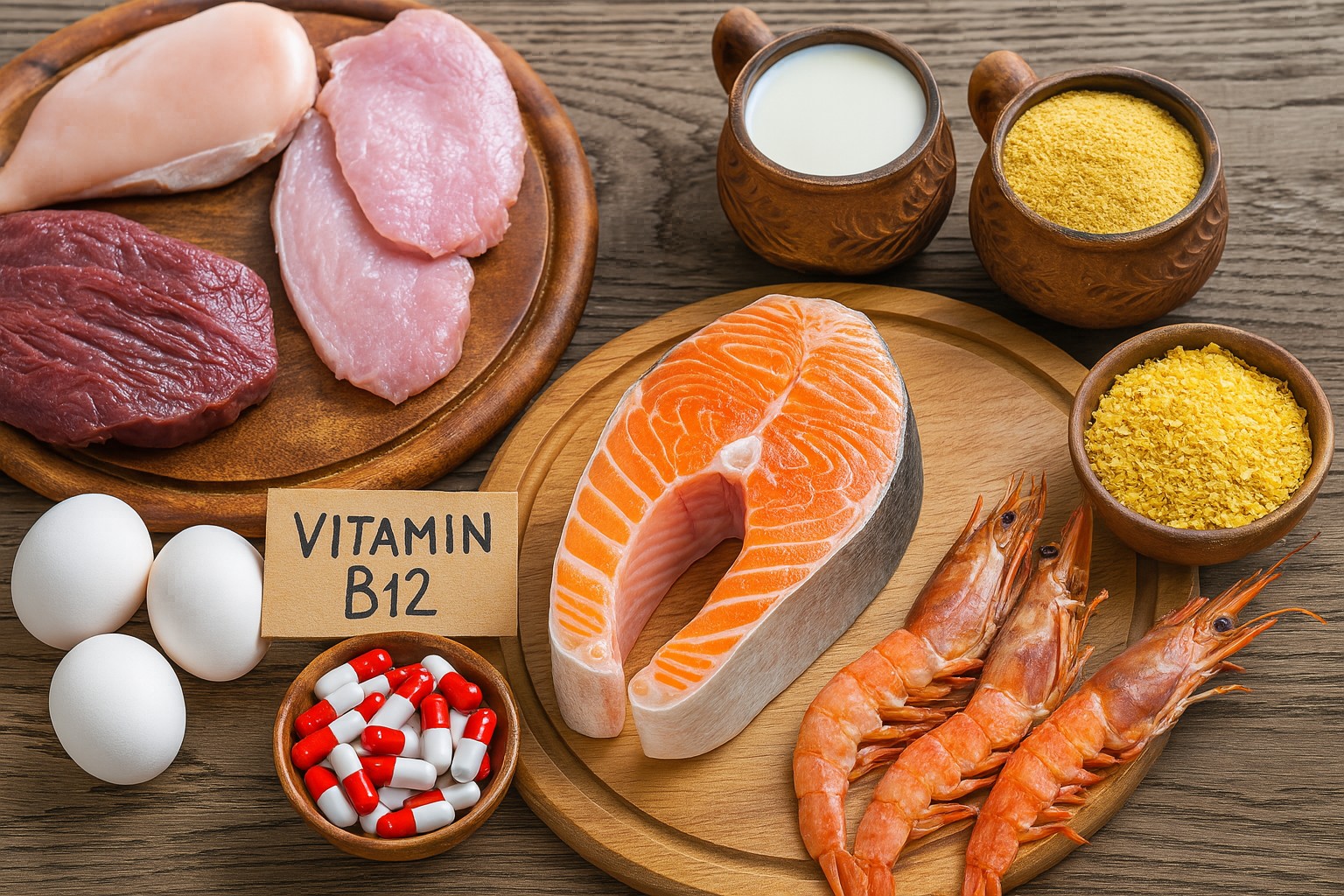
For non-vegan diets, B12 is abundant in:
- Lean meats (poultry, beef, pork)
- Fish and seafood (salmon, tuna, shellfish)
- Eggs and dairy products (for lactose-tolerant individuals or lactose-free dairy alternatives)
For vegan or lactose-free diets, B12-fortified options include:
- Plant-based milk (almond, oat, coconut)
- Breakfast cereals and nutritional yeast
- Dietary supplements (tablets, sprays, or injections)
Foods and Ingredients That Affect Vitamin B12 Absorption
Certain dietary choices can enhance or impair Vitamin B12 absorption:
- Enhancers:
- Vitamin C-rich foods can indirectly help maintain stomach acid, which is necessary for B12 absorption.
- Fermented foods like kefir, sauerkraut, or kimchi help improve gut health, enhancing nutrient absorption overall.
- Suppressors:
- Alcohol consumption can negatively affect B12 absorption.
- Due to tannins, a high intake of coffee or tea may interfere with absorption, especially when consumed close to meals.
Recipe Suggestions and Frequency of Eating B12-rich Foods
Here are a few simple and delicious ways to regularly incorporate Vitamin B12 into your meals:
- Salmon: Include baked salmon at least 2-3 times weekly to boost B12 intake.
- Oven-baked Pork chops: One chop provides the recommended daily intake. Consume in moderation, once every fortnight, as part of the Mediterranean diet.
- Scrambled Eggs with Spinach: Eggs are versatile and can be enjoyed daily or several times a week.
- Nutritional Yeast sprinkled on Salads or Soups: Daily usage is safe and beneficial, especially for plant-based diets.
My Personal Advice: Ensure Your Gut Health Supports B12 Absorption
As someone passionate about gut health and nutrition, I’ve learned that optimising gut health significantly enhances nutrient absorption, including B12. Incorporating fermented foods like sauerkraut or kimchi into your meals supports a healthy gut microbiome, indirectly benefiting your Vitamin B12 status.
Practical Tips to Avoid Deficiency
Regular screening for at-risk groups is vital. Here are additional practical tips:
- Regularly consume B12-rich foods or supplements, especially if at risk.
- Consult your healthcare provider about the need for supplements or B12 injections.
- Regularly monitor levels through blood tests if you’re in a high-risk group.
FAQs
Can I get enough B12 from a plant-based diet?
Absolutely, provided you regularly consume fortified foods or supplements.
Can Vitamin B12 help with energy levels?
Yes, since B12 helps produce energy by supporting the metabolism of fats and proteins.
How long does it take to correct a Vitamin B12 deficiency?
Correction can take a few weeks to several months, depending on severity.
What are the side effects of too much Vitamin B12?
Vitamin B12 has low toxicity, but excessively high intake through supplements might cause headaches, nausea, or dizziness.
Do fermented foods naturally contain Vitamin B12?
Fermented plant-based foods usually don’t contain significant levels unless fortified. Always check labels.
Can cooking affect Vitamin B12 content in food?
Yes, excessive heat and prolonged cooking can reduce B12 content. Cooking methods like grilling or steaming help retain more nutrients.
In Conclusion
Vitamin B12 is essential for good health. It’s important to learn how to incorporate this vitamin into your diet, recognise the early symptoms of deficiency, and consider the dietary factors that can affect its absorption. These steps can significantly improve your quality of life. Stay aware of your vitamin B12 levels, monitor them regularly if needed, and continue to nourish your body in a holistic way.
Fancy a Freebie?
Subscribe for my newsletter
and get your FREE eBook with 7 delicious gluten-free desserts!
*We will only send you gluten-free, lactose-free, refined sugar-free emails; you can unsubscribe anytime. Read our Privacy & Cookie Policy.



Thank you for stopping by! I’m Dani!
nutrition student | Healthy Live Promoter | Gluten-free recipe developer
Welcome to DeGlutenista Nutrition!
Your visit really means the world to me. I’m happy to share simple, nourishing gluten-free recipes and practical food tips focused on gut health and clean eating, all with an emphasis on reducing ultra-processed ingredients.
My approach is simple: practising mindful eating, regardless of food sensitivities, can be both tasty and healthy.