
Crispy Roasted Duck Breasts – Juicy, Gluten-Free, and Rich in Flavour

This post may contain affiliate links. If you make a purchase through these links, I may earn a small commission at no extra cost to you. I only recommend products I personally use and trust. Thank you for your support!
Craving something restaurant-worthy but easy enough for a weeknight? These crispy golden roasted duck breasts are juicy, gluten-free, and bursting with rich, aromatic flavour.
It’s an elegant yet easy meal that can make a simple weeknight dinner memorable — without any complicated steps or processed sauces.
This recipe is gluten-free, lactose-free, and made with simple, wholesome ingredients — just the way I like to keep things here on DeGlutenista. But, this recipe is one of my other half’s masterpieces, just like his golden chicken wings and tender pork chops, don’t miss!
The secret lies in the short but powerful marinade: a blend of turmeric, sweet paprika, and gluten-free beer that gives the duck a beautiful colour, subtle warmth, and depth of flavour.
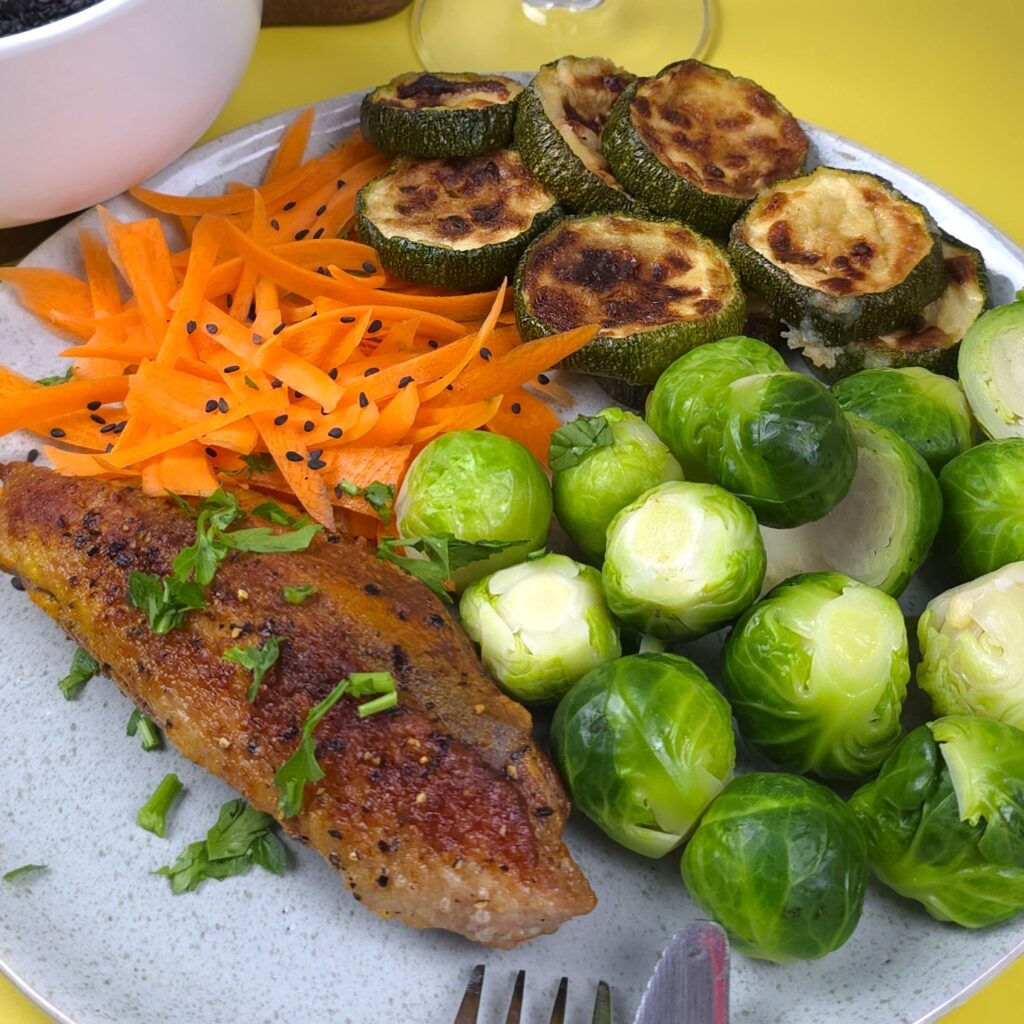
Additionally, these crispy roasted duck breasts pair nicely with steamed Brussels sprouts, roasted courgettes – coming soon and zingy fresh salad.
A Touch of Gourmet for Your Gluten-Free Table
Few dishes make you feel like you’re dining in a fine restaurant quite like roasted duck breasts—the combination of juicy, tender meat and irresistibly crispy skin. But the truth is — you don’t need to be a chef to pull this off. With the proper preparation and timing, you can serve up perfectly cooked duck at home in under an hour.
I particularly enjoy this recipe because it combines tradition with my gluten- and lactose-free lifestyle. The ingredients are clean and simple, and the spices—turmeric and paprika—reflect the Mediterranean and Middle Eastern influences that have shaped much of my cooking style.
Why This Roasted Duck Breast Recipe Works
- Marinating with gluten-free beer adds moisture and flavour.
- The high oven temperature (190°C) ensures that the fat renders out from under the skin, giving it that golden crisp.
- Resting the meat for a few minutes lets the juices redistribute, keeping every bite succulent.
The result is an impressive yet easy dish — ideal for a dinner party or a quiet evening meal with a green salad and steamed veggies.
Roasted Duck Breasts Ingredients
For two servings:
2 duck breasts, skin on – Each breast weighs about 180–200 g. Duck is naturally high in protein and iron, making it a nutritious alternative to red meat. It contains monounsaturated fats that support cardiovascular health, similar to olive oil. Duck fat also provides vitamins A and E, both important antioxidants.
1 tablespoon oil – I recommend rice bran or extra virgin olive oil. Both tolerate high heat and contain antioxidants that protect your heart and cells from oxidative stress.
½ teaspoon turmeric – The golden spice with potent anti-inflammatory and antioxidant effects. Curcumin, the main compound in turmeric, supports liver health and may help regulate blood sugar levels.
½ teaspoon sweet paprika—This adds a gentle sweetness and vibrant colour. Paprika is rich in carotenoids, which promote eye and skin health.
Salt and black pepper to taste – Essential flavour enhancers. I use Himalayan or sea salt and freshly ground pepper for a fresher aroma.
A splash of gluten-free beer adds subtle maltiness and helps tenderise the duck. Gluten-free beer is made from sorghum, millet, or rice. If you don’t consume alcohol, you can easily replace it with apple juice or stock.
Step-by-Step Instructions
Mix the marinade: In a small bowl, whisk together oil, turmeric, paprika, salt, pepper, and a splash of gluten-free beer. The beer lightly tenderises the meat while the spices infuse their aroma.
Marinate the duck: Pat the duck breasts dry with a paper towel to remove any moisture — this helps the skin crisp up later. Place them skin-side down in a shallow dish and pour the marinade over. Massage the mixture gently into the meat. Cover and refrigerate for at least 30 minutes, or up to 4 hours if you have time. The longer it marinates, the richer the flavour becomes.
Preheat your oven to 190°C (375°F) and grease a baking tray with a touch of oil.
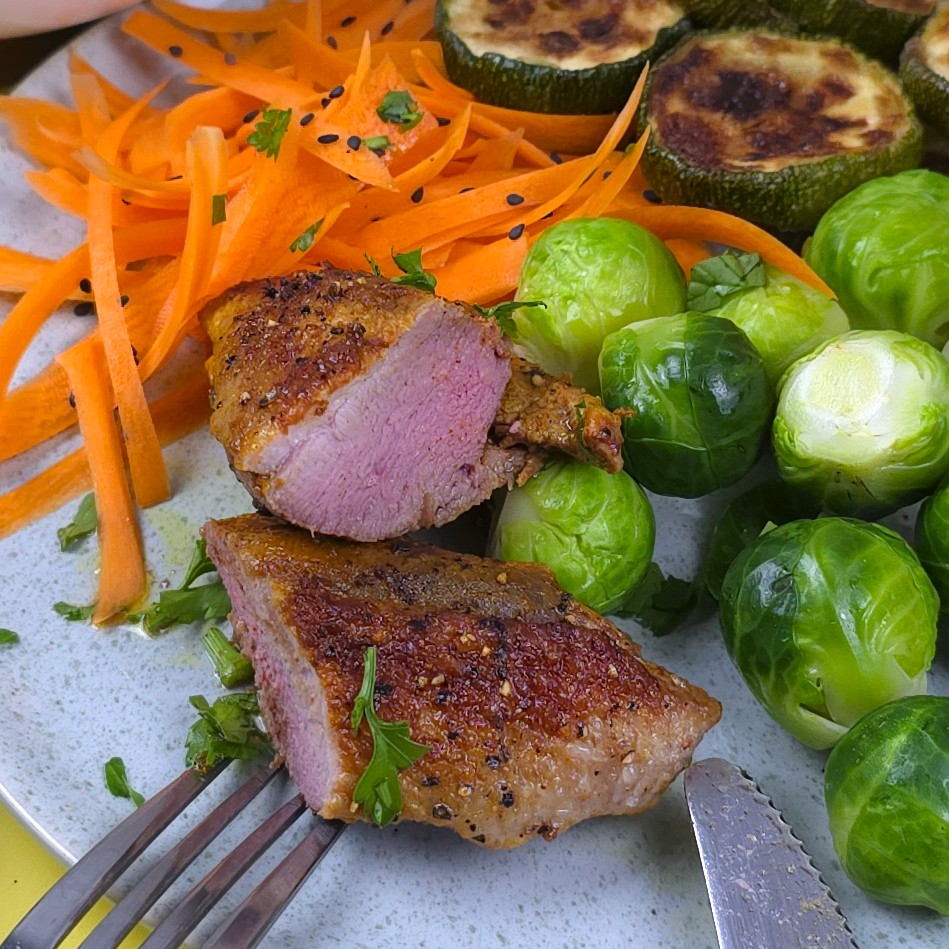
Roast: Place the duck breasts, skin-side up, on the tray and roast for 20 minutes, until the skin is golden and crisp. For medium doneness, the internal temperature should reach around 60–63°C. The meat will be slightly pink but safe to eat.
If you prefer a darker skin, quickly sear the duck breasts in a hot, dry pan (skin-side down) for 2–3 minutes before roasting.
Rest and serve: Once cooked, transfer the duck breasts to a cutting board and let them rest for 5 minutes before slicing. This step is crucial — it locks in the juices and keeps the texture tender.
Roasted Duck Breasts Serving Ideas
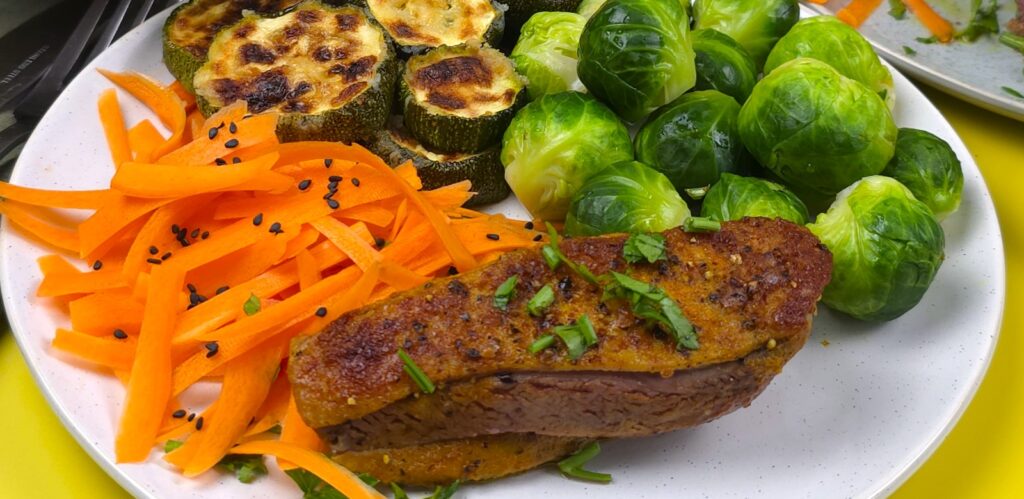
Duck pairs wonderfully with both sweet and savoury sides. I usually keep it simple: a bowl of mixed leaf salad with olive oil, lemon juice, and steamed broccoli or Brussels sprouts.
For a more indulgent version, you can serve it with:
- Roasted vegetables – carrots, parsnips, or sweet potatoes.
- Fruit glaze – orange, cherry, or pomegranate sauce gives a classic French touch.
- Gluten-free grains – try quinoa or buckwheat for added fibre and texture.
The Role of Duck Fat in a Mediterranean-Style Diet
Although duck is higher in fat than chicken, not all fats are equal. Much of the fat in duck is monounsaturated – the same heart-healthy fat found in olive oil and avocados. It helps maintain healthy cholesterol levels when eaten in moderation.
Traditional Mediterranean diets include small amounts of animal fats from high-quality sources. Duck, especially when roasted simply and served with vegetables, fits this balanced pattern beautifully. The key is to enjoy it as part of a varied diet filled with fibre-rich foods, olive oil, nuts, and fresh produce – all of which support a healthy gut and metabolism.
What I Learned After Testing This Recipe
The first few times I roasted duck, I either overcooked it or didn’t get that perfect crispy skin. What made the difference was patting the skin dry before marinating and keeping the temperature steady at 190°C.
The gluten-free beer was a bit of an experiment — and I must say, it adds a subtle malt sweetness that enhances the spice blend beautifully. It’s also a fun way to add depth of flavour without using sauces or sugar.
This recipe is now my go-to when I want something luxurious but manageable. It pairs well with many of my lighter side dishes, such as steamed vegetables or avocado tahini dip.
Storage and Reheating
If you have roasted duck breasts leftovers (which is rare in my house!), store them in an airtight container in the fridge for up to 2 days. To reheat, gently slice the duck and warm it in a pan over low heat or in the oven at 160°C for 5–6 minutes. Avoid microwaving, it makes the meat tough.
Cold slices are also delicious on a salad or wrapped in a gluten-free tortilla with greens and mustard.
Nutritional Facts (Per Serving)
| Nutrient | Amount |
|---|---|
| Calories | 320 kcal |
| Protein | 35 g |
| Total Fat | 18 g |
| Saturated Fat | 5 g |
| Carbohydrates | 2 g |
| Sugars | 0 g |
| Fibre | 0 g |
| Sodium | 400 mg |
| Iron | 3 mg |
| Zinc | 2.5 mg |
FAQs
1. Should I remove the skin before cooking the duck?
Keep the skin on — it protects the meat from drying out and helps render the fat, creating a crisp, golden crust.
2. Can I use frozen duck breasts?
To ensure even cooking, just thaw them completely in the fridge overnight before marinating.
3. Why is my duck skin not crispy?
Moisture is the enemy of crispness. Always pat the duck dry with a paper towel before marinating, and make sure the oven is fully preheated.
4. Can I marinate the duck overnight?
Absolutely! Longer marinating deepens the flavour. Just bring it to room temperature for 15–20 minutes before roasting.
5. What can I use instead of gluten-free beer?
Try apple cider, orange juice, or even white wine. Each adds a unique twist.
6. Is duck healthy?
When eaten in moderation and prepared without heavy sauces, duck provides lean protein, B vitamins, and beneficial fats — all part of a balanced gluten-free diet.
7. What are the best vegetables to serve with duck?
Steamed broccoli, Brussels sprouts, or roasted carrots are excellent choices — they balance the richness of the duck and provide fibre for digestive health.
Fancy a Freebie?
Subscribe for my newsletter
and get your FREE eBook with 7 delicious gluten-free desserts!
*We will only send you gluten-free, lactose-free, refined sugar-free emails; you can unsubscribe anytime. Read our Privacy & Cookie Policy.

Crispy Roasted Duck Breasts – Gluten-Free Dinner

Equipment
Ingredients
- 2 duck breasts skin on
- 1 tbsp oil ½ tsp turmeric
- ½ tsp Sweet red paprika
- ½ tsp turmeric
- sea salt
- black pepper
- splash gluten-free beer
Instructions
- Mix oil, spices, and beer into a marinade.
- Marinate duck breasts for at least 30 minutes.
- Preheat oven to 190°C (375°F).
- Place duck skin-side up on a roasting tray.
- Pour the remaining of marinate over the duck breasts.
- Roast for 20 minutes until golden and crisp.
- Rest for 5 minutes, slice, and serve hot with salad and steamed veggies.
Notes
YourDani x x
Nutrition

Mention @deglutenistanutrition and tag #deglutenistanutrition — you’ll make my day! 🌿✨

Thank you for stopping by! I’m Dani!
nutrition student | Healthy Live Promoter | Gluten-free recipe developer
Welcome to DeGlutenista Nutrition!
Your visit really means the world to me. I’m happy to share simple, nourishing gluten-free recipes and practical food tips focused on gut health and clean eating, all with an emphasis on reducing ultra-processed ingredients.
My approach is simple: practising mindful eating, regardless of food sensitivities, can be both tasty and healthy.