

Hidden Gluten in Food, Cosmetics and Everyday Products: What Missing

You can avoid bread, pasta, and cakes…and still be consuming gluten every single day.
That’s the uncomfortable reality of hidden gluten. Gluten isn’t always obvious, isn’t always labelled clearly, and isn’t always where you expect it to be. For people with coeliac disease, non-coeliac gluten sensitivity, or gluten intolerance, this invisible exposure can quietly cause symptoms, inflammation, and long-term health damage.
The term hidden gluten is commonly used to describe these less visible sources. In practical terms, it refers to gluten exposure arising from compound ingredients, cross-contact during manufacturing or food preparation, regulatory exemptions for highly refined cereal derivatives, or non-food products that may be inadvertently ingested, such as lip balm or toothpaste.
Avoiding hidden gluten is just one part of the bigger picture. For a full overview of how to manage a gluten-free lifestyle, see my complete guide to a gluten-free diet.
This article brings together clinical guidance, food-label standards, and real-world experience to explain where hidden gluten comes from, why ingestion is the real danger for coeliac disease, and how to protect yourself.
What Hidden Gluten Actually Means
Hidden gluten refers to gluten that appears in foods or products where most people would not expect it, or where it is not clearly labeled as wheat. It often shows up under unfamiliar ingredient names, as part of flavorings or thickeners, or through cross-contamination during manufacturing.
For someone with coeliac disease, this matters enormously. Coeliac disease is an autoimmune condition, not a food preference. When gluten is eaten, the immune system reacts by attacking the lining of the small intestine. Over time, this damage interferes with nutrient absorption and increases the risk of anemia, osteoporosis, infertility, neurological symptoms, and other autoimmune diseases.
For people with non-coeliac gluten sensitivity, hidden gluten may not cause intestinal damage, but it can still lead to bloating, abdominal pain, fatigue, headaches, joint pain, and brain fog that significantly affect daily life.
If you want a clear comparison between coeliac disease, gluten intolerance, and wheat allergy, this is explored in depth in Coeliac Disease, Gluten Intolerance & Wheat Allergy – All You Need To Know, which explains why each condition reacts differently to gluten and wheat.
Why Gluten Only Causes Harm When It Is Ingested
Coeliac disease is often misunderstood as a condition where any contact with gluten is dangerous, but the science tells a much more specific story. Gluten causes harm in coeliac disease only when it is eaten and reaches the small intestine. The autoimmune response that defines the condition is triggered within the digestive system, not on the skin’s surface.
Gluten proteins are too large to pass through healthy, intact skin and enter the bloodstream. Because of this, products such as shampoos, body lotions, and creams containing wheat-derived ingredients do not trigger the immune response associated with coeliac disease. Leading medical organizations, including Coeliac UK and Beyond Celiac, clearly state that gluten must be swallowed to cause intestinal damage.
Where caution is still important is in everyday, practical situations. Products applied to the lips, hands, or face can be transferred to the mouth during eating, drinking, or unconscious habits such as lip-touching. In these cases, the concern is not skin exposure but accidental ingestion, which can introduce enough gluten to matter for someone with coeliac disease.
This distinction is important because it allows people to focus their energy where it truly counts. Rather than worrying about every surface or product, the priority becomes preventing hidden gluten from entering the digestive system. Understanding this helps reduce unnecessary anxiety while supporting effective, evidence-based gluten avoidance.
How Gluten Ends Up in Unexpected Foods
Gluten is widely used in food manufacturing because it improves texture, thickness, and stability. Wheat-derived ingredients are cheap, functional, and familiar to manufacturers. As a result, gluten is often added to foods that would otherwise be naturally gluten-free.
Another major source of hidden gluten is cross-contamination. Foods may be processed on shared equipment with wheat-based products. Even trace amounts can exceed the safe threshold for people with coeliac disease. Regulatory bodies such as the U.S. Food & Drug Administration (FDA) define “gluten-free” as containing less than 20 parts per million of gluten, but products not labeled gluten-free may contain significantly more.
Labeling laws help, but they are not foolproof. Wheat must usually be declared as an allergen, but barley and rye derivatives can still appear under names such as malt or flavorings, which many consumers do not immediately recognize as gluten-containing.
The Most Common Food Sources of Hidden Gluten
Hidden gluten most often appears in everyday foods people trust.
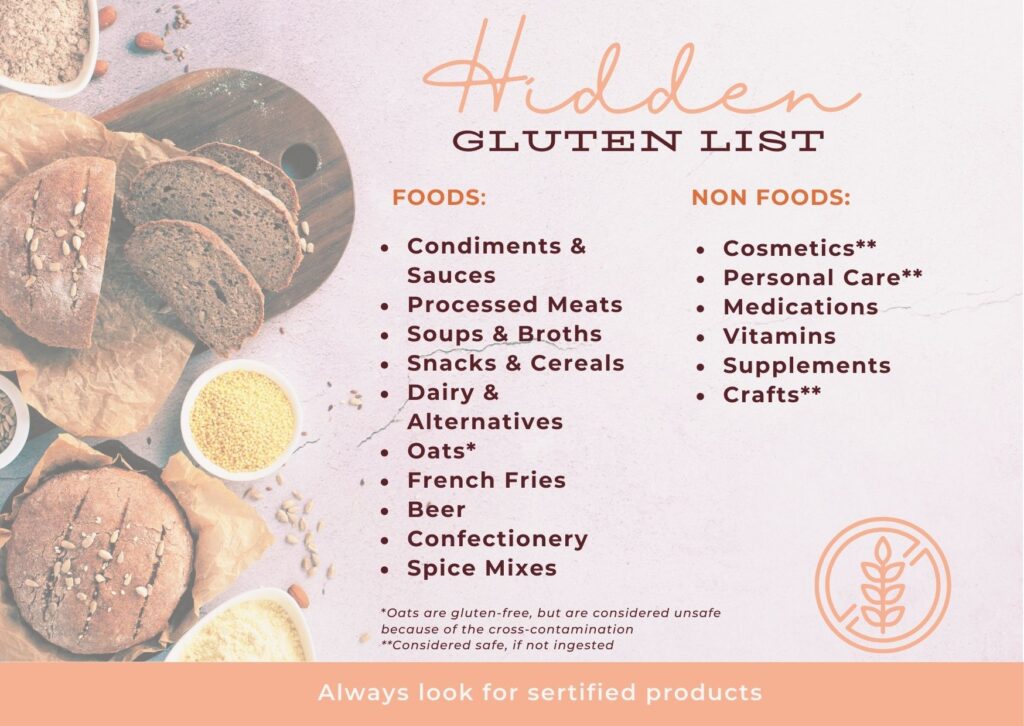
- Sauces and condiments are among the biggest offenders. Soy sauce is traditionally brewed with wheat, and many gravies, marinades, salad dressings, and barbecue sauces rely on wheat flour or malt-based ingredients for body and flavor.
- Processed meats are another frequent source. Sausages, burgers, meatballs, deli meats, and breaded chicken products often contain wheat-based fillers or binding agents. Even when meat looks plain, the seasoning blend may not be.
- Soups and broths also deserve caution. Wheat flour is commonly used as a thickener, and stock cubes or powdered broths often contain wheat or barley extracts. What seems like a light, simple meal can quietly introduce gluten.
- Dairy products are naturally gluten-free, but flavored versions may not be. Ice cream, custards, flavored yogurts, and cream cheese spreads sometimes contain gluten through stabilizers or flavorings.
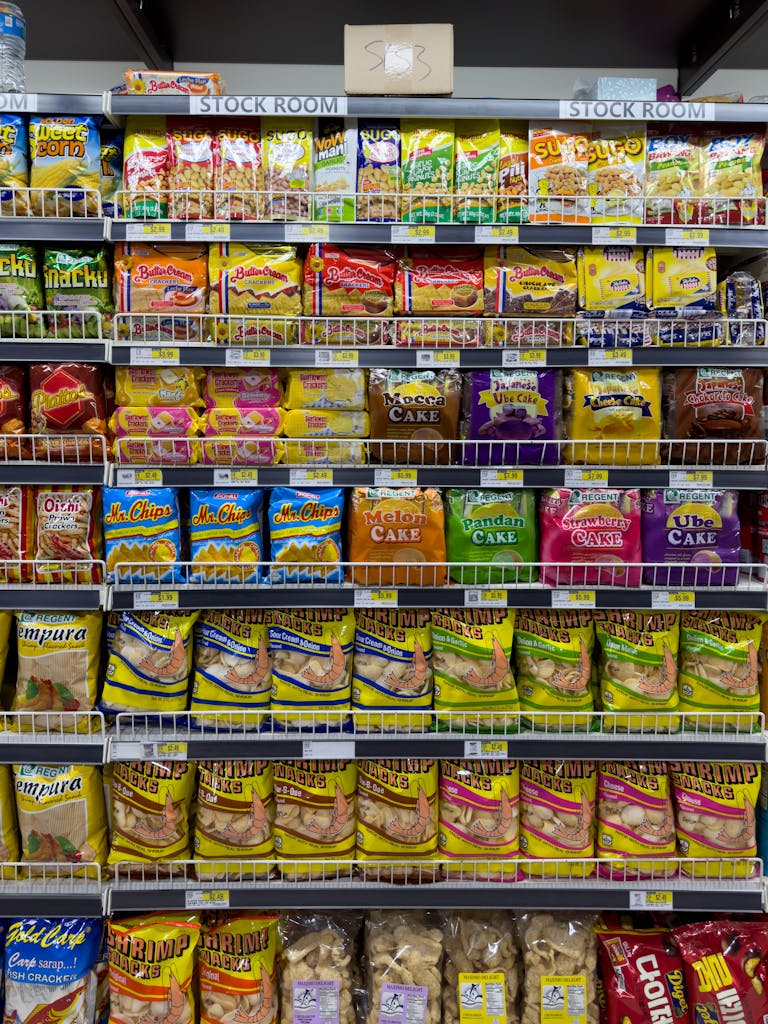
- Snack foods and “health” products are another common trap. Protein bars, flavored crisps, granola, trail mixes, and rice cakes frequently contain gluten in coatings, syrups, or seasonings.
- Even sweets are not exempt. Malt flavoring derived from barley is common in chocolates, candies, and breakfast-style snack bars.
Hidden Gluten in Food Production: How it Happens in Practice
Gluten-containing cereals are used in manufacturing primarily for their functional and flavour-delivery properties.
Thickening and texture (common in processed foods)
Wheat flour and wheat-based thickeners are frequently used in:
- soups and ready meals
- gravies and sauces
- spice mixes and coatings
Binding (especially in formed foods)
Breadcrumbs/rusk/flour may be used in:
- sausages, burgers, meatballs
- some plant-based alternatives
Flavour systems and compound ingredients
“Flavoring,” “seasoning,” and “spice mix” can be compound ingredients. Gluten can enter through:
- wheat-based carriers
- malt-derived flavour notes (often barley)
- inclusions (crispy bits, wafer, biscuit pieces) used in confectionery or snack foods
Ingredient Names That Signal Gluten
Understanding ingredient terminology is one of the most important skills for avoiding hidden gluten. Obvious sources include wheat, barley, rye, spelt, durum, semolina, einkorn, farro, and triticale. Malt in any form, malt extract, malt syrup, or malt flavoring, is almost always derived from barley and should be treated as gluten-containing.
More ambiguous ingredients require caution. Modified food starch, hydrolyzed vegetable protein, textured vegetable protein, dextrin, glucose syrup, caramel color, and natural flavors may be derived from gluten-containing grains unless the source is clearly stated. Coeliac UK and Celiac Canada both advise that if the source grain is not specified and the product is not labeled gluten-free, there may be a risk.
”Nicknames” for Gluten – Wheat (Triticum) terms:
- Triticum vulgare (wheat) germ oil
- Triticum aestivum (wheat) germ oil
- Triticum vulgare extract
- Triticum aestivum extract
- Triticum aestivum (wheat) seed extract
- Triticum aestivum (wheat) bran extract
- Wheat germ extract
- Wheat bran extract
- Wheat seed extract
- Hydrolyzed wheat protein
- Hydrolyzed wheat gluten
- Hydrolyzed wheat starch
- Wheat amino acids
- Wheat peptide / hydrolyzed wheat peptides
- Enzyme-modified gluten (rare, but documented in hygiene/cosmetic discussions)
- Barley and rye terms (less common in lip products but possible)
- Hordeum vulgare (barley) extract
- Secale cereale (rye) extract
Notes:
Important distinction: Hydrolyzed wheat protein in cosmetics is also discussed in the literature for contact reactions (e.g., urticaria) in some individuals, which is separate from coeliac disease mechanisms.
These terms indicate ingredients that are wheat-/barley-/rye-derived or explicitly contain wheat proteins. Presence does not automatically mean clinically significant exposure.
“May Contain” Statements and Cross-Contamination
Statements such as “may contain wheat” or “made in a facility that also processes wheat” are not meaningless legal disclaimers. They indicate a real risk of cross-contamination. For people with coeliac disease, these warnings are particularly important because even very small amounts of gluten can cause intestinal damage.
Organizations such as Beyond Celiac emphasize that repeated low-level exposure can still prevent intestinal healing, even if symptoms are mild or inconsistent.
Why Certified Gluten-Free Matters
Certified gluten-free products are tested to meet strict standards, usually below 20 parts per million of gluten. This additional layer of control helps protect against cross-contamination.
For people struggling with ongoing symptoms despite avoiding obvious gluten, switching to certified gluten-free products is often a turning point.
Hidden Gluten Beyond Food
Hidden gluten is not limited to food. Medications, supplements, and vitamins may use wheat starch as a binder or filler. The U.S. National Library of Medicine and celiac organizations recommend verifying medications with pharmacists or manufacturers when coeliac disease is involved.
Personal care products do not pose a risk through skin contact alone, but products used on the lips or hands can still lead to accidental ingestion. This distinction is supported by Coeliac UK, Beyond Celiac, and Celiac Canada, all of which confirm that gluten must be swallowed to cause harm in coeliac disease.
Hidden Gluten, the Gut, and Long-Term Health
Repeated gluten exposure does more than cause short-term symptoms. In coeliac disease, ongoing exposure prevents the gut lining from healing. This has a direct impact on the gut microbiome, nutrient absorption, and immune balance.
Maintaining a healthy gut is not just about avoiding gluten; it is also about supporting recovery and resilience. This connection is explored further in How To Nurture Your Gut Microbiome For Better Health & Well-Being, which explains why healing the gut is essential for long-term wellbeing after diagnosis.
Learning to Live Confidently With Hidden Gluten
Avoiding hidden gluten is not about fear or restriction. It is about education. The more familiar you become with ingredient names, food categories, and manufacturing practices, the less stressful gluten avoidance becomes.
Whole, minimally processed foods form the safest base of a gluten-free diet. From there, careful label reading, awareness of cross-contamination, and the use of certified gluten-free products help close the gaps where hidden gluten often sneaks in.
Biodegradable Food-Contact Materials: Evidence of Gluten Transfer
Recent laboratory research reported by the Association of European Coeliac Societies (AOECS) has shown that certain biodegradable food-contact materials made from cereal by-products can transfer measurable amounts of gluten into otherwise gluten-free foods. In controlled testing, liquids placed in contact with plates made from wheat bran reached gluten concentrations well above the commonly accepted 20 mg/kg (ppm) threshold used for gluten-free foods.
Other materials produced from durum wheat semolina also released detectable gluten, whereas items such as rye-stalk straws or cutlery primarily composed of polylactic acid showed minimal transfer. These findings are significant because food-contact materials are not currently subject to allergen labelling requirements, meaning the presence of cereal-based components may not be visible to consumers.
From a practical perspective, this research identifies biodegradable plates, bowls, or packaging made from wheat-derived fibres as a credible, non-dietary source of gluten exposure, particularly in takeaway, street-food, and catering settings.
Gluten Cross-Contamination: Shared Equipment and Kitchens
Cross-contact can occur when gluten-free products are made or handled on shared equipment
- lines, mixers, conveyors, ovens
- fryers and oil systems
- storage containers and scoops
Health Canada explicitly notes that gluten-free foods produced under good manufacturing practices may contain up to 20 ppm due to unavoidable cross-contamination and still meet the intent of gluten-free claims.
Canada’s inspection guidance also addresses the acceptability and handling of gluten/allergen claims.
Medicines and Supplements: Hidden Gluten Ingredients
Medications and dietary supplements are an often-overlooked source of hidden gluten, yet they can be especially relevant for people with celiac disease. While gluten is not an active ingredient in medicines, wheat-derived starches and binders may be used to hold tablets together or improve stability. Ingredients such as wheat starch, pregelatinized starch, dextrins, or unspecified “starch” can sometimes be derived from gluten-containing grains.
Because labeling rules for medicines and supplements are different from food labeling laws, gluten is not always clearly disclosed. Trusted organizations such as Coeliac UK and Beyond Celiac advise patients to check with pharmacists or manufacturers when there is uncertainty and not to assume a product is gluten-free unless it is explicitly stated. For people with celiac disease, this extra step helps prevent accidental ingestion and supports consistent intestinal healing.
Gluten In Tea Bags
Tea bags are usually gluten-free, but they can occasionally be a source of concern for people with celiac disease—not because of the tea leaves themselves, but because of added flavorings or manufacturing materials.
Plain black, green, white, and herbal teas do not naturally contain gluten. However, some flavored teas may include ingredients such as malt flavoring or cereal-derived “natural flavors,” and there have been questions about whether adhesives used to seal tea bags could contain gluten-based starches.
The most reputable tea manufacturers do not use gluten-containing materials in tea bags, but flavored varieties and specialty blends are worth double-checking, especially if symptoms persist without an obvious cause. Choosing unflavored teas or brands that clearly state their gluten-free status offers extra reassurance.
Hidden Gluten Safer Decisions:
Hidden gluten becomes manageable once you know where it matters and where it doesn’t. Foods and products that enter the mouth are the priority, such as sauces, soups, processed meats, flavored snacks, medications, supplements, lip products, and flavored teas. because these are the most common sources of accidental ingestion.
In contrast, items like shampoos, body washes, hand creams, and lotions are generally safe for people with celiac disease, provided they are not used on the lips or transferred to the mouth. The simplest rule of thumb is this: if it can be swallowed, it deserves scrutiny; if it stays on intact skin, it usually does not.
By focusing on high-risk categories and letting go of unnecessary worries, people with celiac disease and gluten intolerance can protect their health while living a more relaxed, confident gluten-free life.
Fancy a Freebie?
Subscribe for my newsletter
and get your FREE eBook with 7 delicious gluten-free desserts!
*We will only send you gluten-free, lactose-free, refined sugar-free emails; you can unsubscribe anytime. Read our Privacy & Cookie Policy.

FAQs
1. What does “hidden gluten” actually mean?
Hidden gluten refers to gluten that appears in foods or products where it isn’t obvious, such as sauces, processed foods, supplements, or flavored drinks. It’s usually present because gluten-containing ingredients are used for texture, flavor, or stability, or because of cross-contamination during manufacturing.
2. Why is hidden gluten a problem for people with celiac disease?
For people with celiac disease, gluten causes harm when it is eaten, even in very small amounts. Hidden gluten can lead to repeated, accidental ingestion, which may prevent the gut from healing properly—even if symptoms are mild or not immediately noticeable.
3. What are the most common everyday sources of hidden gluten?
Some of the most common sources include sauces and gravies, soy sauce, soups, processed meats, flavored snacks, candies with malt flavoring, and certain medications or supplements. These products often contain wheat- or barley-derived ingredients that are easy to overlook.
4. Can medications and supplements contain hidden gluten?
Yes. Medications and supplements may contain wheat-derived starches or binders, and gluten is not always clearly disclosed due to different labeling regulations. For people with celiac disease, checking with a pharmacist or manufacturer when ingredients are unclear is a sensible precaution.
5. Are tea bags safe for people with celiac disease?
Plain black, green, white, and herbal teas are generally gluten-free. However, flavored teas may include gluten-containing ingredients such as malt flavoring or cereal-derived natural flavors. Choosing unflavored teas or brands that state they are gluten-free provides extra reassurance.
6. Do skincare or hair products containing gluten affect celiac disease?
Gluten does not cause harm through skin contact alone. In celiac disease, gluten triggers an immune response only when ingested. Products used on the lips, hands, or face may still require caution due to the possibility of accidental ingestion, rather than skin absorption.



Thank you for stopping by! I’m Dani!
nutrition student | Healthy Live Promoter | Gluten-free recipe developer
Welcome to DeGlutenista Nutrition!
Your visit really means the world to me. I’m happy to share simple, nourishing gluten-free recipes and practical food tips focused on gut health and clean eating, all with an emphasis on reducing ultra-processed ingredients.
My approach is simple: practising mindful eating, regardless of food sensitivities, can be both tasty and healthy.