
Fermented Beetroot, Cauliflower, Garlic & Dill Recipe – A Colourful, Gut-Loving Jar You Can Make at Home

This post may contain affiliate links. If you make a purchase through these links, I may earn a small commission at no extra cost to you. I only recommend products I personally use and trust. Thank you for your support!
A jar of fermented beetroot and cauliflower is more than a recipe—it’s a little ritual of care. The colours deepen each day, the brine begins to cloud, and you can almost feel the live cultures working. It’s a slow, grounding reminder that your gut thrives on simple, real foods.
Foods that don’t rush or demand, and that transform naturally, just like the ferments that filled my childhood kitchen back in my homeland. This fermented beetroot cauliflower recipe with garlic and dill blends my heritage, my studies, and my love for uncomplicated, gut-friendly food.
This fermented beetroot cauliflower recipe is a delightful addition to any meal, rich in flavors and health benefits. The fermented beetroot cauliflower recipe enhances digestion and supports gut health.
In Bulgaria, fermentation is practically a part of our DNA. It starts with our national symbol, Lactobacillus bulgaricus, which makes the delicious probiotic-rich yogurt and stuffed fermented cabbage leaves (Sarmi) for Christmas.
The jars of sauerkraut and fermented vegetables lining the balcony in winter—long before I ever learned, in my nutrition studies, how rich they are in probiotics, vitamins, and beneficial bacteria.
Now, with an understanding of the science of wild fermentation, it all makes perfect sense. These simple jars support digestion, microbiome diversity, and immune function—naturally, affordably, and without any complicated tools. If you love beetroot, you might also enjoy my beet kvass recipe.
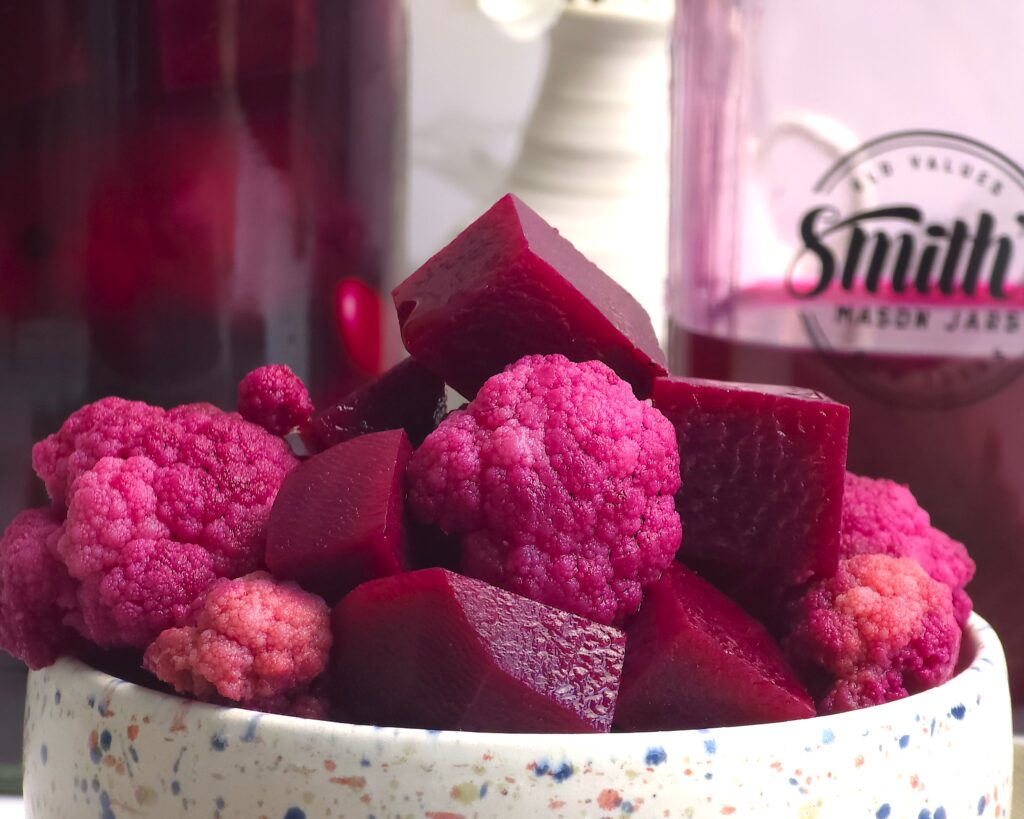
Looking for a great way to enjoy your veggies? This fermented beetroot cauliflower recipe is the perfect solution!
Why Fermented Beetroot, Cauliflower, Garlic & Dill?
This combination reflects the heart of Bulgarian-style ferments: flavourful, functional, and vibrant.
• Fermented beetroot is rich in antioxidants and betalains—natural pigments with powerful anti-inflammatory and detoxifying properties that help combat oxidative stress and support liver health—while adding a naturally sweet, earthy flavor.
• Fermented cauliflower retains its structural integrity and crisp texture while absorbing lactic acid from the brine. This process enhances its probiotic content, supports gut microbiota balance, and preserves essential nutrients such as vitamin C and fiber.
• Fermented garlic undergoes enzymatic changes that soften its pungency, resulting in a mellow, buttery flavor while preserving allicin, a bioactive compound known for its antimicrobial and cardiovascular benefits.
• Dill adds aroma and ties the ferment to classic Eastern European flavors.
Together, they create a probiotic-rich vegetable fermented recipe that supports digestion, reduces inflammation, and enriches your meals with colour and crunch.
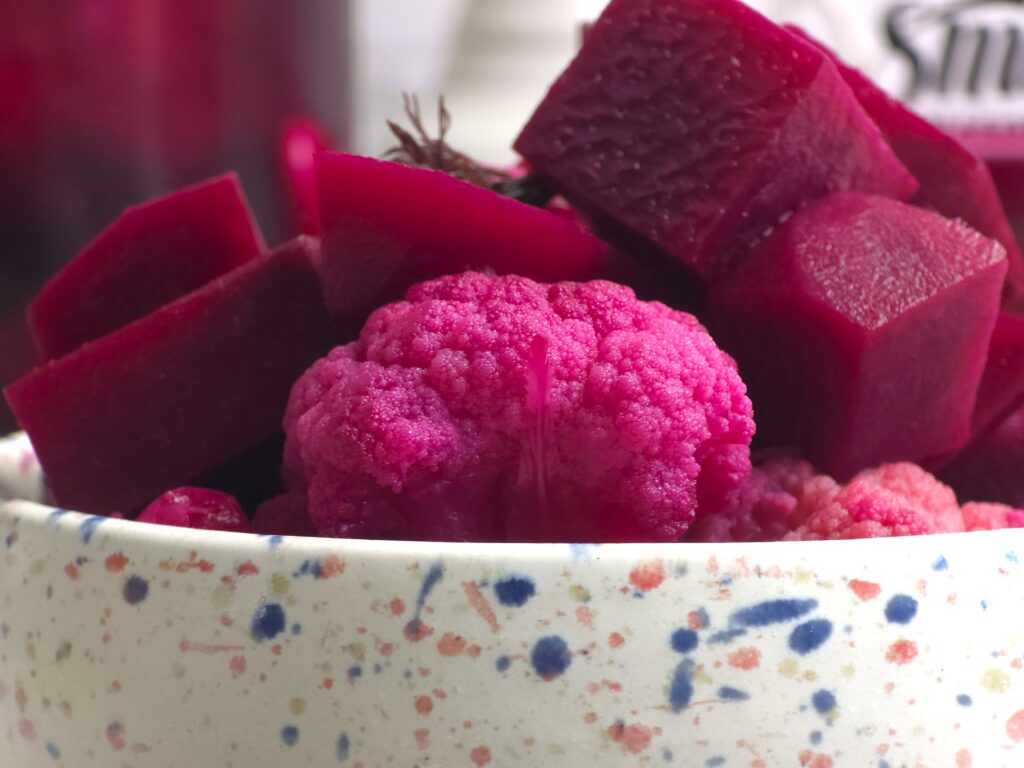
What Is Wild Fermentation?
Wild fermentation relies on the naturally occurring lactic acid bacteria present on vegetables. When placed in the right salt brine (2–3%), these beneficial microbes convert natural sugars into lactic acid—a natural preservative that lowers pH and creates a safe, probiotic-rich environment.
Unlike vinegar pickling, lacto-fermented vegetables like this produce:
• live probiotics • increased bioavailability of micronutrients • improved flavour complexity • enhanced digestibility
This is why traditional Bulgarian fermented vegetables—from sauerkraut to mixed jars—played such an important role in winter nutrition. Learn more about Fermentation in this article.
Gather the ingredients for this fermented beetroot cauliflower recipe to start your fermentation journey today!
Fermented Beeroot, Cauliflower Recipe Ingredients:
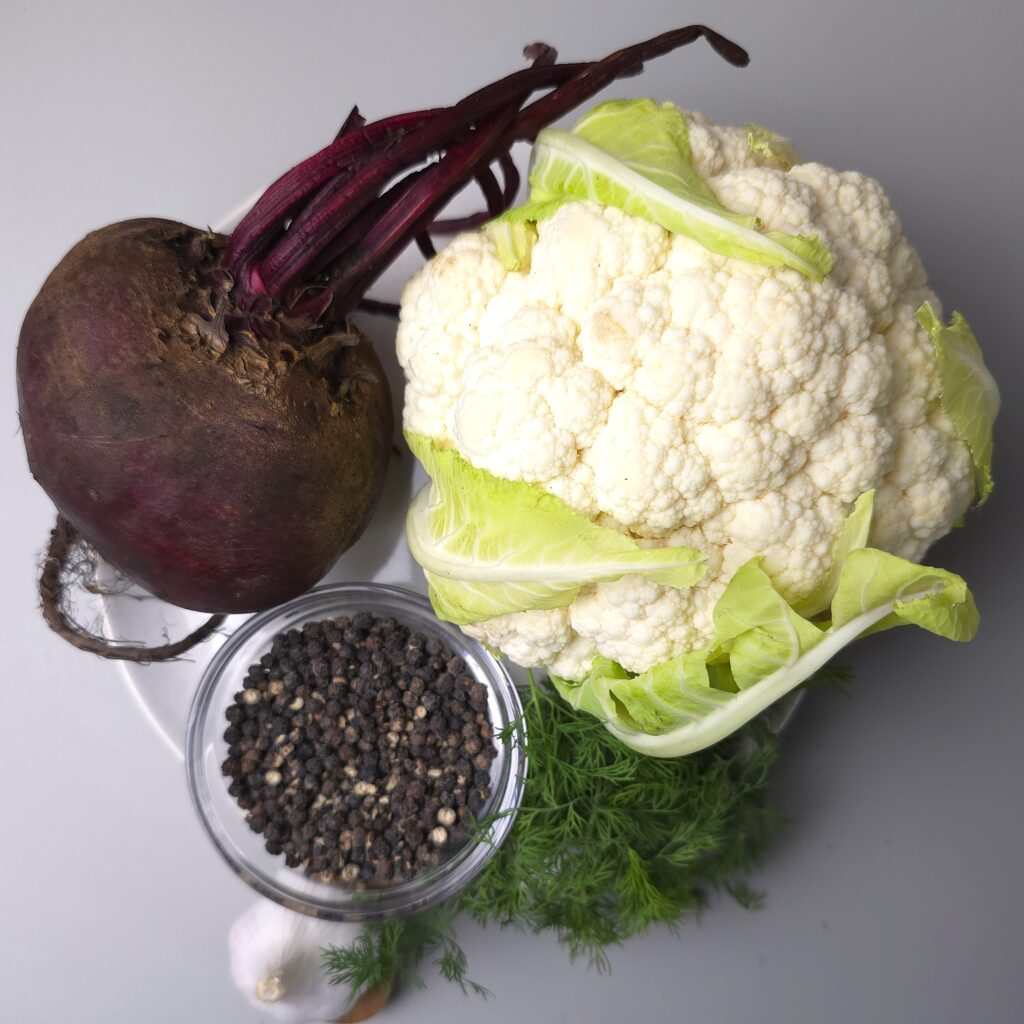
1 large or 2 medium beetroot (cubed). Choose firm, organic, seasonal beetroot whenever possible. Organic roots carry a richer natural microbial diversity, which supports wild fermentation. Smaller beetroots tend to be sweeter and ferment more evenly.
One medium head of cauliflower, cut into florets. Use fresh, crisp cauliflower with tightly packed florets. Avoid pre-cut or old cauliflower, as it softens too quickly during fermentation. Organic is ideal because it reduces the risk of pesticide residue interfering with beneficial bacteria.
3–4 garlic cloves. Fresh, firm garlic cloves work best. Avoid older garlic that has begun to sprout. Organic garlic offers a stronger flavour and better natural microbial balance. If you like a punchier garlic profile, slice the cloves.
Fresh dill. Choose fresh, fragrant dill, ideally seasonal. Dill stems are just as flavourful as the fronds—don’t discard them. Avoid dried dill for fermentation; it loses potency and can cloud the brine.
Sea or Himalayan non-iodised salt. Use non-iodised, additive-free sea salt. Iodine and anti-caking agents can inhibit fermentation. Sea salt or Himalayan salt both work well. Avoid table salt.
Filtered or boiled-and-cooled water. Use filtered or boiled-and-cooled water to avoid chlorine, which can slow or disrupt fermentation. If your tap water is heavily chlorinated, filtered water is the safest choice.
Add 5–6 whole black peppercorns for a gentle warmth and extra depth of flavour. They ferment well and complement beetroot, garlic, and dill beautifully.
Making a 2–3% Salt Brine
Be sure to follow the steps in this fermented beetroot cauliflower recipe for the best results.
To safely ferment beetroot and cauliflower, use:
Enjoy the health benefits of this fermented beetroot cauliflower recipe with every bite.
• 2% brine = 20 g sea salt per 1 L water
• 3% brine = 30 g sea salt per 1 L water. This is my preferred version of this recipe, but if you find it too salty, feel free to use 2% brine.
For this recipe:
Use 1 L of water + 30 g of salt. Mix until dissolved.
Equipment
Wooden board
Fermented Beetroot Cauliflower Recipe Step-by-Step
Sterilise Your Jar. Pour boiling water into your jar and let it air-dry. This helps create a clean environment for lacto-fermentation.
Prepare the Vegetables. Peel and chop the beetroot evenly, floret the cauliflower, peel the garlic, and rinse the dill.
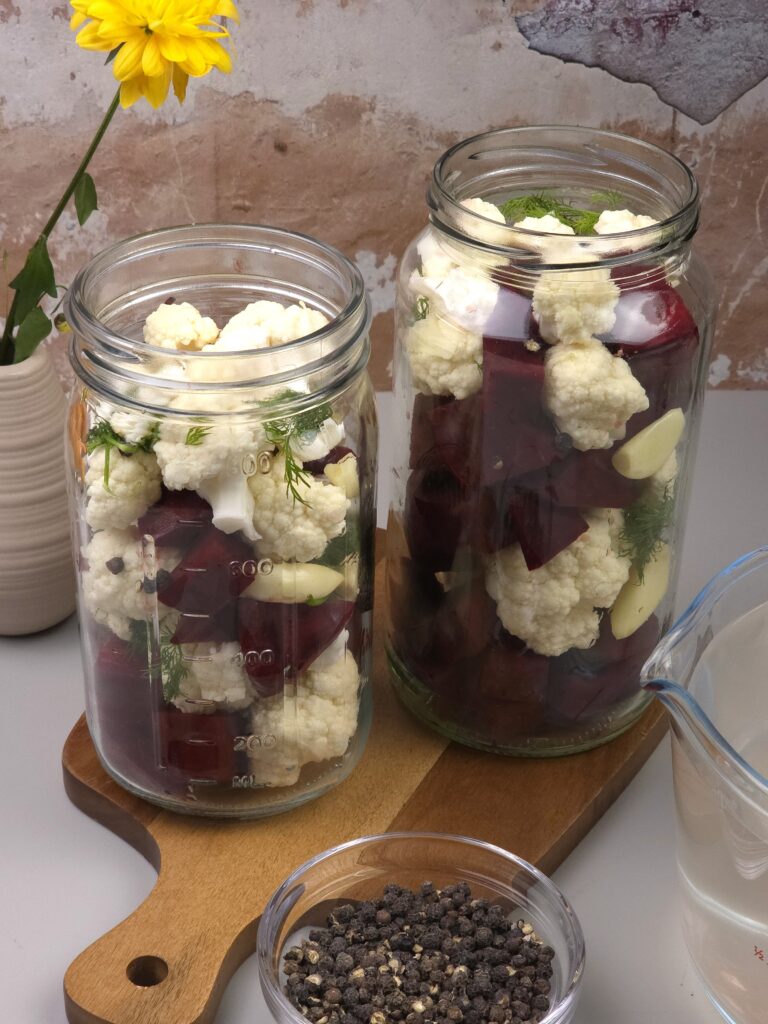
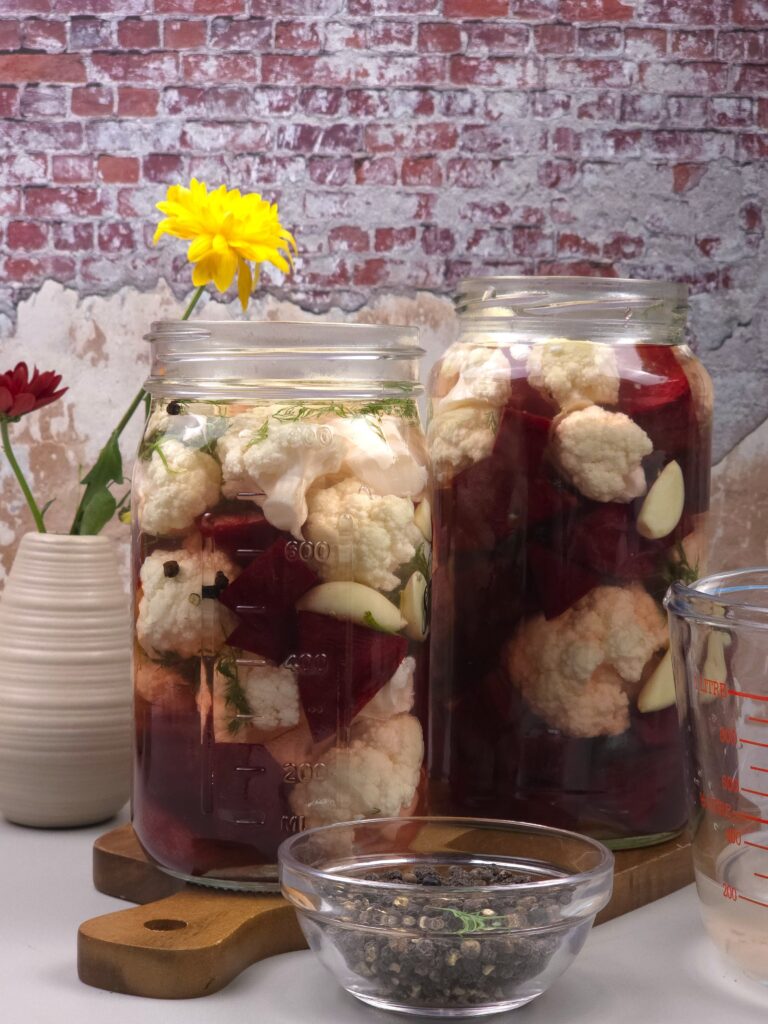
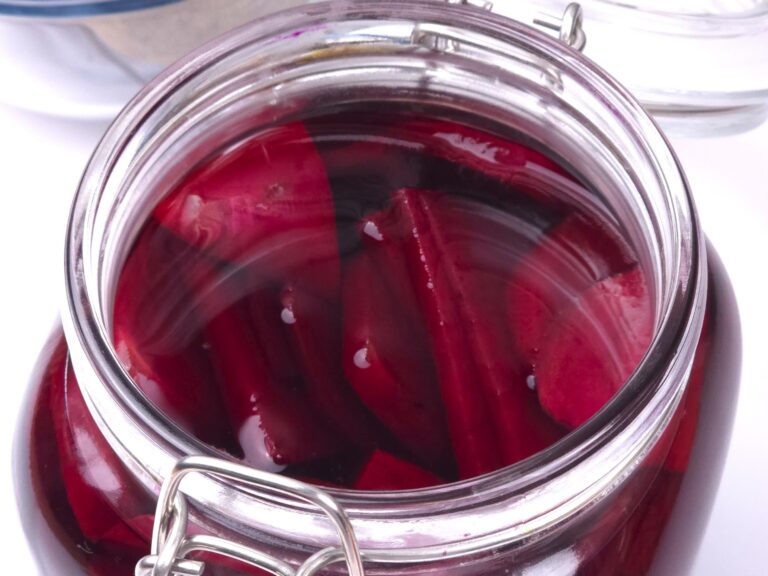
Pack the Jar. Layer all vegetables. Press down to release air pockets.
This layered look is common in Bulgarian fermented vegetable recipes.
Add the Brine. Pour the salt brine over the vegetables until they are submerged.
Add a Weight. I use a cabbage leaf + a small glass weight. The other option is a plastic bag with water.
This prevents floating vegetables, which is crucial in wild vegetable fermentation.
Note! If you close the jars, you have to burp them. Just untight the lid slowly, and you will hear a hissing noise. Burp daily during the first 2–3 days. Or use a fermenting valve.
Ferment at Room Temperature. Place the jars into a shallow tray or plate, and the brine will spill. Store between 18–22°C for 5–7 days. Check the jars regularly for floating vegetables. If you find any, discard them and make sure there is no air trapped between the weight and the veggies.
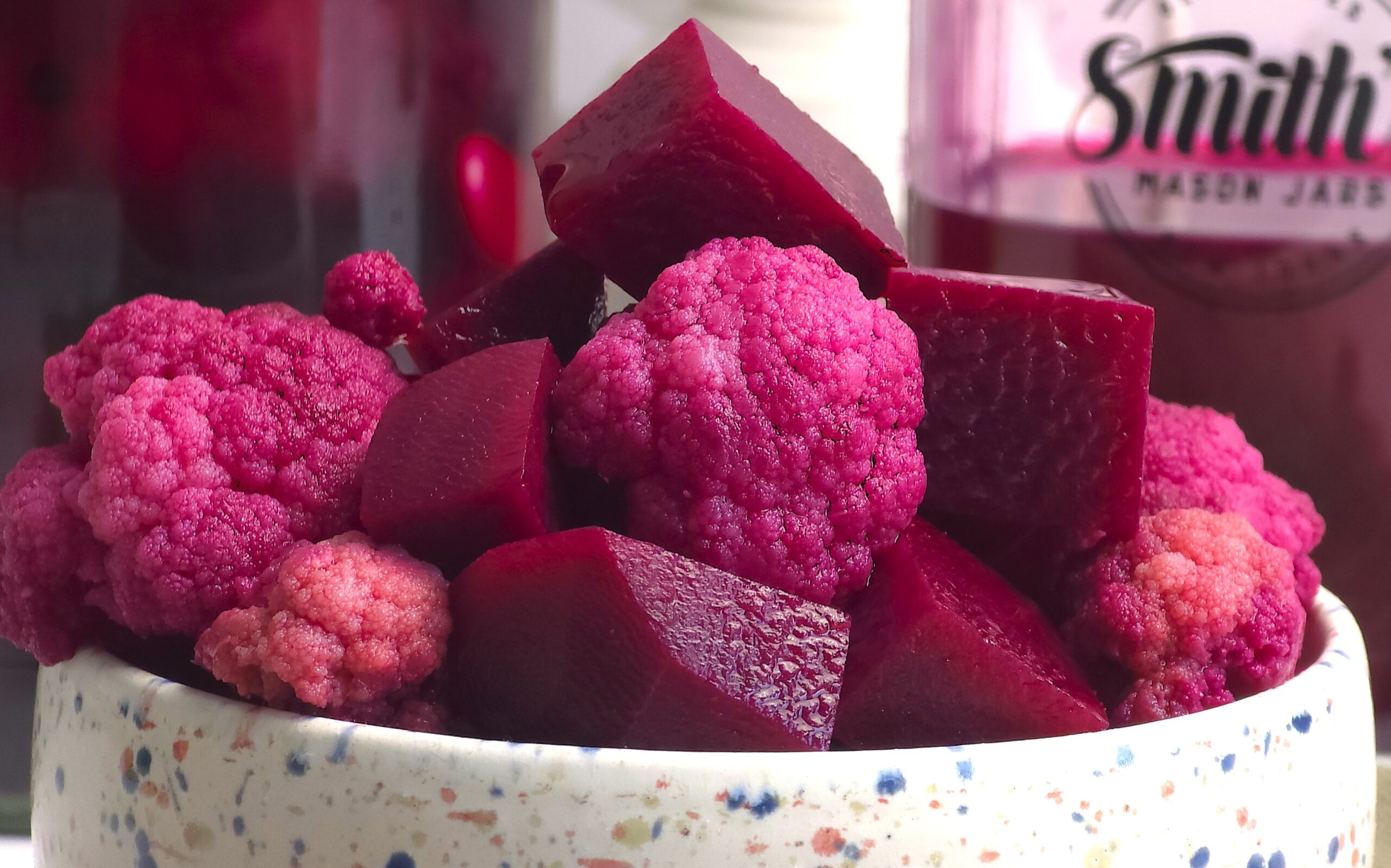
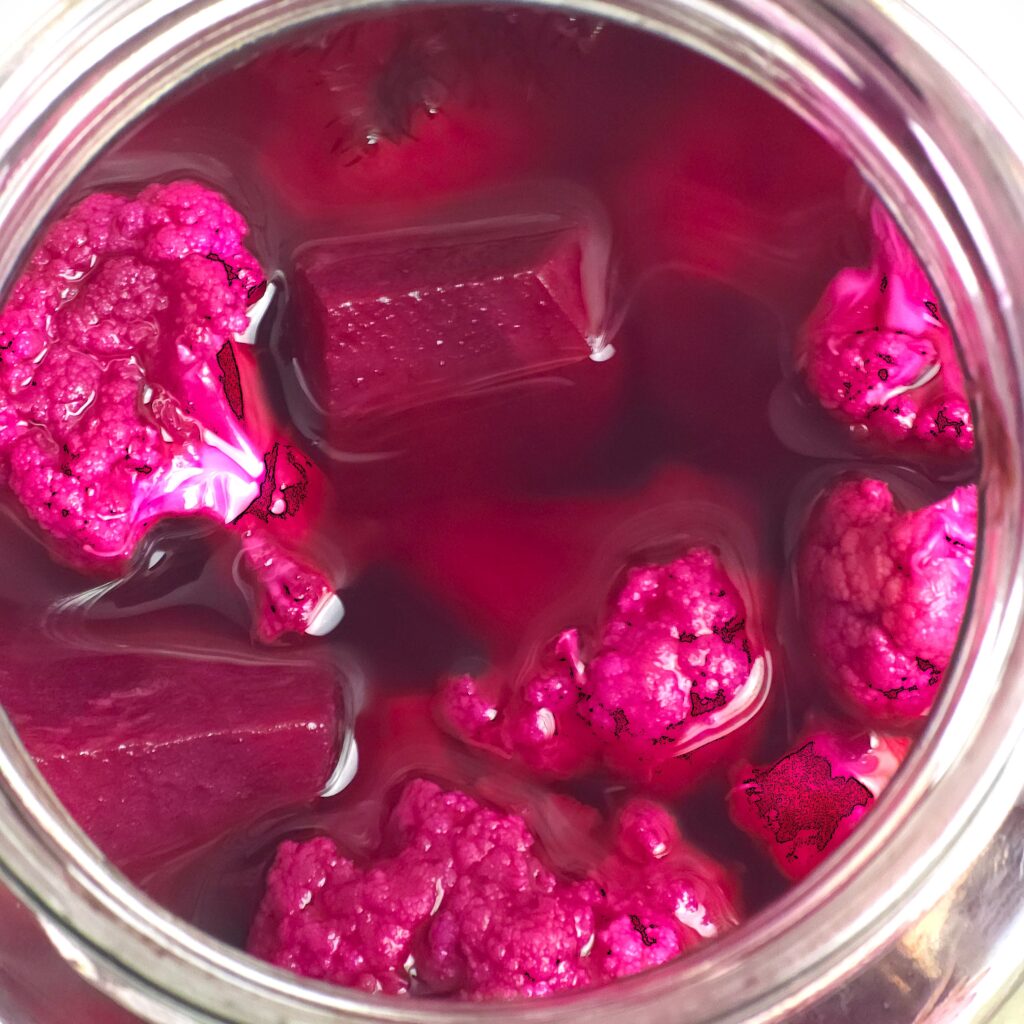
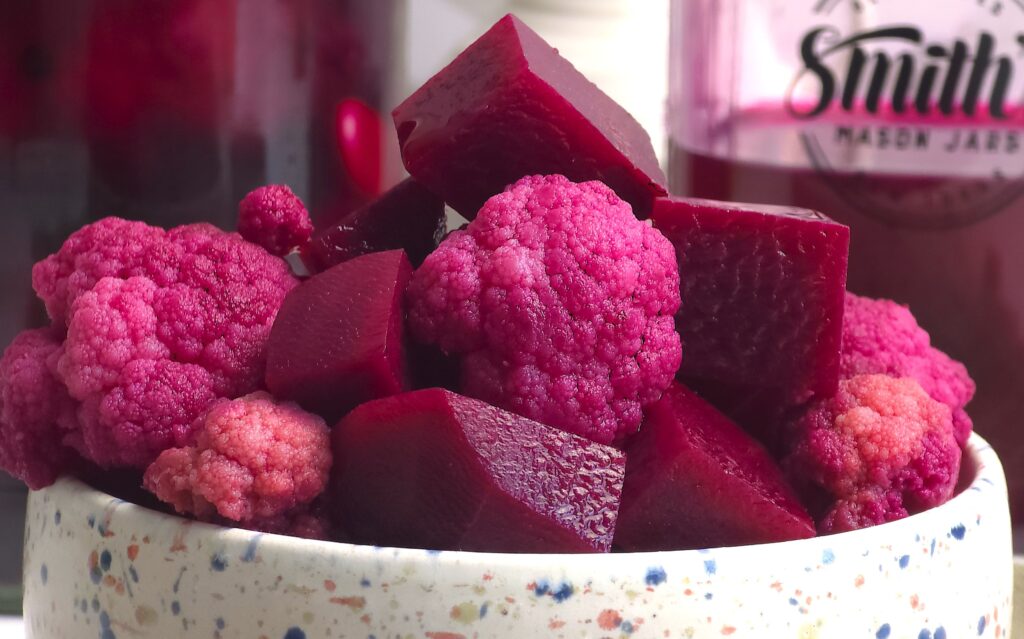
During fermentation, expect to see lively bubbles—a reassuring sign that the process is active and healthy. The brine may turn cloudy, indicating successful lacto-fermentation. And don’t be surprised when the beetroot shares its vibrant personality, staining everything in the jar a deep, beautiful pink.
Taste after day 5. Refrigerate when tangy and crunchy.
Enjoy!
Fermented Beetroot Cauliflower Recipe Nutritional & Health Benefits
Natural Probiotics. Strains such as Lactobacillus plantarum flourish in this ferment, support gut barrier integrity, improve digestion, increase microbial diversity, and contribute to the immune balance.
Prebiotic Fibre. Beetroot and cauliflower contain fibres that feed beneficial bacteria. Fermentation makes them easier to digest—a huge advantage for sensitive guts.
And more! Beets are packed with folate (vitamin B9) and manganese. Plus, they’re a great source of potassium, vitamin C, and iron. What’s more, beets contain nitrates that your body turns into nitric oxide, which can help keep your blood pressure in check.
Fermented Beetroot & Cauliflower Recipe Serving Suggestions
• Add to salads • Serve with grilled chicken, meat, or fish • Use as a topping for omelettes (add at the end) • Combine with quinoa or buckwheat bowls • Mix into gluten-free wraps • Serve with Bulgarian yogurt or kefir • Drink 1 tbsp brine for digestive balance
Troubleshooting
Cloudy brine? Normal sign of active fermentation.
Try this fermented beetroot cauliflower recipe and discover new ways to enjoy fermented foods.
Garlic turning blue? A harmless reaction between sulphur and amino acids.
Floating veg? Weigh down again—oxygen allows mould to grow.
Mould? If fuzzy, colourful, or foul → discard.
Too salty? Soak the veggies in water before eating, and use 2% brine next time.
Storage
Refrigerate for 3–6 months.
Traditional Bulgarian homes often kept these jars through the winter, letting the flavours deepen without losing crispness.
Fermented Beetroot Cauliflower Recipe FAQs
What’s the difference between fermented vegetables and pickled vegetables? Pickling uses vinegar; fermentation uses beneficial bacteria to create probiotics.
Is fermented beetroot good for gut health? Yes—rich in probiotics, antioxidants, and fibre.
Can people with gluten intolerance eat fermented vegetables? Yes—this recipe is naturally gluten-free.
Curious about variations? This fermented beetroot cauliflower recipe can be adapted to include other vegetables.
How long does it take to ferment beetroot and cauliflower? 5–7 days at room temperature.
Why does garlic turn blue during fermentation? It’s a natural chemical reaction and completely safe.
Fancy a Freebie?
Subscribe for my newsletter
and get your FREE eBook with 7 delicious gluten-free desserts!
*We will only send you gluten-free, lactose-free, refined sugar-free emails; you can unsubscribe anytime. Read our Privacy & Cookie Policy.

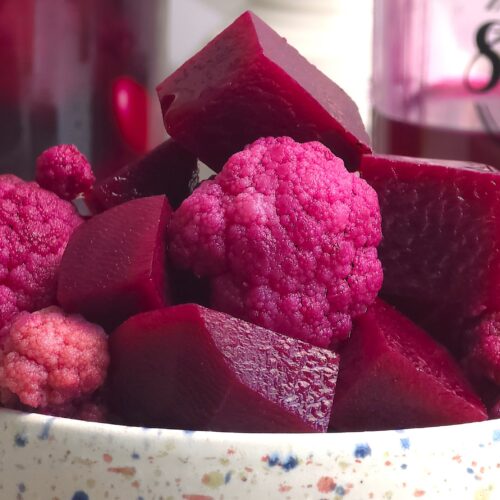
Fermented Beetroot, Cauliflower, Garlic & Dill Recipe (Lacto-Fermented Vegetables)

Equipment
Ingredients
- 1 medium Beetroot peeled and sliced into sticks or wedges
- 1 medium head Cauliflower in florets
- 4 cloves Garlic peeled
- 1 handful Dill fresh
- 1 whole cabbage leaf to use as a weight
- 30 g Salt non-iodised sea or pink, for brine
- 1 L Water filtered or boiled-and-cooled
- 1 handful Black peppercorn optional
Instructions
- Rinse your glass jars with boiling water and leave them to air-dry.
- Slice or chop the beetroot evenly, chop the cauliflower into florets, peel the garlic, and rinse the dill.
- Dissolve 30 g of sea salt in 1 L filtered or cooled boiled water to create a 3% brine.
- Layer beetroot, cauliflower, garlic, and dill inside the jar. Press the vegetables down gently to remove air pockets.
- Pour the brine over the vegetables until they are fully submerged. Leave a few centimetres of space at the top of the jar.
- Fold a clean cabbage leaf over the top and place a small fermentation weight or a clean, heavy glass to keep everything submerged.
- Close with a fermentation lid or keep a standard lid slightly loose. If the lid is tight, burp the jar daily for the first 2–3 days to release built-up gases.
- Leave the jar at 18–22°C for 5–7 days.
- Expect bubbles and cloudiness—both normal signs of active lacto-fermentation.
- Start tasting on day 5.
- When the flavour is tangy, crunchy, and vibrant, remove the weight and store the jar in the fridge. It will keep for 3–6 months.
Notes
YourDani x x
Nutrition

Mention @deglutenistanutrition and tag #deglutenistanutrition — you’ll make my day! 🌿✨

Thank you for stopping by! I’m Dani!
nutrition student | Healthy Live Promoter | Gluten-free recipe developer
Welcome to DeGlutenista Nutrition!
Your visit really means the world to me. I’m happy to share simple, nourishing gluten-free recipes and practical food tips focused on gut health and clean eating, all with an emphasis on reducing ultra-processed ingredients.
My approach is simple: practising mindful eating, regardless of food sensitivities, can be both tasty and healthy.