
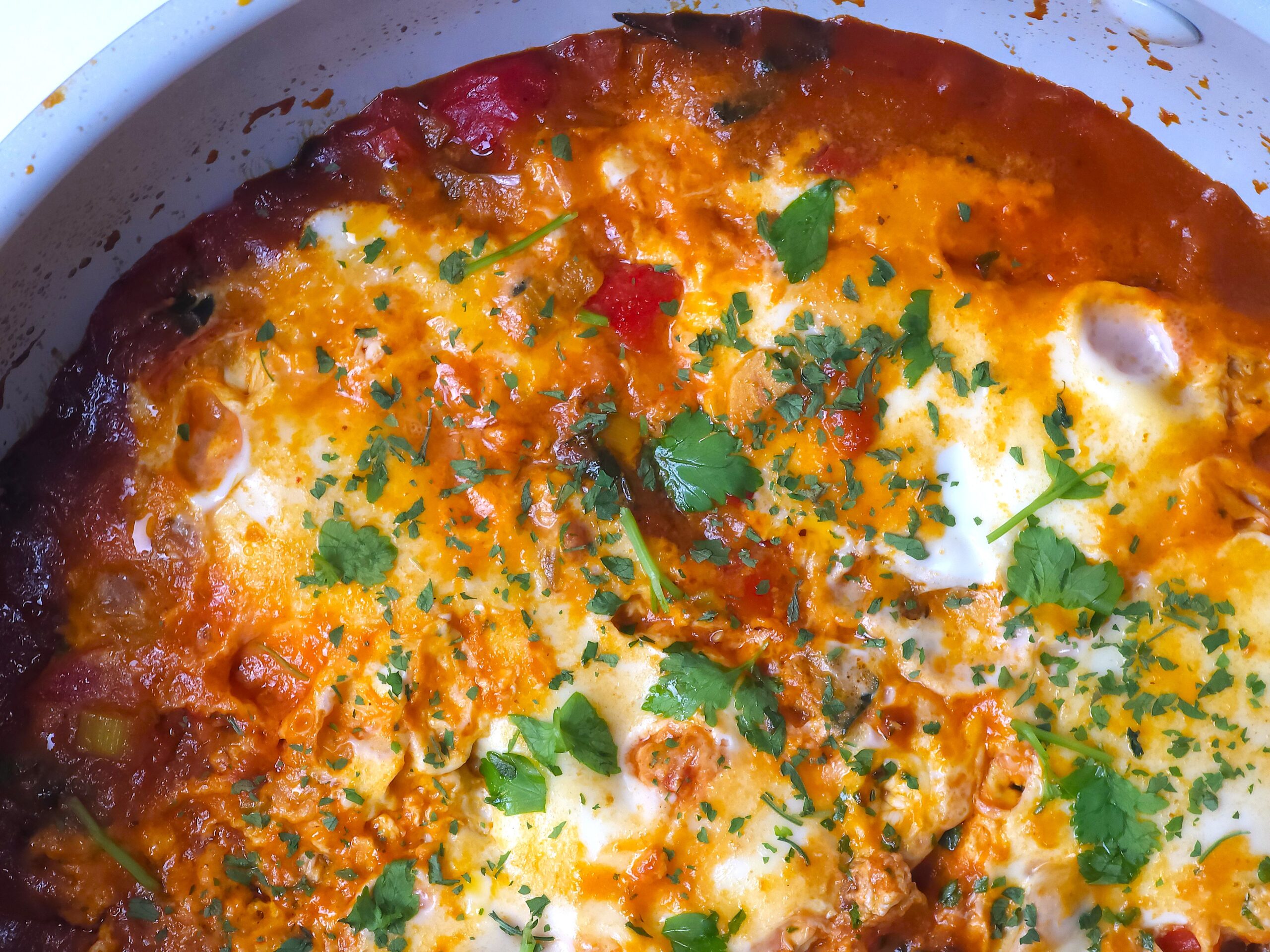
The Best Shakshuka Recipe – Full of Love and Comfort

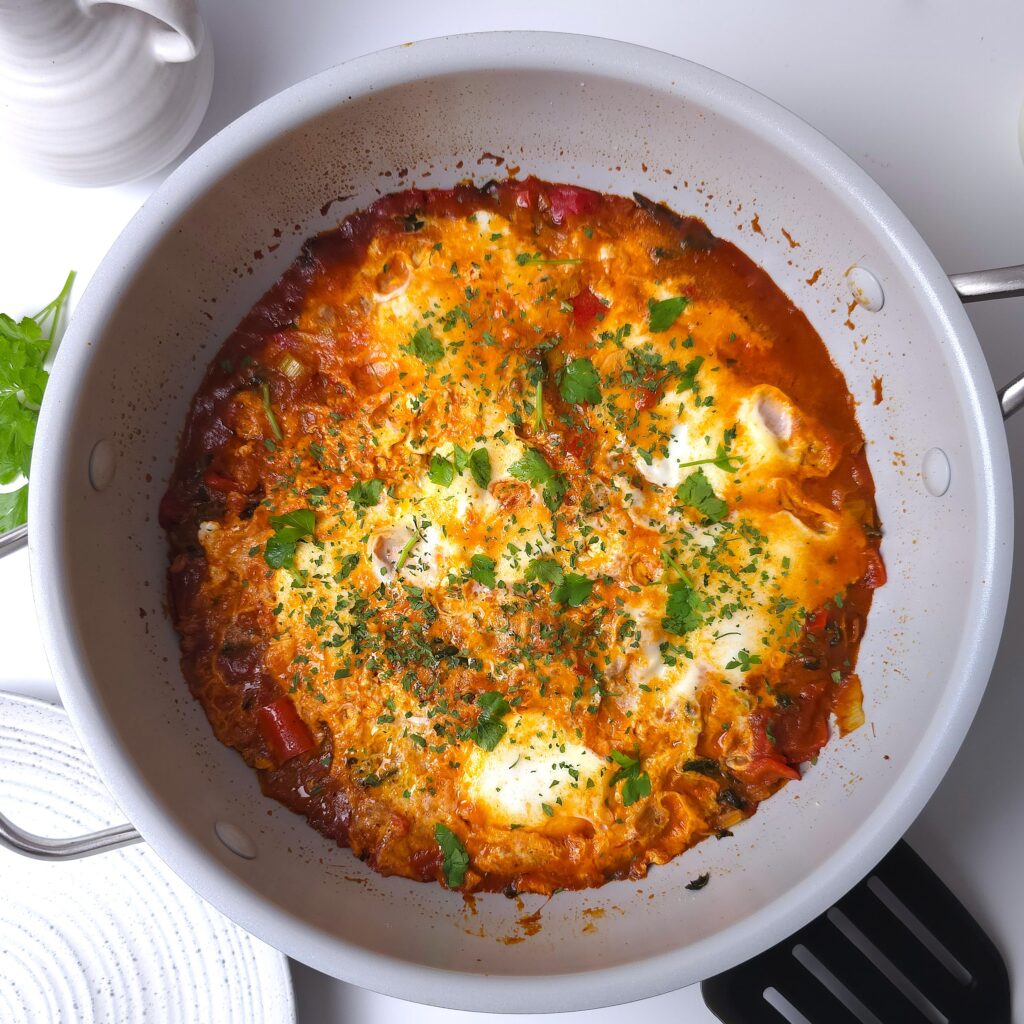
There’s something enchanting about this shakshuka recipe—eggs slowly poaching in a bubbling mix of tomatoes, peppers, and warm spices, filling the kitchen with the inviting scent of Mediterranean mornings.
I first heard about shakshuka a couple of years ago from my friend from university. We went for brunch at a local coffee shop. Because she is a vegetarian, she chose shakshuka. Well, I must confess that I was initially intrigued by the name; it sounded amusing to me, and I added it to my must-try list.
So, on one of the slow mornings without lectures or work, I decided to try this dish, even though I wasn’t sure I had all the ingredients. Of course, this shakshuka is highly versatile – I had no onion, but I had leek, kale, and red pepper from the fridge.
Guess what, that little experiment turned into a regular weekend ritual: my own gluten-free, lactose-free twist on a classic Middle Eastern comfort dish that’s nourishing, balanced, and bursting with flavor.
This post may contain affiliate links. If you make a purchase through these links, I may earn a small commission at no extra cost to you. I only recommend products I personally use and trust. Thank you for your support!
In addition to elevating the flavor of this shakshuka recipe, I used my Homemade Italian Tomato Sauce instead of canned tomatoes. It gives the dish a richer, more balanced taste, plus extra garlic and natural sweetness that pair beautifully with the spices and eggs.
You can also prepare it in advance and keep a jar on hand for quick, Mediterranean-inspired meals any day of the week.
If you enjoy hearty, protein-packed breakfasts like this shakshuka recipe, you’ll love my Kale Mushroom Omelet. It’s another quick and gluten-free favorite that brings together fluffy eggs, kale, and melting lactose-free cheese. Perfect for busy mornings when you need something nourishing, comforting, and full of flavor.
To complete the Middle Eastern experience, enjoy this shakshuka recipe with a chilled glass of Ayran Hydration Drink. This yogurt-based drink is popular across the Middle East and the Balkans, offering a refreshing, slightly salty balance to the rich tomato sauce and spices. It’s naturally hydrating and perfect for balancing the warmth of this classic dish.
What Is Shakshuka?
Shakshuka has deep roots in North African and Middle Eastern cuisine, particularly Tunisia and Libya, where it began as a humble dish cooked in well-seasoned pans over open fires.
The name comes from the Arabic word shakshek, meaning “to mix up,” which perfectly describes how the ingredients meld together in the pan.
What I love most is how something so simple can feel so soulful; every bite tastes like sunshine and warmth, especially when made with fresh vegetables and a pinch of love.
This shakshuka recipe is a vibrant, one-pan meal that combines eggs, tomatoes, and spices for pure comfort, and now in my Cheshire kitchen too.
Why You’ll Love This Shakshuka Recipe
This version is:
- Gluten-free and lactose-free – perfect for sensitive tummies.
- Packed with fiber and antioxidants from kale, leeks, and tomatoes.
- One-pan magic – less washing up, more enjoying.
- Protein-rich – six eggs make it a powerhouse breakfast or brunch.
- Naturally refined sugar-free – only whole, nourishing ingredients.
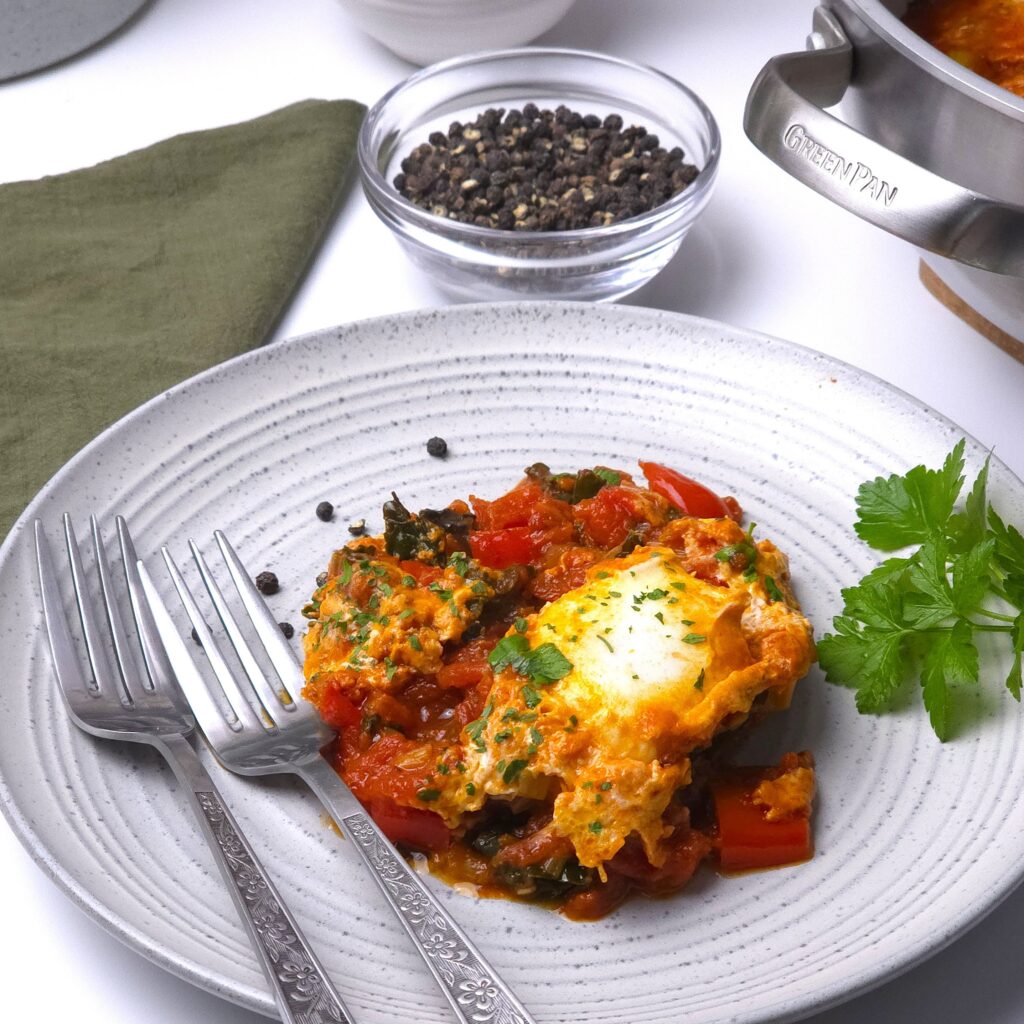
Ingredients You’ll Need for This Shakshuka Recipe
Every ingredient in this dish brings something special, both in taste and nutrition.
Leek:
A gentle member of the onion family, the leek is easier to digest and rich in prebiotic fiber, which supports gut health and feeds beneficial bacteria. When sautéed, it adds a subtle sweetness and creamy texture to the sauce.
Kale:
Massaged kale softens beautifully while retaining its nutrients. It’s high in vitamins A, K, and C, and adds bulk and fiber, with a satisfying bite that balances the silky tomato base.
Red Bell Pepper:
This sweet, crunchy vegetable is rich in vitamin C and carotenoids, providing both color and immune support.
Tomatoes (700g chopped):
Tomatoes are the soul of shakshuka. They provide lycopene, a potent antioxidant linked to heart health, and a natural sweetness when cooked down slowly.
Spices (Sweet Red Paprika and Cumin Powder):
These give the dish its signature aroma and depth. Sweet paprika brings warmth, while cumin adds an earthy undertone typical of Middle Eastern cuisine.
Eggs (6 medium):
Eggs are a complete protein, providing essential amino acids, healthy fats, and vitamin D. Poaching them in the sauce keeps them tender and preserves their flavor.
Parsley:
The finishing touch — fresh, aromatic, and rich in antioxidants. It lifts the entire dish with a fresh note.
Rice bran oil (or olive oil):
Used for sautéing, rice bran oil is a neutral, high-smoke-point oil rich in vitamin E and oryzanol, while olive oil adds traditional Mediterranean flavor.
Equipment
How to Make Shakshuka Step by Step
I’ve tested this recipe several times, tweaking it each time to find the perfect texture—creamy sauce, set whites, and just-runny yolks. Here’s the version I always return to:
- Prepare the vegetables.
Wash and chop one medium leek, one red bell pepper, and a handful of kale (massaged with a pinch of salt to soften). - Sauté the base.
Heat 1–2 tablespoons of rice bran or olive oil in a deep non-stick pan over medium heat. Add the leek, kale, and bell pepper. Sauté for about 5–7 minutes, stirring occasionally until softened and fragrant. - Add the tomatoes.
Stir in 700g of chopped tomatoes (or your homemade tomato sauce). Season lightly with salt and simmer uncovered for about 15 minutes, until the sauce thickens and deepens in color. - Spice it up.
Add 1 teaspoon of sweet paprika and ½ teaspoon of ground cumin. Taste and adjust salt if needed. - Add the eggs.
Using the back of a spoon, make six little wells in the sauce. Crack one egg into each well. Cover the pan and cook gently for 5–7 minutes, or until the egg whites are set but the yolks remain runny. - Finish and serve.
Remove from heat and sprinkle with freshly chopped parsley. Serve immediately — ideally with gluten-free flatbread or a few slices of avocado on the side.
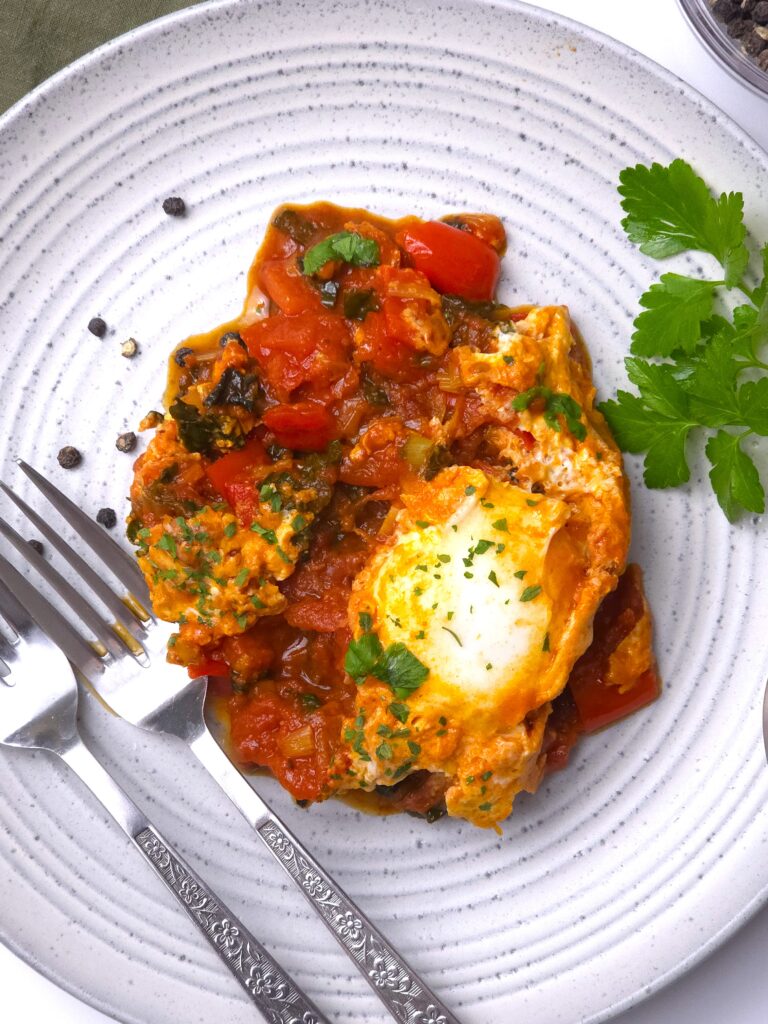
Tips for Perfect Shakshuka Every Time
- Low and slow is key. Let the tomato sauce simmer gently; this lets the flavors deepen.
- Adjust the eggs to your liking. If you prefer firmer yolks, cook for an extra 2–3 minutes.
- Add heat if you love spice. A pinch of chili flakes or harissa can turn this into a fiery delight.
- Make it ahead. The tomato base can be made the day before — just reheat and add the eggs when ready.
- Add protein or texture. Chickpeas or feta-style lactose-free cheese work beautifully for extra substance.
Nutritional Information (Per Serving – 1 of 3 portions)
| Nutrient | Amount | % Daily Value* |
|---|---|---|
| Calories | 240 kcal | — |
| Protein | 14 g | 28% |
| Total Fat | 14 g | 18% |
| Saturated Fat | 3 g | 15% |
| Carbohydrates | 13 g | 5% |
| Fibre | 4 g | 16% |
| Total Sugars | 6 g | — |
| Sodium | 420 mg | 18% |
*Percent Daily Values are based on a 2,000-calorie diet.
Key nutrients:
This dish is rich in vitamin C (from tomatoes and red peppers), vitamin A and K (from kale), and a good source of plant-based fiber, protein, and healthy fats. Eggs contribute vitamin D and choline for brain and metabolic support, while the tomatoes offer lycopene for antioxidant protection.
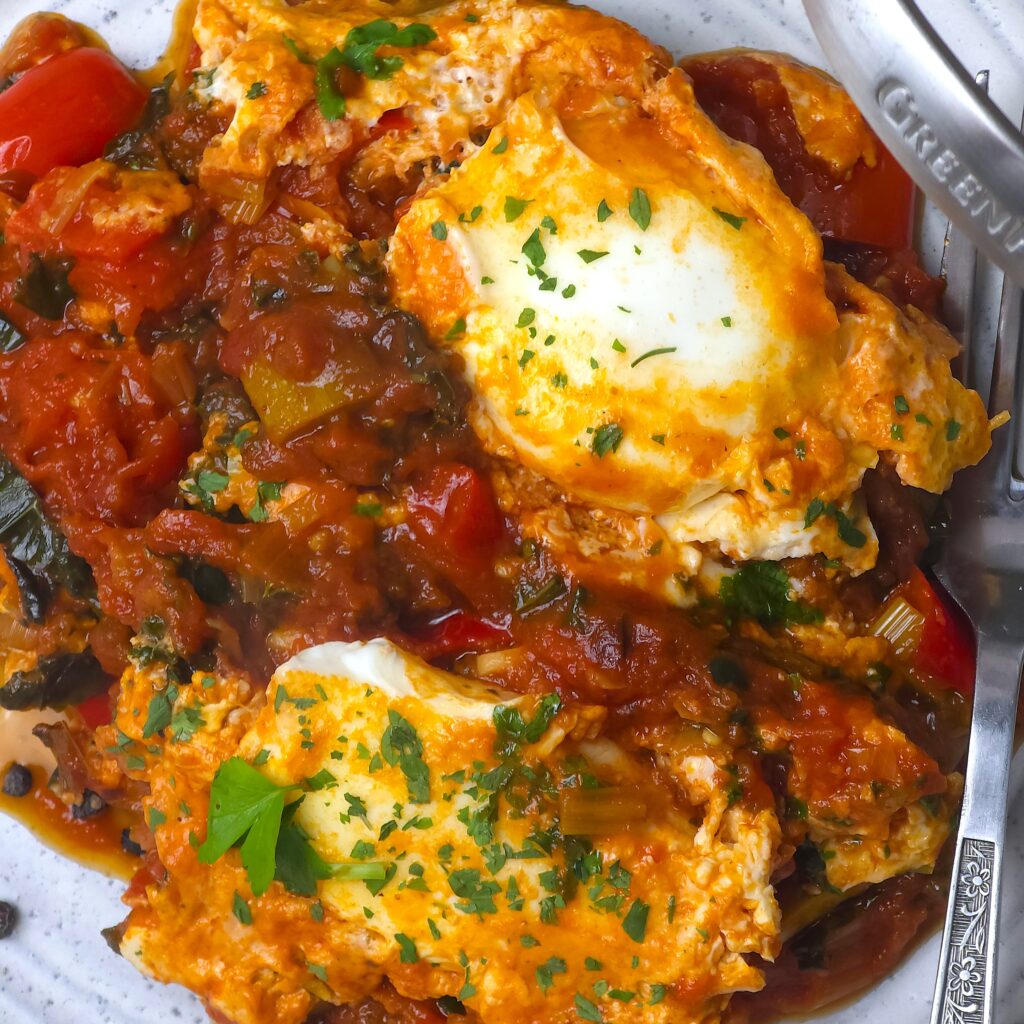
Shakshuka Recipe Serving Ideas
Shakshuka shines on its own, but you can turn it into a hearty brunch by pairing it with:
- A slice of gluten-free sourdough toast
- A dollop of Greek yogurt or tahini drizzle
- Fresh herbs like coriander or mint for a refreshing twist
- Roasted sweet potatoes for a more filling meal
FAQs
Can I use spinach instead of kale?
Yes! Spinach wilts more quickly and develops a softer texture. If using spinach, add it in the last few minutes of cooking to prevent overcooking.
What if I don’t have leeks?
You can use onions or spring onions instead. Leeks add a delicate sweetness, but any mild allium, such as garlic, works well.
Can I make it ahead?
Definitely, prepare the tomato base in advance, then add eggs just before serving.
How do I know when the eggs are done?
The whites should be opaque, and the yolks slightly jiggly. Covering the pan helps cook the tops evenly.
Is shakshuka healthy?
Absolutely. It’s rich in antioxidants, vitamins, fiber, and high-quality protein; a well-balanced meal for energy and gut health.
Can I bake it instead of cooking on the hob?
Yes. Transfer the cooked sauce to an ovenproof dish, crack in the eggs, and bake at 180°C for 7–10 minutes.
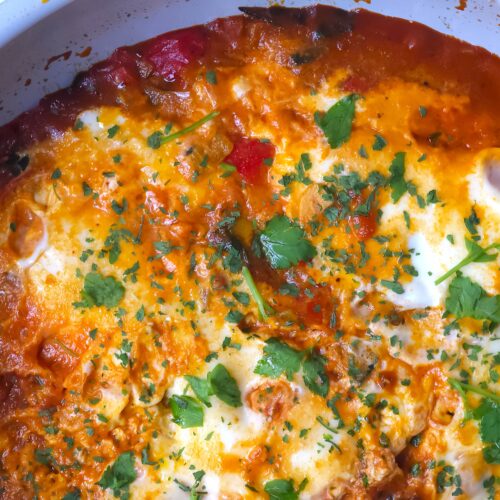
Easy Middle Eastern Shakshuka Recipe

Equipment
Ingredients
- 1 medium Leek chopped
- 1 medium Red bell pepper chopped
- 1 handful Kale chopped and massaged with salt
- 1 tbsp Rice bran oil
- 700 g Tomatoes or homemade tomato sauce
- 1 tsp Sweet red paprika
- ½ tsp Cumin powder
- Salt to taste
- 6 medium Eggs
- 1 handful Parsley fresh, chopped, for garnish
Instructions
- Heat oil in a deep non-stick pan over medium heat.
- Add leek, kale, and bell pepper; sauté for 5–7 minutes.
- Add tomatoes and salt. Simmer for 15 minutes, uncovered.
- Stir in paprika and cumin.
- Make six small wells in the sauce and crack one egg into each.
- Cover and cook for 5–7 minutes, until the whites are set, but yolks are soft.
- Sprinkle with fresh parsley and serve warm.
Notes
YourDani x x
Nutrition

Mention @deglutenistanutrition and tag #deglutenistanutrition — you’ll make my day! 🌿✨