
Pea Stew – Quick & Very Easy One Pot Recipe

This post may contain affiliate links. If you make a purchase through these links, I may earn a small commission at no extra cost to you. I only recommend products I personally use and trust. Thank you for your support!
Hearty, wholesome, and full of fibre, this one-pot pea stew is your new weeknight favourite. Made from pantry staples, it is vegan, gluten-free, and uses buckwheat flour for thickening. The best part – and ready in 45 minutes.
Autumn is here! If you’re after a warming and comforting, gut-friendly meal that’s quick, budget-friendly, and bursting with veggie goodness, this pea stew is your new weeknight favourite.
It’s one of those dishes I grew up with, simple, nourishing, and flavored, made with humble pantry staples like canned peas, carrots, onions, and a few warming herbs and spices.
This version of the classic Balkan-style yahniya s grah (pea stew) is gluten-free and lactose-free. It’s thickened with buckwheat flour instead of wheat flour, and I’ve added a dash of thyme and sweet paprika to round out the flavours beautifully.
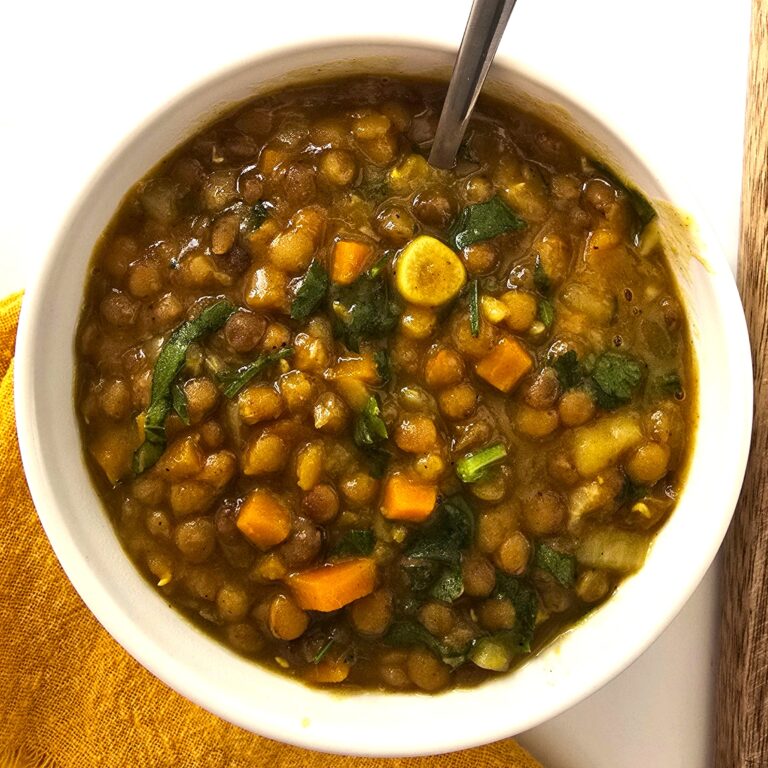
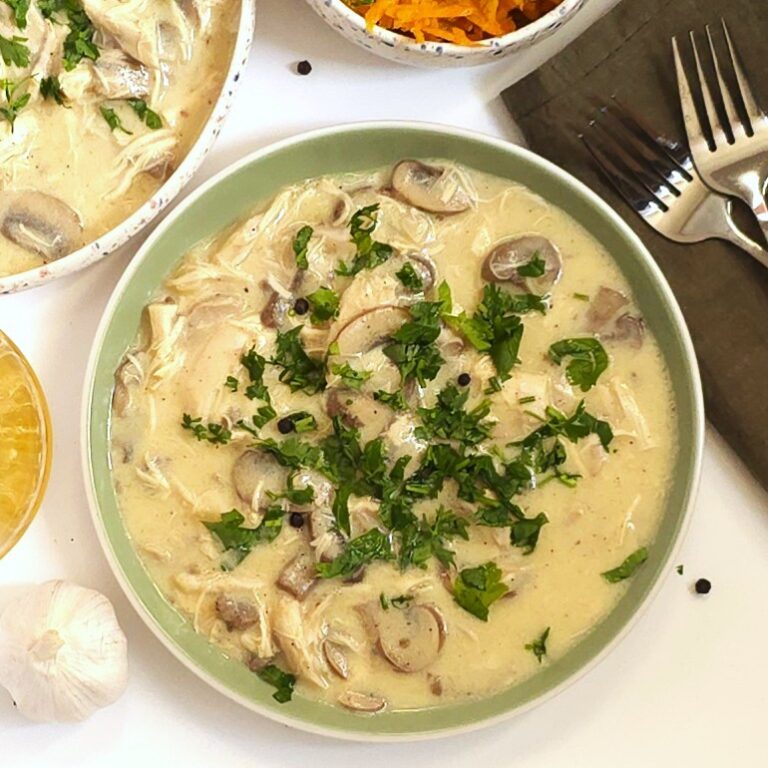
The result is a hearty, slightly creamy, and herby pea stew, just like the warming lentil and delicious vegetable soups – perfect on their own or paired with crusty gluten-free sourdough bread—coming soon.
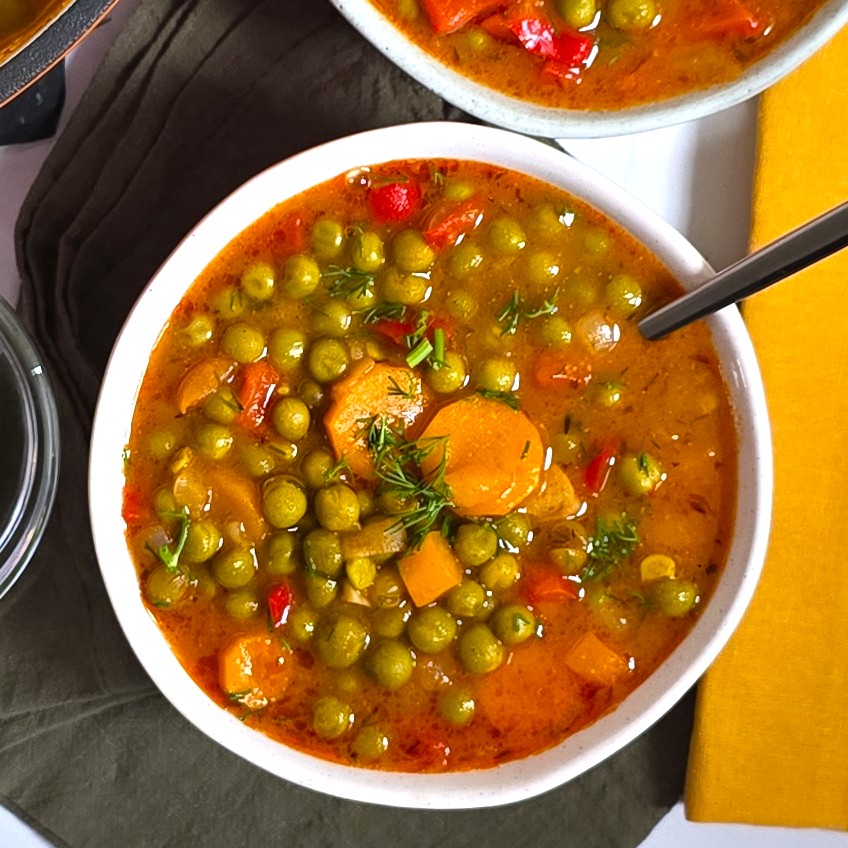
About the One-Pot Pea Stew Recipe
Easy and Quick – This pea stew takes only about 45 minutes from start to finish, with most of the time hands-off. It’s also perfect for batch cooking, once cooled, it tastes even better the next day!
Using canned peas keeps it quick and convenient, while the trio of carrots, sweet, pointed peppers, and onions adds natural sweetness and depth.
Buckwheat flour is my secret to achieving that lovely, thick texture without any gluten. And the final touch of fresh dill just lifts this pea stew dish with its fragrant, slightly aniseed note.
💡 Did You Know?
The humble garden pea (Pisum sativum) played a starring role in the birth of genetic science. In the 1800s, Gregor Mendel used pea plants to study how traits are passed down through generations. His simple experiments with pea colour, shape, and flower position laid the foundation for modern genetics. So, the next time you enjoy a comforting bowl of pea stew, remember—you’re tasting a little piece of scientific history.
Pea Stew Recipe Ingredients
For this recipe, I use:
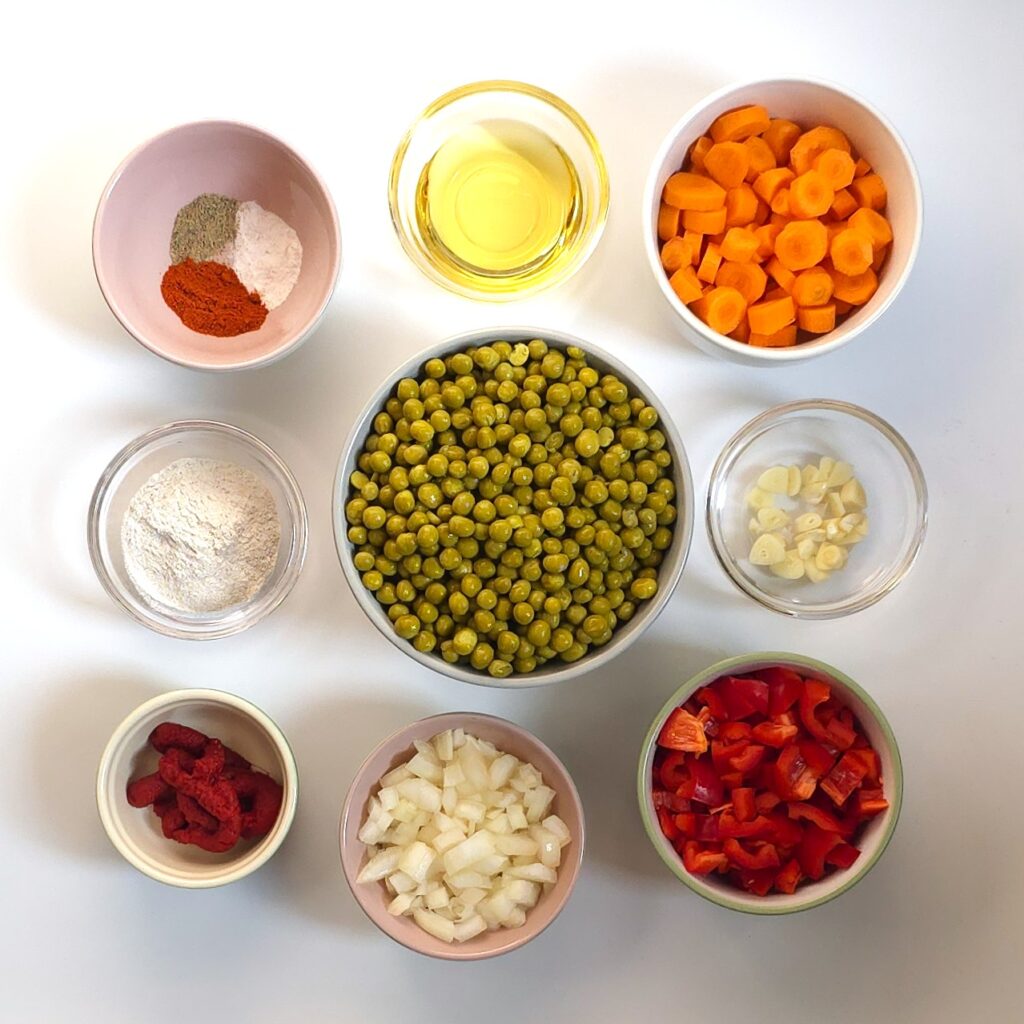
Canned peas (3 x 290g cans) – A great plant-based source of protein and fibre, canned peas are also rich in vitamins A, C, and K. They help regulate blood sugar and are easy on the gut.
Carrots (200g, sliced) – High in beta-carotene, which converts to vitamin A and supports immune function and skin health.
Onion (150g, chopped) – A prebiotic-rich veggie that supports gut health and adds natural sweetness and depth when sautéed.
Sweet pointed pepper (150g, chopped) – Full of vitamin C and antioxidants, this sweet variety adds a lovely brightness to the stew.
Garlic (3 cloves, sliced) – Well-known for its antimicrobial properties, garlic is a gut-health hero and adds a bold aroma.
Rice bran oil (3 tbsp) – A high-smoke-point oil rich in vitamin E and healthy fats. Neutral in flavour and gut-friendly.
Buckwheat flour (2 heaped tbsp) – Naturally gluten-free, this flour is high in resistant starch, protein, and minerals like magnesium and manganese. It thickens the stew while nourishing the gut.
Tomato paste (2 tbsp) – Provides umami depth and a rich colour. A source of lycopene, a powerful antioxidant.
Vegetable stock or water (800ml) – Use homemade or low-sodium stock for flavour and hydration.
Sweet paprika (1 tbsp) – Adds warmth and colour without heat.
Pink salt (1 tsp) – A source of trace minerals and flavour enhancer.
Black pepper (½ tsp) – Enhances digestion and increases bioavailability of nutrients.
Dry thyme (½ tsp) – Earthy and calming, thyme brings a grounding herbal note.
Fresh dill (to garnish) – Brightens up the stew with fresh flavour and supports digestion.
Easy Pea Stew Recipe Step-by-Step Method
Before you begin, peel and chop all vegetables to make the cooking process flow smoothly.
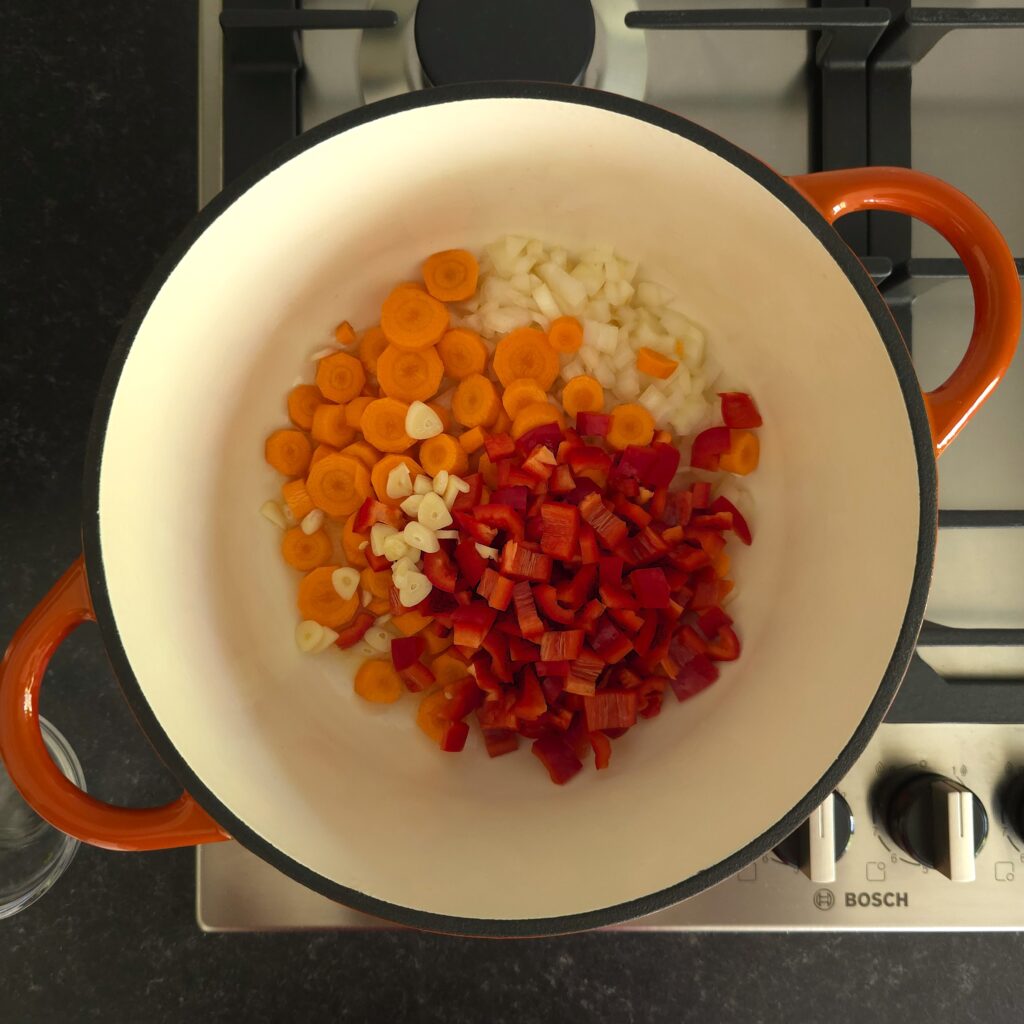
In a deep pot or cast-iron casserole, heat the rice bran oil over medium heat.
Add the chopped onion, sliced carrots, sweet pointed pepper, and garlic. Sauté gently for 10–15 minutes, stirring occasionally, until the vegetables are softened and fragrant.
Stir in the tomato paste and let it cook for 1 minute to enhance the flavour.
Add the buckwheat flour and mix well—it will coat the vegetables and start to form a light roux.
Sprinkle in the paprika, thyme, salt, and pepper. Stir again.
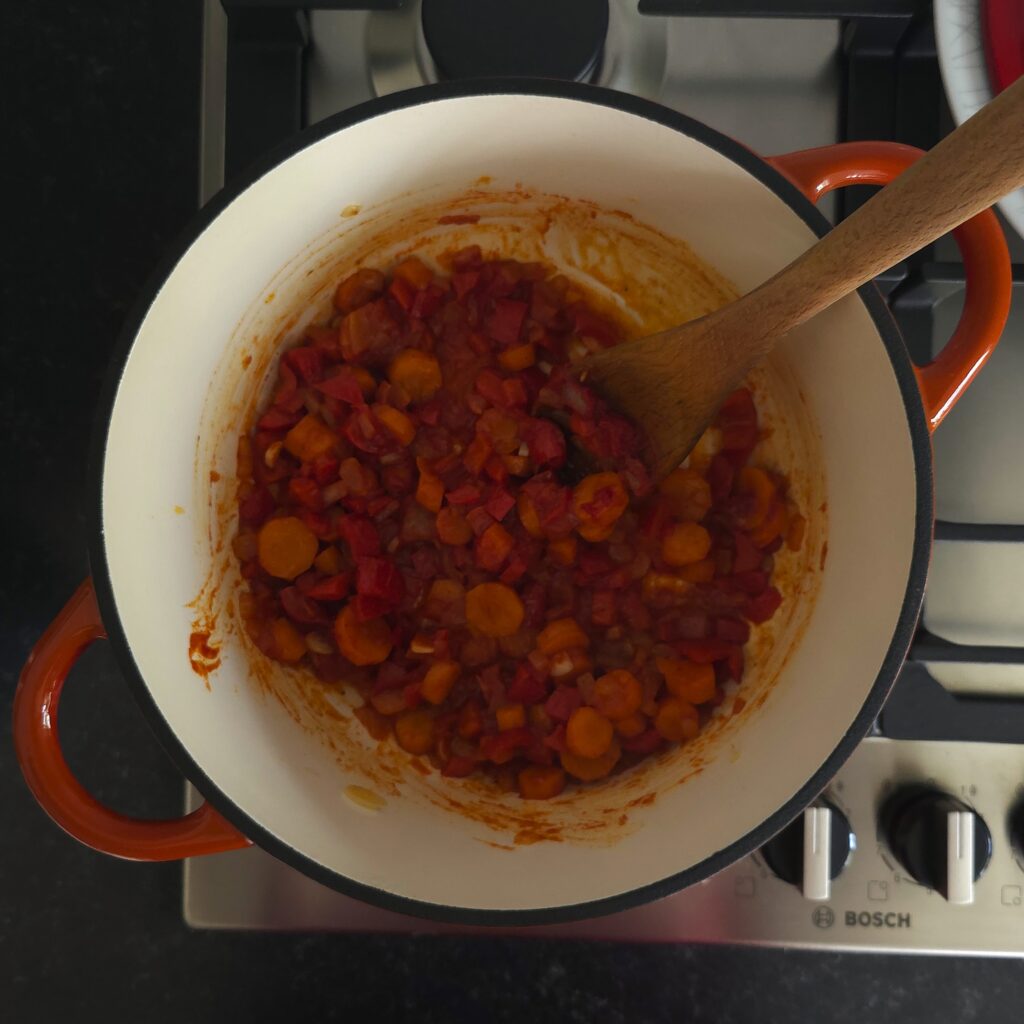
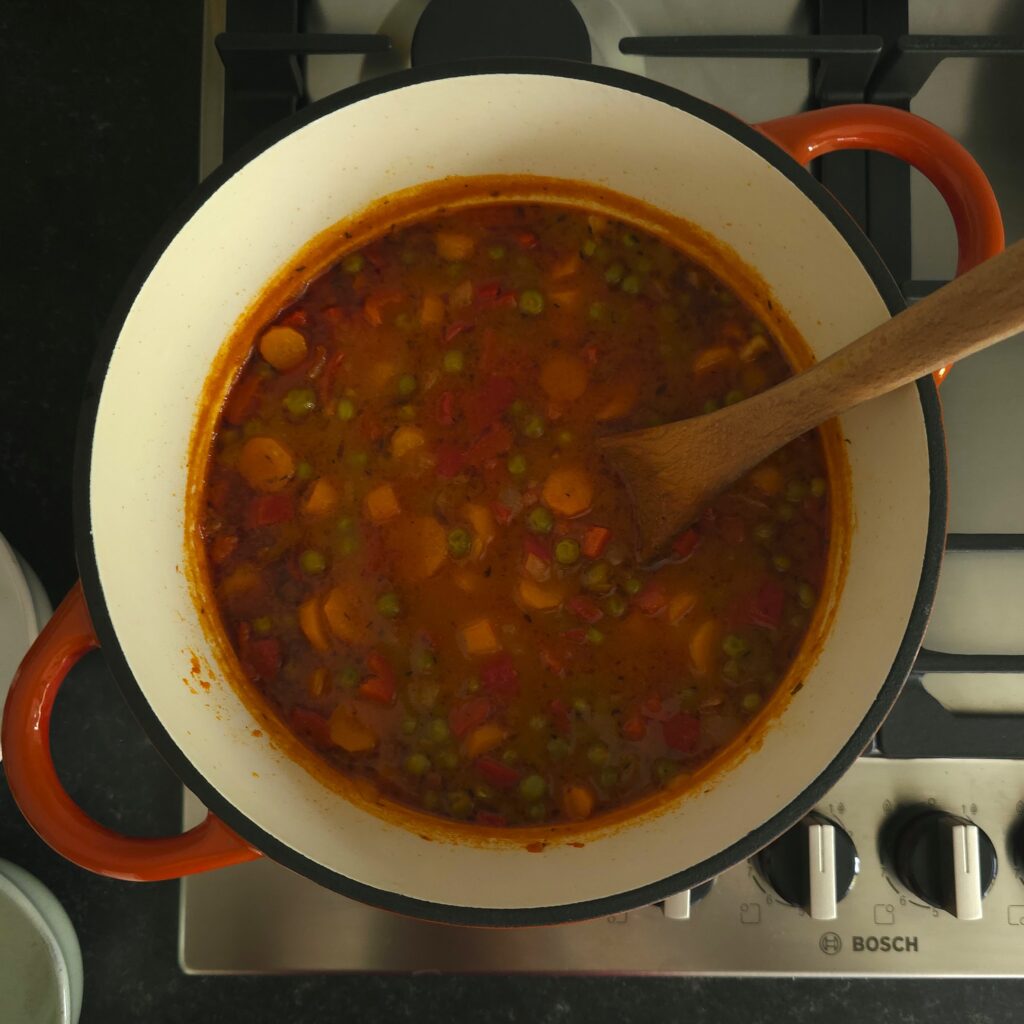
Gradually pour in the vegetable stock or water, stirring constantly to avoid lumps. Make sure all the flour dissolves into the liquid.
Add the canned peas, reduce the heat to low, and simmer the stew for 20–25 minutes, stirring occasionally.
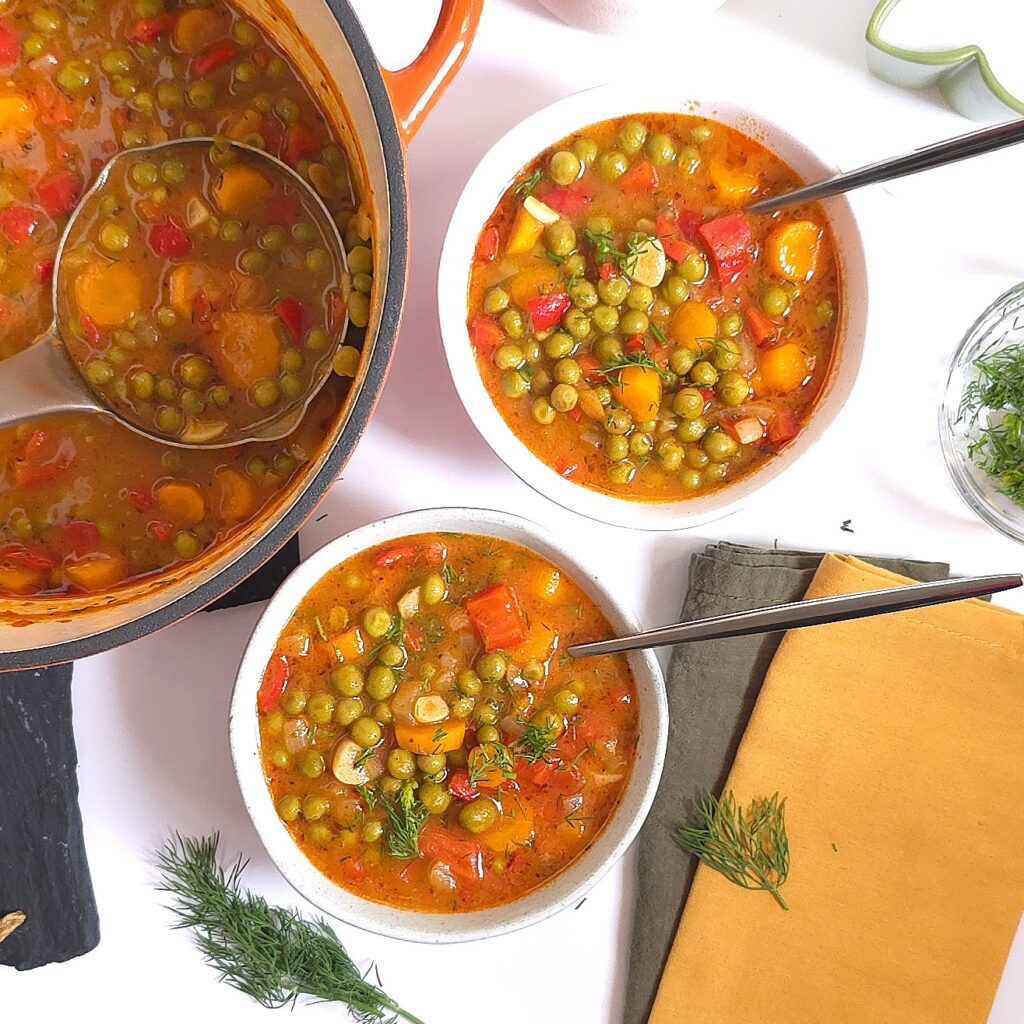
Once thickened and the vegetables are fully tender, remove from the heat and sprinkle fresh chopped dill.
Tips for the Best Pea Stew
- Use a heavy-bottomed pot, such as cast iron or an enamelled casserole, to keep the heat evenly distributed and prevent burning.
- If using unsalted stock, adjust salt to taste.
- Stir continuously as you add flour and stock to avoid clumps—this is key to a smooth, creamy texture.
- Don’t skip the fresh dill—it really brightens the whole dish and balances the earthy peas and paprika.
Pea Stew Storage and Make-Ahead Tips
This delicious pea stew keeps well in the fridge for up to 4 days and freezes beautifully for up to 3 months.
Reheat gently over the stove or in the microwave, and add a splash of water or stock if it thickens too much.
Geen Peas Stew Recipe Variations and Substitutions
- Fresh or frozen peas – You can use 600g of frozen peas or about 500g of cooked fresh peas instead of canned.
- Other flours – Swap buckwheat flour for brown rice flour or cornstarch (dissolved in cold water first).
- Add protein – Toss in chickpeas, tofu cubes, or cooked lentils to turn this into a full one-pot meal.
- Make it spicier – Add a pinch of chilli flakes or cayenne pepper for a kick.
- Herb swap – Try parsley or coriander instead of dill for a twist.
FAQs
1. Can I use frozen peas instead of canned?
Yes, you can. Use about 600g of frozen peas. Just add them straight to the stew without thawing.
2. What can I use instead of buckwheat flour?
You can use brown rice flour or gluten-free all-purpose flour. For a corn-free version, avoid cornstarch.
3. Is this stew suitable for kids?
Absolutely—it’s mildly seasoned, naturally sweet, and easy to digest.
4. Can I make this ahead of time?
Yes! It tastes even better the next day. Store in an airtight container in the fridge or freeze in portions.
5. What goes well with pea stew?
A slice of gluten-free bread, mashed potatoes, or a light green salad pairs beautifully.
6. Is it low-FODMAP?
To make it low-FODMAP, omit onion and garlic and use leek greens and garlic-infused oil instead. Use canned peas, drained and rinsed (limit to 60g per serve).
Nutritional Highlights (Per Serving)
Calories: ~270 kcal
Protein: ~8g
Carbohydrates: ~30g
Fibre: ~9g
Fat: ~12g
Sugars: ~6g
GI: Moderate
GL: Low
Rich in: Fibre, Vitamins A, C, K, Iron, and Magnesium
Serving Ideas
Serve this stew warm, topped with extra dill and a poached egg.
For a heartier meal, serve it over steamed rice, potatoes, polenta, or gluten-free dumplings.
Fancy a Freebie?
Subscribe for my newsletter
and get your FREE eBook with 7 delicious gluten-free desserts!
*We will only send you gluten-free, lactose-free, refined sugar-free emails; you can unsubscribe anytime. Read our Privacy & Cookie Policy.
Pea Stew – Quick & Very Easy One Pot Recipe

Equipment
Ingredients
- 3 cans Peas 290g each, drained or with liquid, adjust for saltiness
- 200 g Carrots peeled and sliced
- 150 g Onion chopped
- 150 g Sweet pointed pepper chopped
- 3 tbsp Rice bran oil
- 3 cloves garlic sliced
- 2 Buckwheat flour
- 2 tbsp Tomato paste
- 1 tbsp Sweet red paprika
- 1 tsp Salt sea or pink, to taste
- ½ tsp Black pepper
- ½ tsp Dry thyme
- 800 ml Vegetable stock or water
- Dill fresh, chopped, for garnish
Instructions
- Peel and chop all vegetables before you begin.
- In a cast-iron pot or deep saucepan, heat the rice bran oil over medium heat.
- Add the chopped onion, carrots, pepper, and garlic. Sauté for 10–15 minutes, stirring occasionally, until softened and lightly golden.
- Stir in the tomato paste and cook for 1 minute.
- Add the buckwheat flour and stir well to coat the vegetables.
- Sprinkle in the paprika, thyme, salt, and pepper.
- Gradually pour in the vegetable stock while stirring constantly to dissolve the flour.
- Add the canned peas. Stir to combine.
- Lower the heat and simmer for 20–25 minutes, stirring occasionally.
- Remove from heat and finish with freshly chopped dill.
Notes
- Make sure your stock is vegan—check labels for meat or dairy derivatives. Or simply make your own stock at home.
- This stew thickens more as it sits; add water or stock to loosen when reheating.
- Perfect with gluten-free flatbread, potatoes, or steamed rice.
- Dill adds freshness, don’t skip it if you can!
- For a low-FODMAP version, replace onion and garlic with leek greens and garlic-infused oil.
YourDani x x

Mention @deglutenistanutrition and tag #deglutenistanutrition — you’ll make my day! 🌿✨

Thank you for stopping by! I’m Dani!
nutrition student | Healthy Live Promoter | Gluten-free recipe developer
Welcome to DeGlutenista Nutrition!
Your visit really means the world to me. I’m happy to share simple, nourishing gluten-free recipes and practical food tips focused on gut health and clean eating, all with an emphasis on reducing ultra-processed ingredients.
My approach is simple: practising mindful eating, regardless of food sensitivities, can be both tasty and healthy.