

How to Make the Perfect Almond Milk at Home

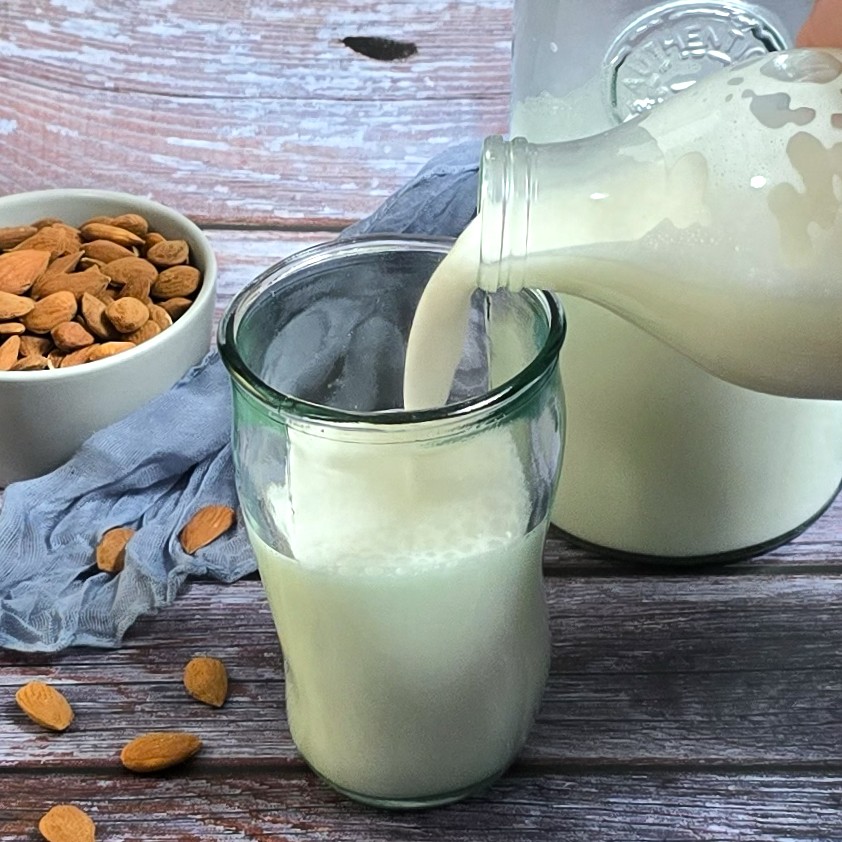
Skip the cartons and preservatives and discover how easy it is to make fresh, eco-friendly almond milk at home with just two simple ingredients. Once you’ve tasted homemade nut milk, there’s no going back — it’s fresher, lighter, and simply unbeatable compared to store-bought versions.
Whether you are lactose-intolerant, a vegetarian or a vegan, or just looking for a free-from lifestyle, this blog post is for you!
In just 10 minutes, you can make almond milk using only almonds, water and a blender! It’s amazingly easy to make almond milk – just soak, blend, and strain! Plus, there are endless ways to use the leftover almond pulp, such as in these fantastic cocoa energy balls and numerous yogurt parfaits – strawberry, cherry and blackberry, yum!
This post may contain affiliate links. If you make a purchase through these links, I may earn a small commission at no extra cost to you. I only recommend products I personally use and trust. Thank you for your support!
Why You Will Like This Homemade Almond Milk?
The milk itself is very versatile. There are a million ways to use homemade almond milk: you can splash it over homemade granola, blend it into your morning latte (just like I do), or use it in baked goods.
Furthermore, making almond milk at home reduces packaging waste, making it an eco-friendly choice.
It’s worth noting that, being creamier and nuttier than commercial almond milk, it is free of stabilisers, emulsifiers, or shelf-life-extending additives. There’s no argument that store-bought plant-based milk is convenient.
But have you ever read that label at the back of the pack? There are just about 2% almonds in it? How does it sound? For me, it doesn’t sound right.
Why Is It a Good Idea to Make Your Almond Milk at Home?
Recently, it was published that milk alternatives on supermarket shelves are not a good choice for individuals with digestive conditions such as irritable bowel syndrome (IBS), colitis, or Crohn’s disease.
In this article, The truth about emulsifiers, with Dr Federica Amati, you will find more about the latest studies and research on the emulsifiers used in processed food and their impact on sufferers, and how to make informed choices. So, if you find yourself in this group, read the article; it’s worth it.
If you choose the hard but healthy route and make your own food, you’re in the right place. Here, you will find how to make almond milk at home.
My Story – I Love Coffee!
I adore coffee. I’m definitely a coffee drinker. In the past, I used to drink a lot of coffee daily. Well, now I drink less but still love the smell of fresh coffee in the morning. However, nothing is comparable to the feeling of the first sips of your morning frothy and aromatic coffee, isn’t it?
Coffee lovers will understand. The trouble is that I don’t like black coffee or espresso. It is too strong and bitter for my taste. But a latte or a cappuccino is the other story. I love my milky morning shots, and when I was diagnosed with lactose intolerance, I stumbled upon a huge issue – what to substitute milk for in my coffee.
Some Lactose Intolerance Info
My story about lactose intolerance is long and painful. The official diagnosis for many years was that I had IBS. This makes sense because lactose intolerance can cause symptoms like IBS.
Along with my gluten intolerance, this can be taken as the proper diagnosis. Lactose intolerance can be mistaken for a dairy allergy, but they differ. Diary allergy is a distinct condition; for more information, you can read this comprehensive article here: What is the difference between lactose intolerance and dairy allergies?
Fortunately, I have no dairy allergy, so I can consume my Homemade Yogurt, kefir, ghee butter and some hard cheese without any inconvenience.
Did You Know?
Almond milk isn’t a new trend — it actually dates back to the Middle Ages, when it was used as a nutritious alternative to dairy during fasting periods. In many parts of the world, it was considered a luxury drink, valued for its delicate flavour and long shelf life compared to fresh cow’s milk.
Today, almond milk is a favourite in plant-based and gluten-free kitchens, offering a sustainable and environmentally conscious choice. Making your own reduces packaging waste, avoids additives, and allows you to use every part of the almond — from the milk itself to the leftover pulp, which can be transformed into almond flour, desserts, or smoothies.
So, next time you make a batch of fresh homemade almond milk, take pride in knowing you’re continuing an age-old tradition — one that’s wholesome, eco-friendly, and perfectly aligned with a mindful, gluten-free, lactose-free, clean eating lifestyle. 🌱✨
Let’s Learn How to Make Almond Milk at Home
Ingredients You Will Need:
Almonds: Opt for high-quality, organic, fresh almonds. Always start with raw almonds for the best result. Roasted almonds are dry and brittle, so the milk is less creamy. Roasting also emphasises the almond’s bitter undertones. Blanched almonds also work. Blanched almond milk has a whiter colour and a less intense almond flavour.
Water: (filtered or boiled/cooled)
Sunflower Seeds (optional) – help emulsify almond milk and prevent separating.
Equipment:
These are my favorites. During the years, I tried different blenders, jugs and storage bottles, even the cheesecloth matters here, lol. Please, use whatever you have or prefer.
Instructions:
Soak the Almonds: First, set 100g of raw almonds in water for at least 8 hours. This process softens the almonds, making them easier to blend and enhancing their nutrient availability. Overnight soaking is ideal, but 4 hours will still do the trick if you’re in a rush.
Blend: After soaking, drain and rinse the almonds. Please place them in a blender along with 750g of filtered water. Blend on high speed for about 5 minutes until you achieve a smooth, creamy consistency.
Strain: Strain the almond milk into a clean container using cheesecloth or a dedicated nut milk bag. I use a cheesecloth, so pick whatever is easiest for you. Squeeze and press as much liquid out as possible. You’ll be left with delicious, silky almond milk, perfect for adding to coffee, cereal, or smoothies!
Save the Pulp: Don’t throw away the leftover almond pulp! This can be used to make almond flour, added to baked goods, or even incorporated into sweet recipes like Cocoa energy bites, Torta Caprese or simply gluten-free cookies.
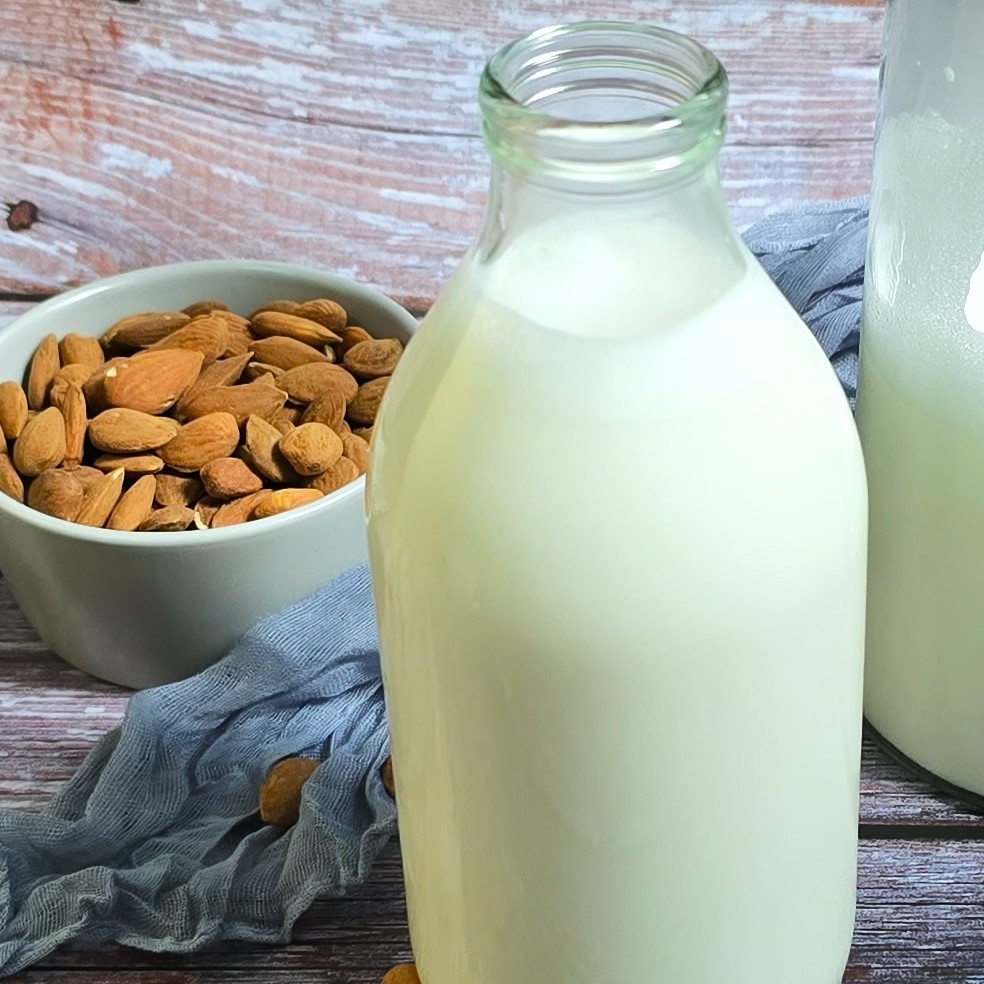
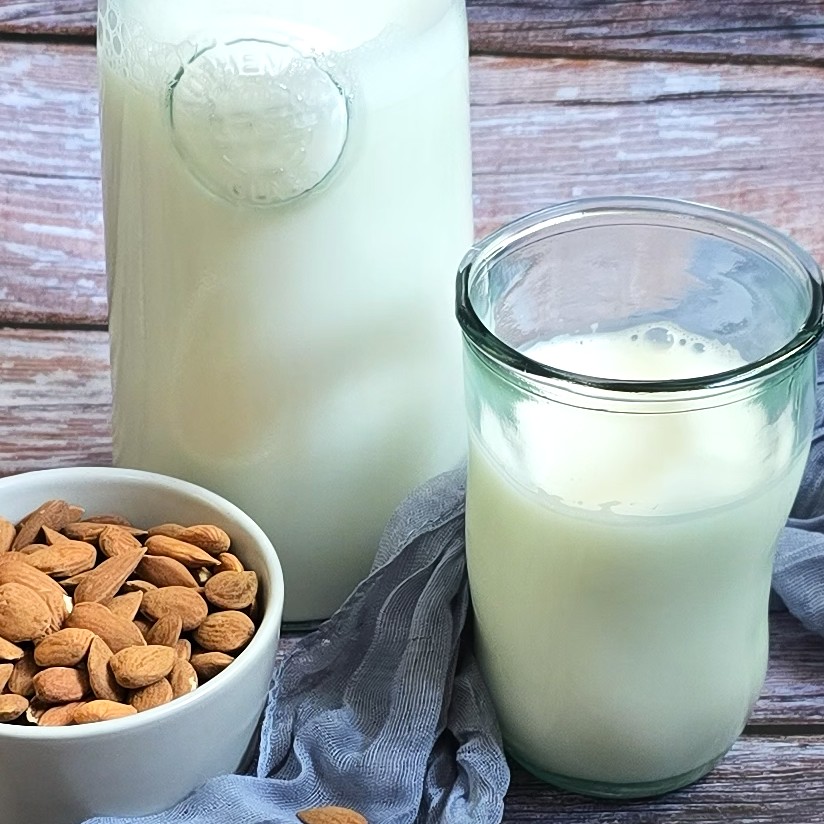
Store your almond milk in a glass bottle with a swing-top lid, or consume it immediately with your coffee or sweet treats. Enjoy!
Tips and Tricks for Perfect Almond Milk
- Sweeten it up: If you prefer a sweeter almond milk, blend in a few dates, a drizzle of maple syrup, or a splash of vanilla extract before straining.
- Experiment with flavours: Add a dash of cinnamon or cocoa powder for a more indulgent twist for a delicious treat.
- Use high-quality almonds: The quality of your almonds makes a huge difference. Look for raw, organic almonds for the best results.
- Make it creamier: For richer, creamier almond milk, use a 1:3 ratio of almonds to water instead of the standard 1:7.
Storing Your Homemade Almond Milk
Freshly made almond milk can be stored in the fridge for up to 5-7 days. Be sure to give it a good shake before each use, as natural separation occurs when the milk sits for a while. This is quite normal, as there are no emulsifiers, unlike in commercially produced plant-based milk.
In case you make more than you can consume in a few days, almond milk freezes well, too—pour it into ice cube trays for convenient, portioned servings later.
Almond Milk Serving Suggestions:
- Enjoy your fresh homemade almond milk chilled or slightly warmed.
- Pour it over gluten-free granola, oatmeal, or chia pudding for a creamy plant-based breakfast.
- Use it as a base for smoothies, golden milk, or matcha lattes.
- Add a splash to coffee or tea as a dairy-free milk alternative.
- Incorporate it into baking recipes, sauces, or desserts where you’d normally use milk.
- Try blending with cocoa powder and a touch of maple syrup for a quick almond chocolate drink.
FAQs
1. Can I use other nuts or seeds instead of almonds?
Absolutely! The same method works beautifully with cashews, hazelnuts, or sunflower seeds. Remember to soak them for at least 6–8 hours to achieve a smooth, creamy texture. Cashews blend even more easily and don’t require straining.
2. How long does homemade almond milk last?
Fresh almond milk lasts up to 5-7 days in the fridge when stored in an airtight glass bottle. Always shake before use, as natural separation occurs. It’s time to make a new batch if it smells sour or tastes off.
3. Can I freeze almond milk?
Yes, almond milk freezes well. Pour it into ice cube trays for portioned use — perfect for smoothies, baking, or iced coffee. Once frozen, transfer cubes into a sealed container or freezer bag.
4. Do I need to peel the almonds after soaking?
Peeling is optional! Keeping the skins adds a slightly nuttier flavour and retains more fibre, while removing them results in a smoother, lighter texture.
6. Is homemade almond milk healthier than store-bought?
Yes, because it’s additive-free, unsweetened, and preservative-free. Many commercial plant-based milks contain stabilisers, oils, and emulsifiers, which you avoid by making your own. Plus, you can control the flavour, sweetness, and consistency to your liking.
7. Can I make almond milk without soaking?
Soaking is highly recommended, as it softens the almonds, improves blendability, and helps remove phytic acid — a natural compound that can reduce nutrient absorption. If you’re short on time, quick-soak almonds in hot water for 30–40 minutes.
Nutritional Facts (per 240ml serving – 1/3 of this recipe)
Calories: 60 kcal
Fat: 4.5 g
Carbohydrates: 2 g
Fibre: 1 g
Sugars: 0 g
Protein: 1 g
Calcium: 20 mg
Vitamin E: 6 mg
Fancy a Freebie?
Subscribe for my newsletter
and get your FREE eBook with 7 delicious gluten-free desserts!
*We will only send you gluten-free, lactose-free, refined sugar-free emails; you can unsubscribe anytime. Read our Privacy & Cookie Policy.
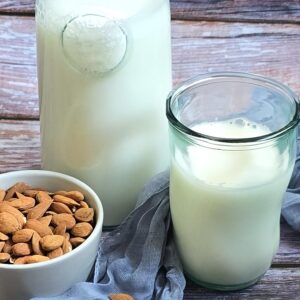
Homemade Almond Milk (Vegan, Vegetarian)

Equipment
Ingredients
- 100 g Almonds raw
- 750 ml Filtered water
- 1 tbsp sunflower seeds optional
Instructions
- Soak the Almonds: Begin by soaking 100g of raw almonds in water for at least 8 hours. Overnight soaking is best, but if you're in a rush, 4 hours will still do the trick.
- Blend: After soaking, drain and rinse the almonds. Place them in a blender along with 750g of filtered water. Blend on high speed for about 5 minutes until you achieve a smooth, creamy consistency.
- Strain: Using a cheesecloth or a nut milk bag, strain the almond milk into a clean container. Squeeze and press as much liquid out as possible.
- Save the Pulp: Keep it in a fridge up to 5 days or freeze it.
- Store your almond milk in a glass bottle with a swing-top lid, or consume it immediately with your coffee or sweet treats. Enjoy!
Notes
YourDani x x
Nutrition

Mention @deglutenistanutrition and tag #deglutenistanutrition — you’ll make my day! 🌿✨


Thank you for stopping by! I’m Dani!
nutrition student | Healthy Live Promoter | Gluten-free recipe developer
Welcome to DeGlutenista Nutrition!
Your visit really means the world to me. I’m happy to share simple, nourishing gluten-free recipes and practical food tips focused on gut health and clean eating, all with an emphasis on reducing ultra-processed ingredients.
My approach is simple: practising mindful eating, regardless of food sensitivities, can be both tasty and healthy.
