
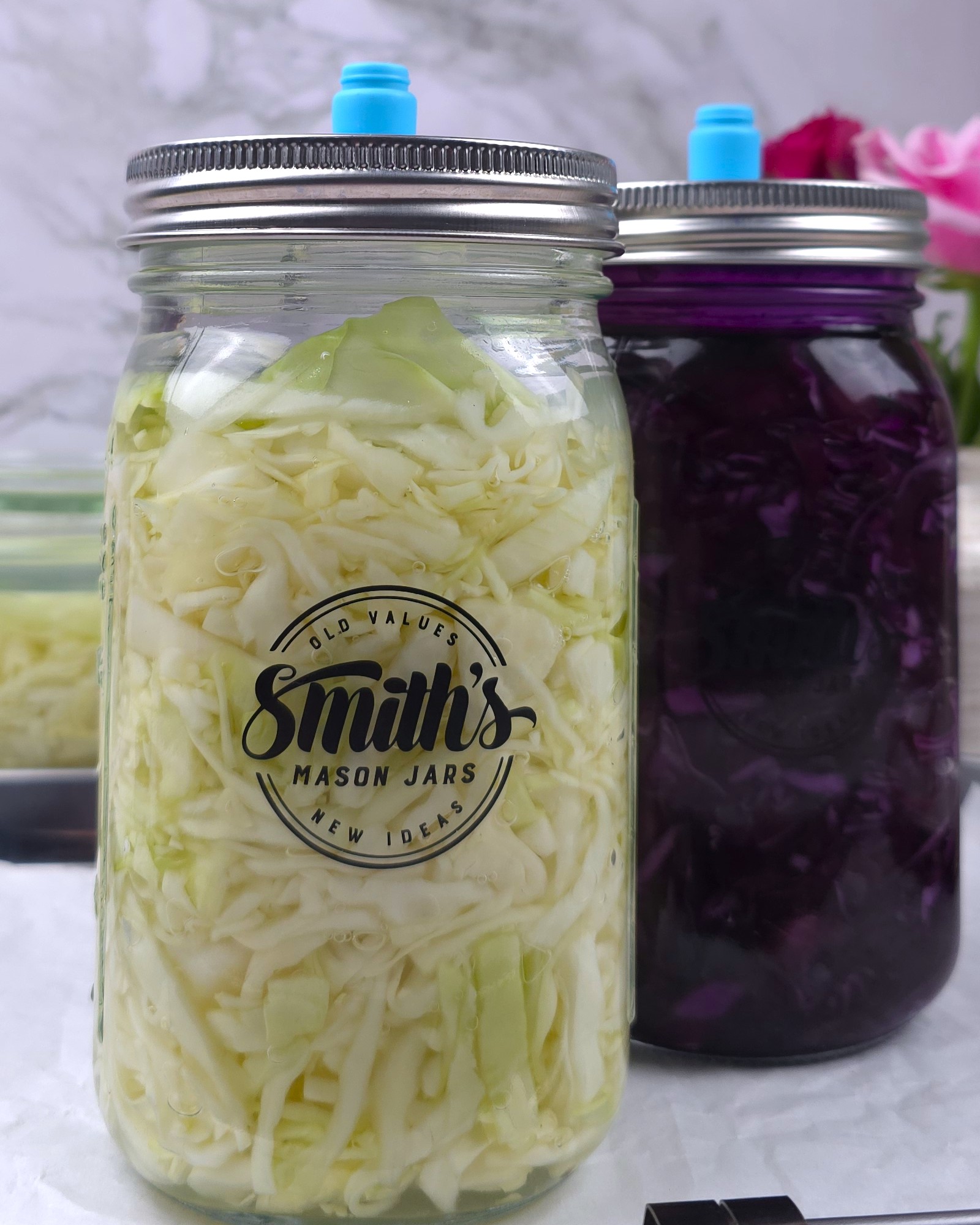
How to Make Sauerkraut at Home: The Crunchy Bulgarian Method

If you are looking for how to make sauerkraut at home, you will find that different cultures approach the process in unique ways. A classic German-style kraut involves massaging the cabbage thoroughly with salt until it releases enough natural juice to cover itself, which naturally results in a more tender texture. However, if you prefer a firmer, more distinct bite, try my different approach.
As a registered nutritionist (ANutr), I love exploring how simple prep tweaks change the final dish. This Bulgarian-style homemade sauerkraut recipe focuses on keeping the cabbage crunchy. Instead of heavily massaging the shreds, we give them a quick salt massage, so they retain their natural crispness.
Because this method doesn’t draw out quite enough liquid on its own, we simply top up the jar with a precise 3% saltwater brine. This way preserves the cabbage’s rigid cell walls. As a result, your sauerkraut will become a perfectly tangy, probiotic-dense raw ferment with a loud crunch every single time. You will need a cabbage, salt, a jar, a sharp knife, and salty water, and that’s it.
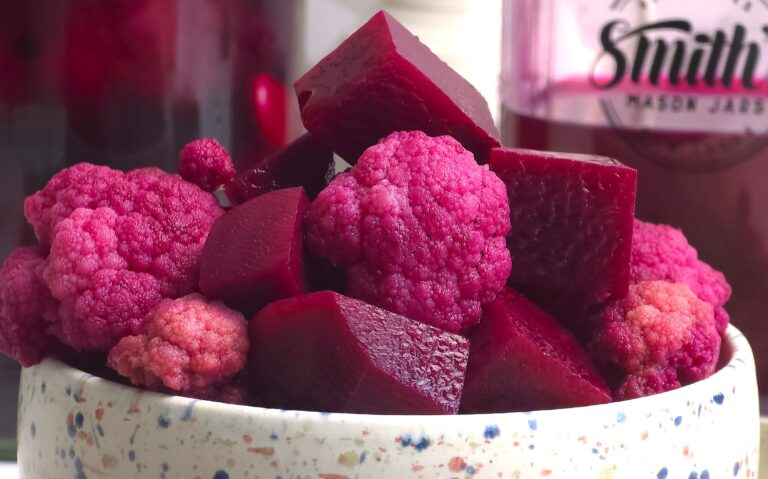
Unlike mixed fermented vegetables and fermented beetroot and cauliflower, sauerkraut wants some massage with salt. They all use the same wild-fermentation process, but the textures and flavors are, let’s say, unmistakable.
This post may contain affiliate links. If you make a purchase through these links, I may earn a small commission at no extra cost to you. I only recommend products I personally use and trust. Thank you for your support!
From Balkan Barrels to UK Kitchens: The Story Behind This Recipe
Growing up in Bulgaria, late autumn always meant one thing: it was time to make kiselo zele (кисело зеле). In traditional Balkan households, making sauerkraut isn’t a small-batch hobby; it’s a major family event. We would pack whole heads of cabbage tightly into massive plastic drums or wooden barrels, filling them to the brim with brine to slow-ferment over weeks in the crisp autumn air.
To be completely honest, as a child, I absolutely hated it. The strong sulfur aroma escaping from those fermenting barrels was anything but magical to me; I used to joke that it smelled like “farted cabbage” and wanted nothing to do with it!
Fast forward to today, and I now proudly prepare my own jars every single year. My perspective shifted entirely once I began studying nutrition and understood the incredible internal health benefits hidden behind that distinct, pungent aroma.
When I moved to the UK, I quickly realized replicating the traditional barrel method exactly would be a challenge. Modern British homes are consistently heated, winters are milder, and most of us don’t have room for a massive 50-liter drum sitting in a freezing cellar. Fermenting a whole head of cabbage indoors at room temperature often leads to uneven fermentation.
However, as a registered nutritionist and someone who cares about food texture and food sensory qualities, I purposefully choose a different path. I wanted to preserve the cabbage’s crunch and create something more palatable. Of course, this is my mum’s method, so there’s a bit of mother-to-daughter here too.
Homemade Sauerkraut Ingredients:
To guarantee a perfectly crunchy outcome, accuracy is key. Weighing your ingredients ensures the exact salinity balance required for a safe fermentation environment.
- 1 kg (2.2 lbs) White or Dutch Cabbage (approx. 1 medium head, outer leaves removed and saved)
- 5g fine sea salt or pink Himalayan salt (for the initial cabbage massage, representing a crisp-safe ~1.8% ratio)
- 500 ml filtered water (warmed slightly to dissolve salt, then cooled to room temperature)
- 15g fine sea salt (dissolved into the 500ml water to create your 3% topping brine)
- Optional traditional additions: 1 small bay leaf, ½ tsp caraway seeds, or a slice of red horseradish root (for a beautiful pink hue).
Equipment:
- Fermentation jars with lids and weights – these are perfect for small batches. For a bigger batch, double or triple the recipe and use larger jars.
- Sharp knife
- Wooden board
Step-by-Step: How to Make Sauerkraut at Home


Step 1: Prep and Shred
Peel off the tough outer leaves, wash the cabbage, and save one clean, whole leaf for later. Quarter the cabbage, slice away the tough core, and use a sharp knife to shred the remaining leaves into thin ribbons about 3mm thick. Transfer the shreds to your large mixing bowl.
Step 2: The Gentle, Crisp-Preserving Toss
Sprinkle 5g sea salt evenly over the cabbage ribbons. Using clean hands, toss and gently massage the cabbage for 1 to 2 minutes. Your goal is simply to distribute the salt and let the cabbage sweat slightly, without breaking or bruising its firm cellular walls. Let the bowl sit for 10 minutes.
Step 3: Pack the Jar Tightly
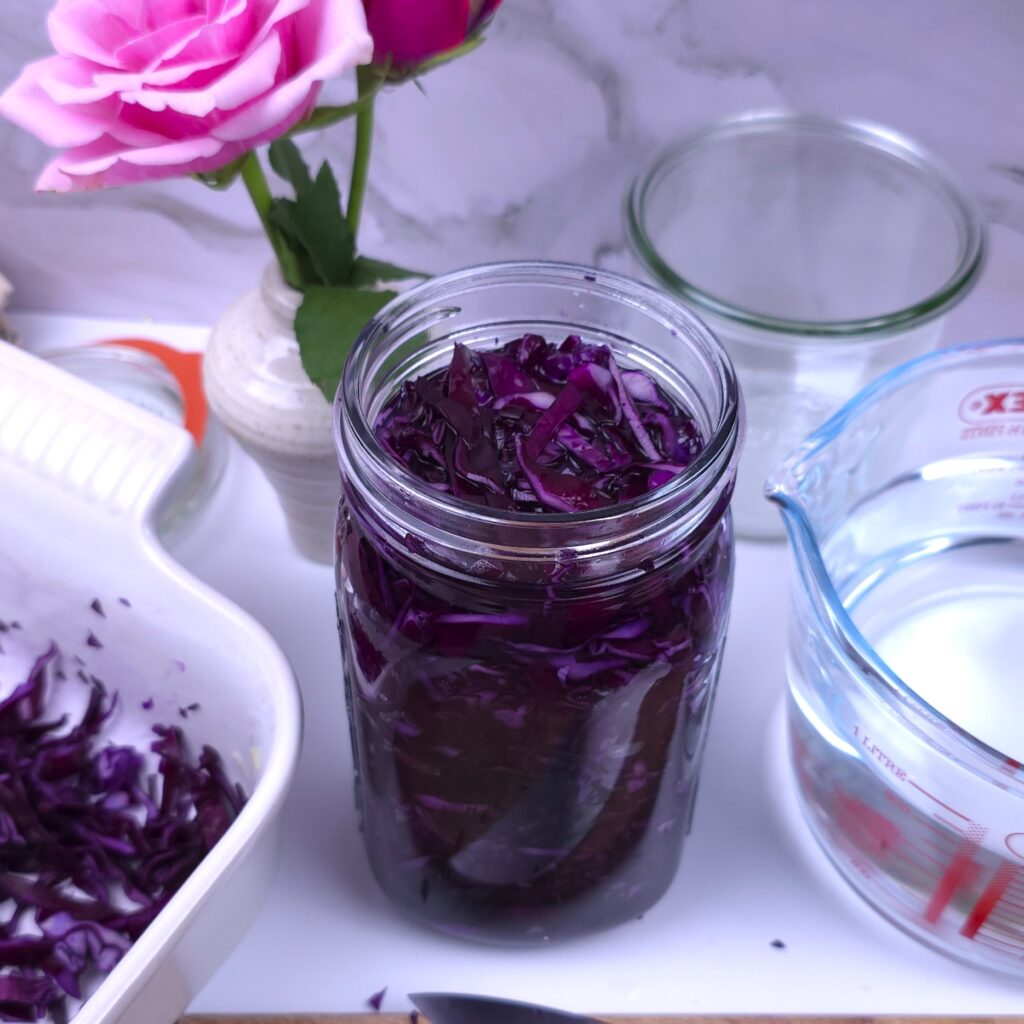
Transfer the lightly sweated cabbage into your clean 1-liter glass jar a handful at a time. Use your fist, a wooden tamper, or the back of a large spoon to press the cabbage down firmly after each addition. This eliminates large pockets of trapped oxygen.
Step 4: Mix and Pour the 3% Brine
Whisk the remaining 15g of fine sea salt into your 500ml of filtered water until fully dissolved. Slowly pour this brine solution over your packed cabbage. Ensure the liquid fills the gaps and rises completely above the vegetable line, leaving about 2.5cm (1 inch) of headspace at the top of the jar.
Step 5: Lock Beneath the Liquid
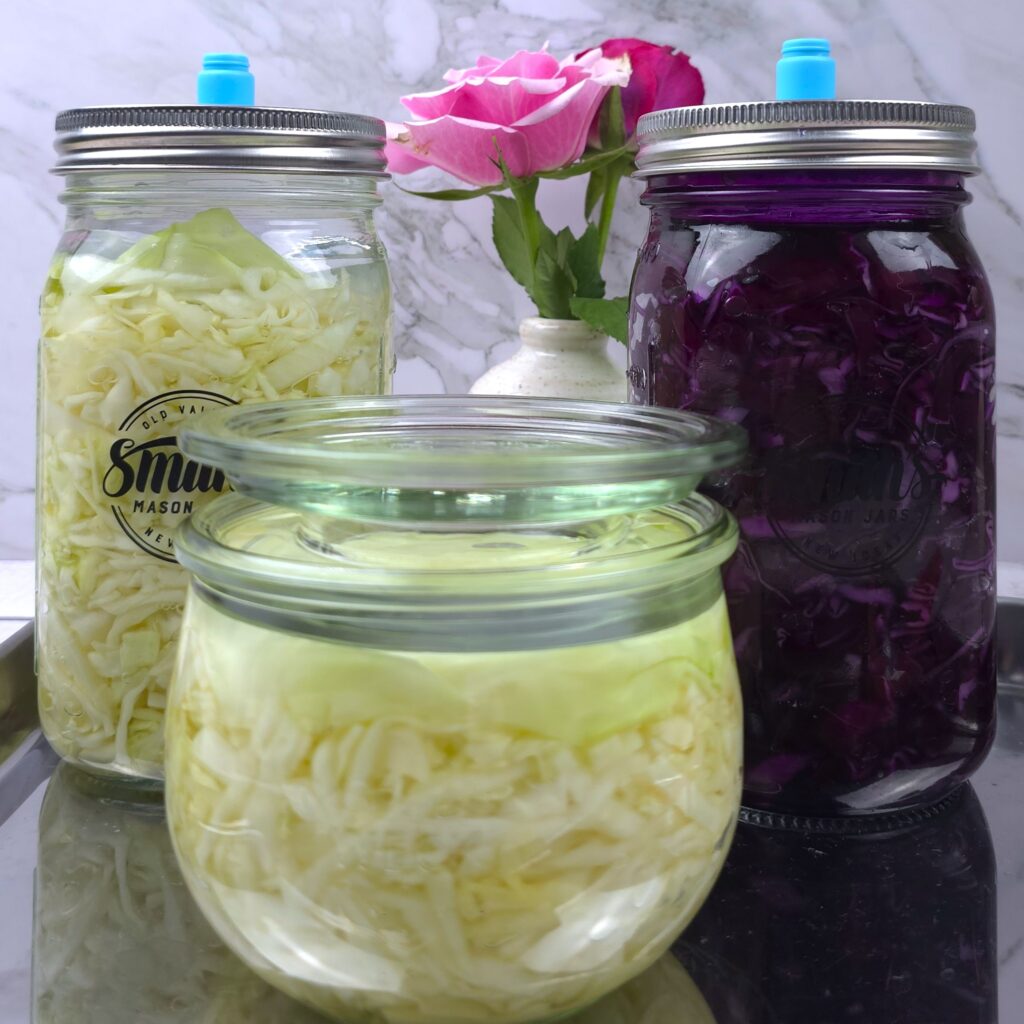
Take your reserved whole cabbage leaf, trim it to fit the jar opening, and place it directly on top of the shredded cabbage to shield it. Place your heavy fermentation weight on top of that leaf to lock every single shred safely below the brine. Close your lid loosely so carbon dioxide can vent.
Step 6: Ferment and Monitor
Place the jar in a cool, dark kitchen cupboard out of direct sunlight (ideally 18–22°C). Let it ferment for 7 to 14 days. If you are using a standard airtight lid, open it briefly once a day to “burp” the built-up gases. Taste your kraut on day 7; once it hits your perfect level of tanginess while maintaining its robust crunch, seal the lid tightly and move it to the fridge.
Tips for Success
- Cleanliness is key: always sterilize your jars and tools with boiling water.
- All cabbage must stay submerged – oxygen encourages mould.
- Fermentation works best at 18–22°C.
- Don’t worry if you see bubbles or hear fizzing – that’s a good sign of active fermentation.
The Science of Fermentation: Why “Smelly” Cabbage is a Gut Health Powerhouse
That distinct aroma I used to dislike as a child is actually a sign of brilliant cellular chemistry at work. Cabbage naturally contains sulfur compounds called glucosinolates. When wild lactic acid bacteria (specifically strains like Lactobacillus plantarum) ferment the cabbage, they break down these compounds and release that signature pungent scent.
As a registered nutritionist, I highly value this process because raw, wild fermentation transforms simple cabbage into a functional superfood.
Dynamic Probiotic Ecosystems
Unlike pasteurized, vinegar-pickled store versions, this raw brined sauerkraut is alive. It delivers millions of beneficial bacteria directly to your gut microbiome. These microbes secrete short-chain fatty acids (SCFAs) like butyrate, which fuel your colon cells, strengthen your gut barrier, and support smooth digestion.
The Nutritionist’s Note: A Warning on Histamines
While the health benefits are extensive, listen to your body if you have food sensitivities. During fermentation, bacteria convert the amino acid histidine into histamine.
Because sauerkraut is naturally high in histamines, it can occasionally trigger reactions in individuals with histamine intolerance, mast cell activation, or a temporary enzyme deficiency (DAO). If you experience sudden bloating, headaches, or flushing after eating fermented foods, don’t worry; you don’t have to give up your gut health. Start small: add just 1 teaspoon of sauerkraut brine per day, then gradually increase as your tolerance builds.
The Sauerkraut Benefits: Lessons from Polish Immigrant Studies
In a 2021 follow-up to earlier migrant studies, Cabbage and Sauerkraut Consumption in Adolescence and Adulthood and Breast Cancer Risk among U.S. Resident Polish Migrant Women reported that high intake of raw or lightly cooked cabbage/sauerkraut during adolescence was associated with a significantly reduced breast cancer risk in these women.
The study’s design captured variations in cabbage intake that persist after migrating, making it one of the more relevant modern pieces in the migrant diet cancer field.
🎗 In October, We Wear Pink – Breast Cancer Awareness!

October is Breast Cancer Awareness Month; a nudge to prioritize yourself. If you’re registered with a GP as female in the UK, you’ll be invited for an NHS mammogram every 3 years between the ages of 50 and 71 (those aged 71+ can self-refer). If an invitation letter lands on your doormat, please book it; screening helps find cancers earlier, when treatment is most effective. And for all ages, make regular self-checks part of your routine. Early action saves lives.
And Some More Research:
Beyond observational epidemiology, mechanistic and integrative research has advanced. A 2022 study characterizing the microbiota and metabolites of artisanal sauerkraut showed that sauerkraut brine can modulate immune responses, promoting anti-inflammatory cytokines like IL-10, which may help dampen chronic inflammation in the gut (a cancer risk factor).
Interestigly, In Bulgaria, sauerkraut brine left in the jar is often used as a natural hangover cure. I can’t personally vouch for it (as I don’t drink), but it’s a well-known remedy back home. Locals swear that a glass of sauerkraut brine helps with headache.
Well, it might be the power of electrolytes, which rehydrate the body after dehydration effect of alcohol drinking and settle the stomach after a night of boozing.
More broadly, recent reviews of fermented vegetables (2023–2024) emphasize that compounds produced during fermentation (such as isothiocyanates, indol-3-carbinol, ascorbigen, and other glucosinolate breakdown products) exhibit anticancer potential in cell and animal models, and that lactic acid bacteria may contribute through antioxidant, anti-inflammatory, and immunomodulatory actions.
Immune System Support: Respiratory Health and Winter Resiliency
Beyond gut barrier function, regular consumption of live-cultured ferments directly supports systemic immunity. A substantial body of clinical research focuses on the relationship between lactic acid bacteria and upper respiratory tract health. Randomized, double-blind trials have demonstrated that daily intake of probiotic strains, particularly Lactiplantibacillus plantarum, which is dominant in raw vegetable ferments, can significantly reduce the incidence, duration, and severity of common cold and flu symptoms by stimulating innate immune defenses and lowering systemic inflammatory markers.
In my clinical and personal experience, expanding your ferment rotation during the colder months builds remarkable resilience. Last winter, I followed a daily protocol using active live cultures from my homemade sauerkraut brine, mixed fermented vegetables (cauliflower, carrots, and celery), and traditional 24-hour fermented Bulgarian yogurt. The combination of varied bacterial strains, plus the natural vitamin C and zinc found in raw ferments, provides an incredibly robust, protective shield for the winter season. Guess what? For the first time in my life, believe it or not, I went an entire winter without a single cold or flu. Nice!!
FAQs
Why do you add an external brine to this sauerkraut recipe?
Traditional sauerkraut relies entirely on the cabbage juices drawn out by heavy pounding and high salt ratios. However, heavy massaging destroys the cabbage’s natural pectin scaffolding, leading to a softer texture. This Bulgarian-style recipe uses a gentle toss with just 5g of salt to keep the cabbage exceptionally crisp, meaning we must top up the jar with an external 3% saltwater brine to keep the environment safely anaerobic (oxygen-free) and prevent mold.
What should I do if my sauerkraut tastes too salty?
If you taste your sauerkraut during fermentation and find it overwhelmingly salty, do not throw it out. You can dilute the salinity by pouring out a small portion of the brine and topping the jar back up with plain, filtered water. Alternatively, you can rinse the sauerkraut quickly under cold water before serving, or mix it into a larger cooked dish (like a traditional Balkan stew) without adding extra salt to the pot.
Does sauerkraut cause a histamine reaction?
Yes, fermented foods like sauerkraut are naturally high in histamines. During lacto-fermentation, beneficial bacteria break down amino acids and produce biogenic amines, including histamine. If you have a known histamine intolerance or a compromised gut lining, introducing sauerkraut too quickly can trigger symptoms like headaches, bloating, or hives. Start with just one teaspoon of brine per day and gradually build your tolerance.
Why is my sauerkraut brine turning cloudy?
A cloudy brine is completely normal and a sign of successful fermentation. As the Lactobacillus bacteria multiply and consume the natural sugars in the cabbage, they produce lactic acid and gas, which creates a milky or cloudy appearance in the liquid.
Is the white layer on top of my brine dangerous?
A thin, white, matte film on top of your fermentation liquid is usually Kahm yeast, which is harmless and common in brined ferments. Simply skim it off with a clean spoon. However, if you see fuzzy, colorful, or black spots, that is mold caused by oxygen exposure. If mold takes hold, discard the batch and ensure your next batch stays completely submerged beneath the liquid line.
How long does it take for cabbage to turn into sauerkraut?
At a standard indoor room temperature of 18–22°C, the initial fermentation stage takes about 7-10 days. By this point, the cabbage will have developed its signature sour tang but will still retain its crisp texture. If you prefer a deeply sour, softer kraut, you can ferment it for up to 3 weeks before moving the jar to the refrigerator.
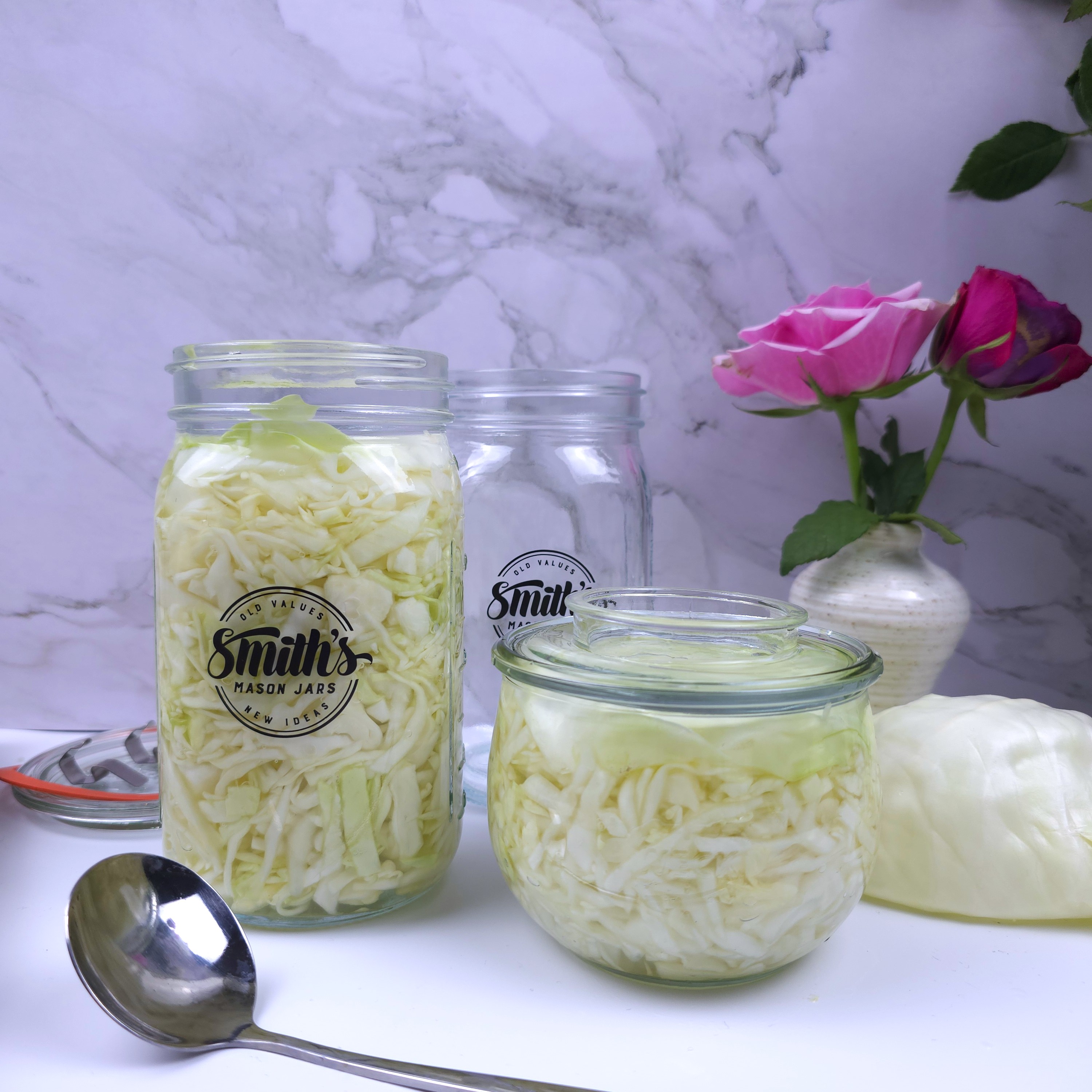
How to Make Sauerkraut at Home

Equipment
Ingredients
- 1 medium cabbage
- 15 g sea salt plus 5g extra for massaging
- 500 ml water for brine filtered or boiled and cooled
Instructions
- Remove outer leaves, set one aside, and shred the cabbage finely.
- Massage with salt until softened and juicy (5 min).
- Pack tightly into sterilized jars, pressing down to release brine.
- Cover with the reserved cabbage leaf, weigh down.
- Pour the salty brine to cover the shredded cabbage.
- Cover loosely and ferment at room temperature for 7-10 days.
- Taste after day 7; once tangy, refrigerate to slow fermentation.
Notes
YourDani x x
Nutrition
Serving Ideas – Bulgarian Dishes with Homemade Sauerkraut
In Bulgaria, sauerkraut isn’t just a side dish – it’s at the heart of many traditional meals. Here are a few classic ways we enjoy it back home:
Sarmi (Stuffed Cabbage Rolls) – Fermented cabbage leaves are used instead of fresh ones, stuffed with rice and mince (or sometimes just rice, onions, and herbs for a vegetarian version), then slowly simmered in tomato sauce. They’re a must-have for Christmas Eve in many households.
Kapama is a rustic, hearty dish from the Pirin mountain region. It’s layered with different meats (usually pork, chicken, and sausage), sauerkraut, rice, and spices. It’s baked slowly in a clay pot until everything is tender and infused with the cabbage’s sour tang. Coming soon!
Pork medallions with sauerkraut are our favorite dish at home, often served at our table, especially in winter. Coming soon!
Sauerkraut Soup (Zeleva Supa) – A warming winter soup made with sauerkraut, onions, paprika, and sometimes bits of pork. It’s simple but so comforting when the weather turns cold.
Side Dish with Roasts – Sauerkraut pairs beautifully with roasted meats, especially pork chops or oven-baked duck breasts, cutting through the richness with its fresh tang.
For me, these dishes bring back memories of cold Bulgarian winters, family gatherings, and that unmistakable aroma of sauerkraut simmering away in the kitchen.

Mention @deglutenistanutrition and tag #deglutenistanutrition — you’ll make my day! 🌿✨