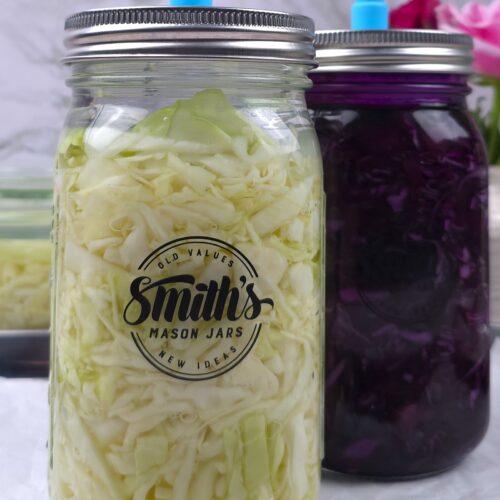
How to Make Sauerkraut at Home

An authentic, crispy Bulgarian-style shredded sauerkraut adapted for modern kitchens. Unlike traditional German kraut, this Balkan method uses a gentle massage technique to preserve maximum crunch, supplemented with a precise 3% saltwater brine. Naturally fermented, probiotic-rich, and tailored by a registered nutritionist for reliable results in any climate.
Equipment
Ingredients
- 1 medium cabbage
- 15 g sea salt plus 5g extra for massaging
- 500 ml water for brine filtered or boiled and cooled
Instructions
- Remove outer leaves, set one aside, and shred the cabbage finely.
- Massage with salt until softened and juicy (5 min).
- Pack tightly into sterilized jars, pressing down to release brine.
- Cover with the reserved cabbage leaf, weigh down.
- Pour the salty brine to cover the shredded cabbage.
- Cover loosely and ferment at room temperature for 7-10 days.
- Taste after day 7; once tangy, refrigerate to slow fermentation.
Notes
Keep the cabbage submerged to prevent mould.
Add carrots, garlic, or ginger for flavor variations.
Sauerkraut keeps in the fridge for up to 6 months.
YourDani x x
Nutrition
Serving: 100gCalories: 45kcalCarbohydrates: 11gProtein: 2gFat: 0.2gSaturated Fat: 0.1gPolyunsaturated Fat: 0.03gMonounsaturated Fat: 0.03gSodium: 1200mgPotassium: 309mgFiber: 5gSugar: 6gVitamin A: 178IUVitamin C: 66mgCalcium: 76mgIron: 1mg
Tried this recipe?Let us know how it was!
