
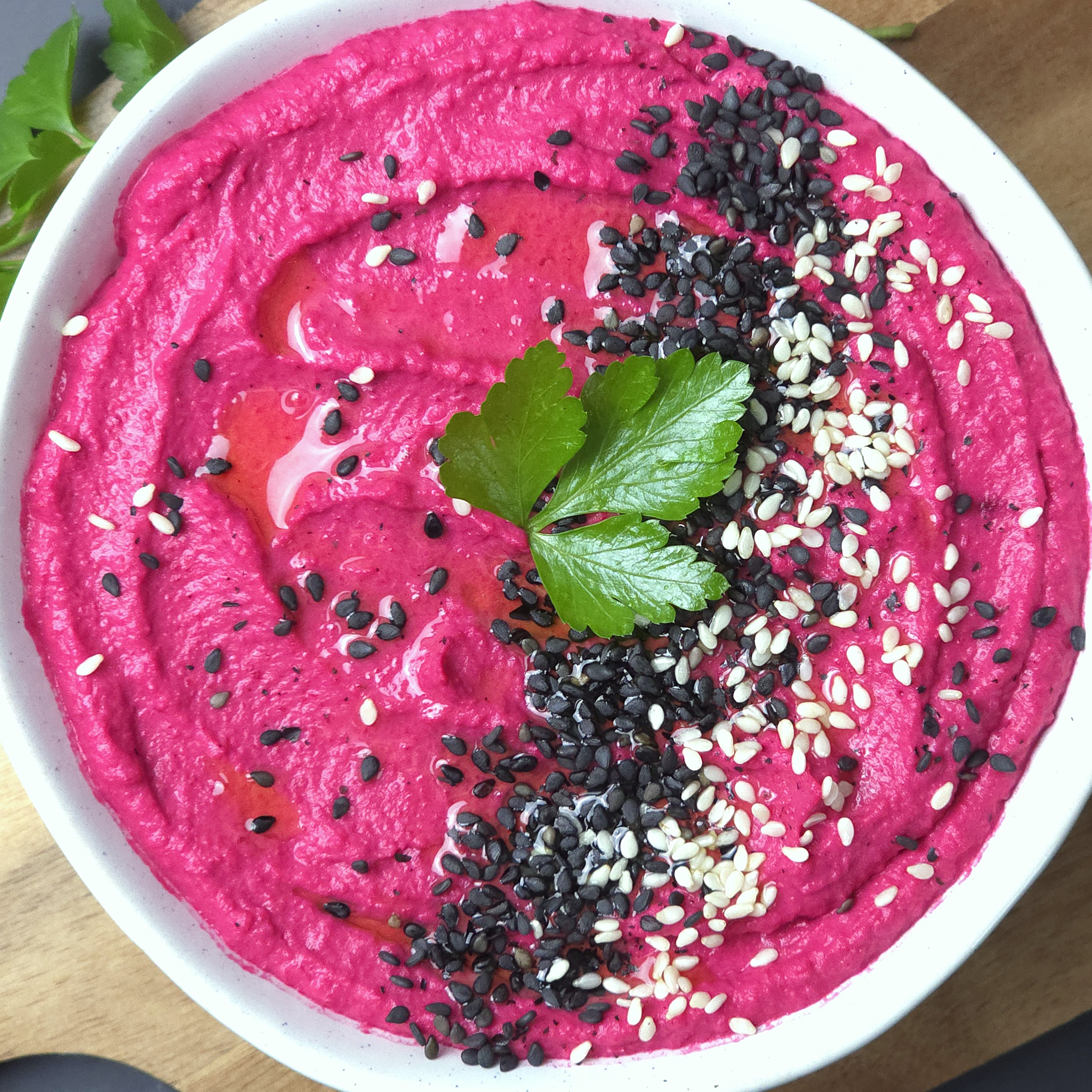
Easy Beetroot Hummus Recipe – Vibrant, Creamy & Nutritionist-Approved

I’ll be honest with you: I did not expect beetroot hummus to become a household staple for me. I thought it would be one of those things I make once, photograph, and forget about. Dear reader, I have not forgotten about it. It appears at practically every gathering I host, disappears before anything else on the table, and I’ve made it so many times I no longer need to look at the recipe.
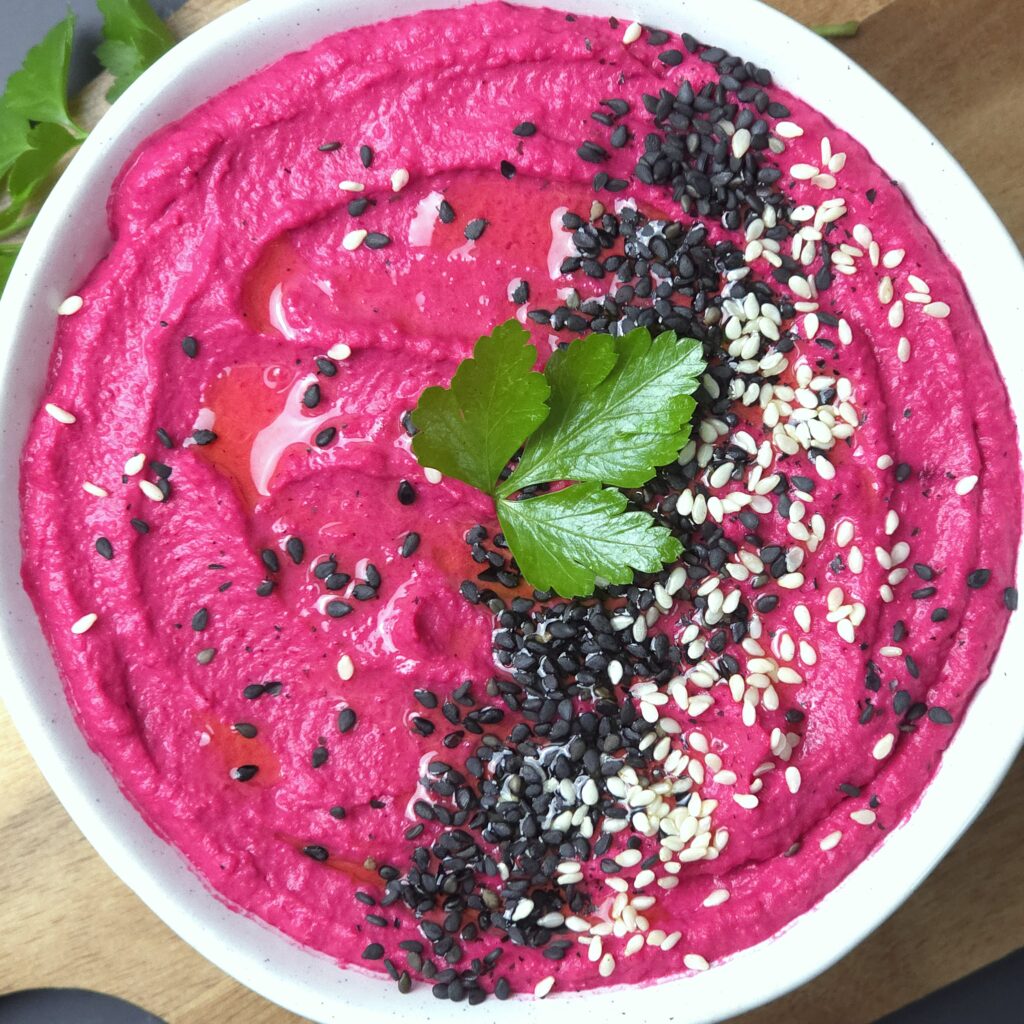
This beetroot hummus recipe is everything a good dip should be – vibrant, creamy, slightly earthy, and grounded in genuinely good ingredients. The roasted beet brings a natural sweetness that plays beautifully against the nuttiness of tahini and the bright sharpness of lemon. The result is a dip that looks dramatic and tastes like it took far more effort than it did.
It’s a twist on the classic hummus that’s been a staple of Mediterranean and Middle Eastern kitchens for centuries, and if you ask me, this version earns its place right alongside the original.
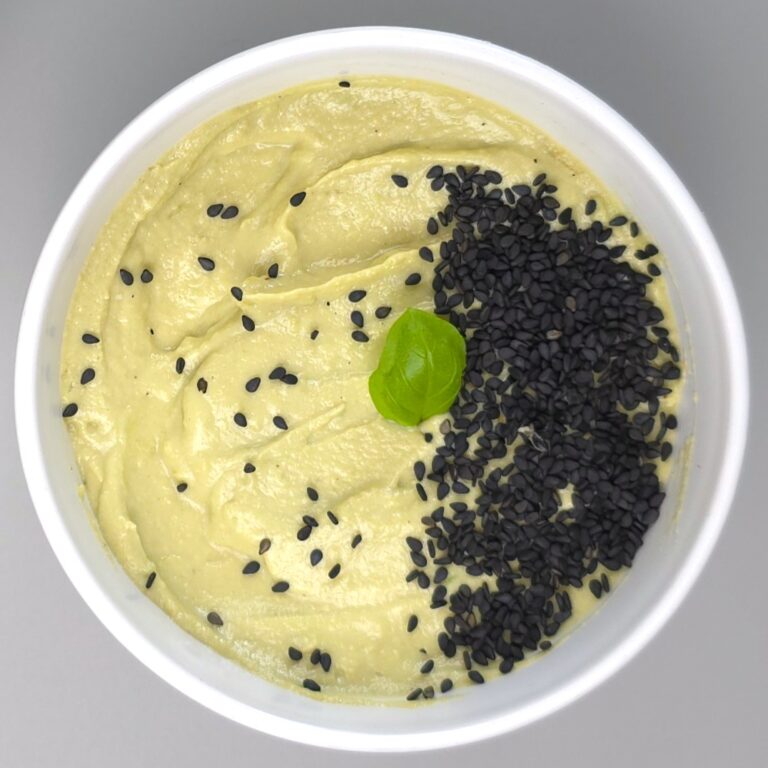
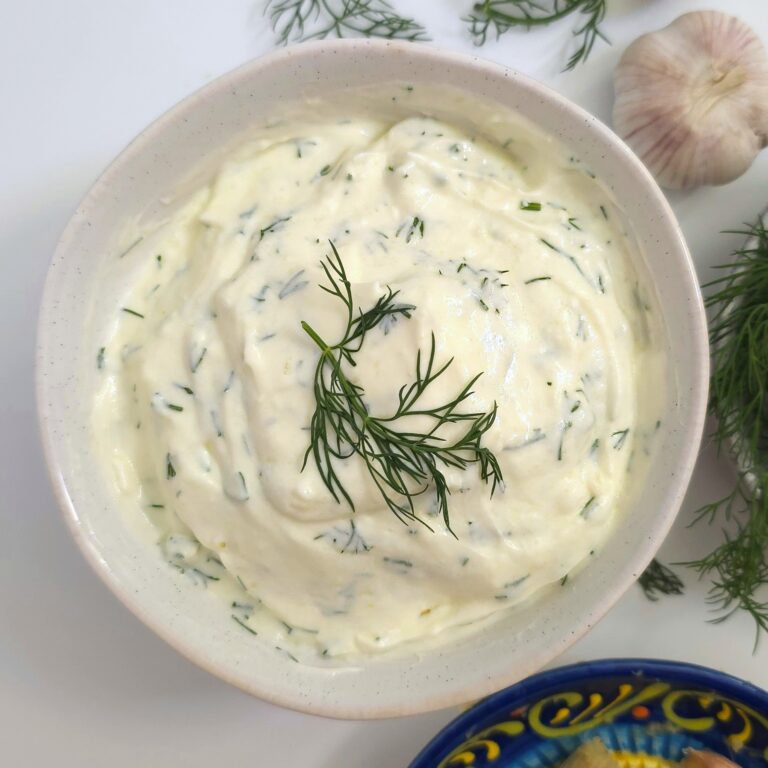
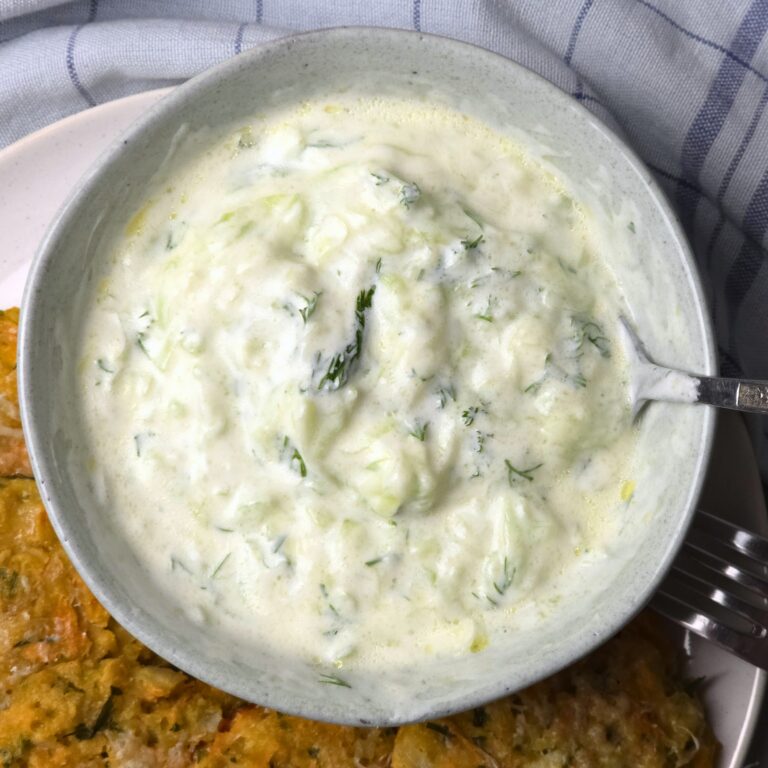
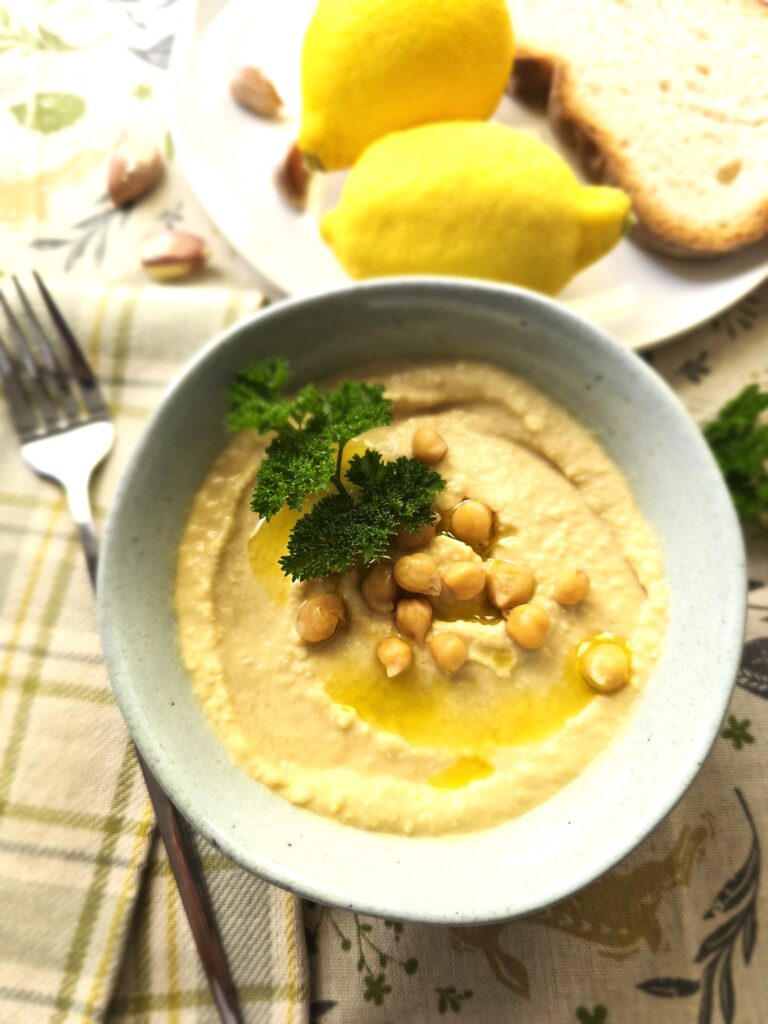
If you’re building a spread, pair it with the avocado tahini dip and the garlic yogurt sauce; the three together are genuinely hard to walk away from. Serve with maple-glazed carrots, alongside cheesy baked meatballs, or simply with cucumber crudités if you want something light and high in fiber.
This post may contain affiliate links. If you make a purchase through these links, I may earn a small commission at no extra cost to you. I only recommend products I personally use and trust. Thank you for your support!
Why You’ll Love This Easy Beetroot Hummus Recipe
- Naturally stunning color – that magenta hue is entirely from the beet. No dye, no drama, just plant pigments doing what they do best.
- Genuinely nutritious – high in fiber, folate, and plant-based protein, with healthy fats from tahini and olive oil.
- Minimal effort – one food processor, ten minutes of active time, and you’re done.
- Endlessly versatile – works as a dip, a spread, a bowl base, or an excuse to eat more vegetables without noticing.
Beetroot Health Benefits
Beetroot has an impressive nutritional profile and health benefits. I say that as someone who spent years avoiding it because of the color it leaves on everything it touches. Worth it.
Beets are low in calories, a solid source of dietary fiber, and particularly rich in folate (vitamin B9), which plays a key role in cardiovascular health and cell function. The deep color comes from betalains — natural plant pigments with well-documented anti-inflammatory properties.
What Beets, Chickpeas, and Tahini Bring to This Hummus
- Betalains and antioxidants – the pigments that make beets so visually striking are also what make them nutritionally interesting. Anti-inflammatory and protective.
- Cardiovascular support: the natural nitrates in beets help maintain healthy blood pressure by improving blood vessel function and circulation.
- Fiber for gut health – both beets and chickpeas contribute to digestive regularity and support a healthy gut microbiome.
- Sustained energy – dietary nitrates support oxygen efficiency during physical activity, which is useful whether you’re running marathons or running errands.
- Plant-based protein – chickpeas and tahini together make this a legitimately filling snack, not just a pretty one.
Beetroot Hummus Recipe Ingredients
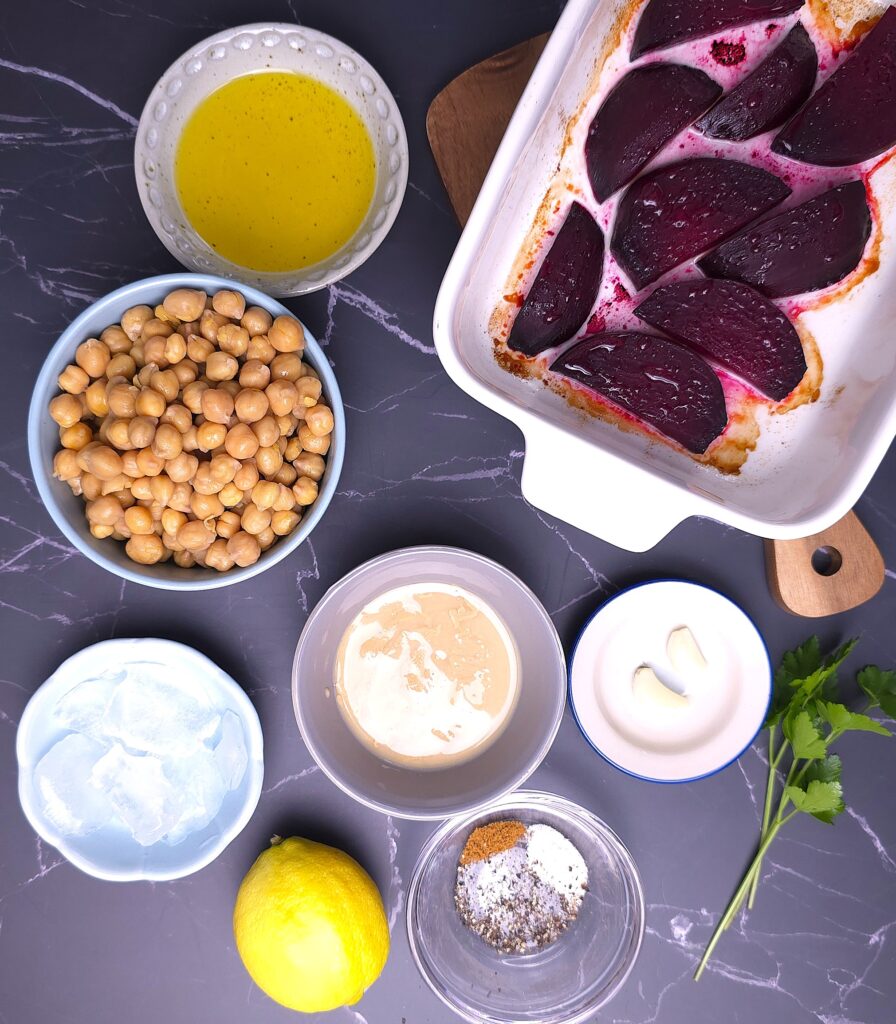
1 medium beet (approximately 150g), roasted. Choose firm, deep-coloured beetroot for the best flavor and antioxidant content. Roasting enhances natural sweetness and reduces earthy bitterness while preserving fiber and folate.
250g cooked or canned chickpeas (drained and rinsed). Use BPA-free canned chickpeas or home-cooked for optimal texture and mineral availability. Always rinse well to remove excess sodium and improve digestibility.
80g tahini. Opt for stone-ground, light tahini made from 100% sesame seeds. It provides healthy fats, calcium, and magnesium, and gives the hummus its creamy body.
5 ice cubes (to make hummus fluffy). Ice helps emulsify the tahini and oil while whipping air into the mixture, producing a lighter, smoother hummus texture.
1 medium fresh lemon, juiced. Always use freshly squeezed lemon for vitamin C and clean acidity. It balances the sweetness of beetroot and supports iron absorption from chickpeas and sesame.
50ml olive oil. Use cold-pressed extra-virgin olive oil for its polyphenols and monounsaturated fats. It improves mouthfeel and supports cardiovascular health.
2 garlic cloves. Fresh garlic provides antimicrobial compounds and supports gut health. For a milder flavor, remove the inner green sprout before blending.
1/4 tsp cumin. Cumin enhances digestion and reduces bloating from legumes. A small amount adds warmth without overpowering the beetroot.
1/2 tsp salt. Use fine sea salt or Himalayan pink salt for clean seasoning and better mineral balance. Adjust to taste depending on the saltiness of your tahini.
1/4 tsp black pepper. Freshly ground black pepper improves flavor complexity and enhances the bioavailability of plant compounds.
30 -50ml water (as needed for fluffy consistency). Add gradually to control texture. Cold water helps keep the hummus light and prevents the tahini from thickening too quickly.
Equipment
Food Processor
The one piece of kit you genuinely can’t skip here. I use mine for almost every dip and sauce on this site, and it earns its counter space every single time. A good-capacity bowl (at least 1.5 litres) makes a difference -anything smaller and you’ll be scraping the sides constantly. This is the one I use.
Citrus Squeezer
Fresh lemon juice is non-negotiable in this recipe – bottled just doesn’t behave the same way. A handheld squeezer gets the job done without any faff. This is the one I reach for.
Rubber Spatula
Essential for scraping down the sides of the food processor between blends. Without one, you end up with half the mixture stubbornly stuck to the bowl and a texture that’s smooth in some places, not in others. I use a silicone, the blue one from this kit – easy to clean and doesn’t scratch the bowl.
Airtight Storage Container
If you’re not eating this all in one sitting (no judgement if you are), a good airtight container keeps it fresh for up to five days. Glass is my preference – no staining, no odours, and the beetroot won’t permanently redecorate the inside. This set covers most of my storage needs.
Easy Beetroot Hummus Recipe Instructions:
Prepare the Beet: If using a raw beet, roast it at 400°F (200°C) for approximately 45 minutes, or until tender when pierced with a fork. Let it cool, then peel off the skin.
Roast or boil — but roasting wins.
Boiling works in a pinch, but roasted beets are a different ingredient entirely. Roasting concentrates natural sugars, reduces the sharp earthiness, and keeps the nutrients intact rather than leaching them into the cooking water. If you want to know why cooking method matters nutritionally, I’ve written a full guide on the best cooking methods for nutrient retention.
To roast: Peel, chop into medium chunks, toss with a little oil, cover with foil, and roast at 190°C / 375°F for 45–55 minutes until completely tender. Let cool before blending.
Blend Ingredients: In a food processor, combine the cooked beet, chickpeas, tahini, lemon juice, olive oil, garlic, cumin, salt, and pepper.
Adjust Texture: Blend until smooth, adding water gradually if needed to achieve a creamy consistency.
Taste and Adjust: Adjust seasoning as needed. For extra tang, add more lemon juice; for creaminess, add a little more tahini or olive oil.
Serve and Enjoy: Transfer to a serving bowl, drizzle with olive oil, and garnish with sesame seeds, chopped parsley, or crumbled feta if desired.
Beetroot Hummus Recipe Tips & Variations
For smoky depth: add a pinch of smoked paprika. It works brilliantly against the beet’s sweetness.
For extra creaminess: blend in a tablespoon of Greek-style yogurt (or a dairy-free alternative). It softens the earthiness and gives a silkier finish.
For a garlic kick: roast the garlic alongside the beetroot rather than using it raw. The flavor mellows and deepens considerably.
For a spicy edge: a small pinch of chili flakes or cayenne adds a kick.
For a lighter texture: reduce the tahini slightly and add extra lemon juice or cold water. The ice-cube trick in the main recipe is your best friend here – don’t skip it.
For topping: toasted sesame seeds, chopped flat-leaf parsley, and a drizzle of good extra-virgin olive oil. Crumbled feta if you’re not keeping it vegan.
FAQs
Can I use raw beetroot?
You can, but I wouldn’t recommend it as your first attempt. Raw beets produce a more aggressively earthy flavor and a slightly grainier texture. Roasting or boiling first gives you that smooth, sweet result that makes this recipe worth making again.
How long does beetroot hummus keep?
Up to 5 days in an airtight container in the fridge. Drizzle a little olive oil over the surface before sealing – it acts as a barrier, keeping it fresh.
Can I freeze it?
Technically yes, but I don’t – the texture becomes grainy after thawing, and it loses that fresh, creamy quality. It’s so quick to make that I’d rather just make a fresh batch.
What if I don’t have tahini?
Peanut butter, almond butter, or sunflower seed butter all work. The flavor profile shifts, but the creaminess stays. Sunflower seed butter is the most neutral.
Beetroot Hummus Recipe

Equipment
Ingredients
- 1 medium Beetroot ~150 – 200g, roasted or boiled
- 250 g Chickpeas cooked or canned (drained and rinsed)
- 80 g Tahini (stone-ground, light)
- 1 medium Lemon juiced (freshly squeezed)
- 50 ml Extra virgin olive oil
- 2 cloves Garlic peeled and sliced
- ¼ tsp Cumin powder
- ½ tsp Sea Salt or to taste
- ¼ tsp Black pepper freshly ground
- 30 – 50 ml Water as needed
- 5 Ice cubes
Instructions
- Roast the beetroot. Peel and chop into medium chunks, toss with a little oil, place on a foil-covered baking tray, and roast at 190°C / 375°F for 45–55 minutes until completely tender. Let cool fully before using.
- First blend. Add the chickpeas, beetroot, tahini, lemon juice, garlic, ice cubes, cumin, salt, and pepper to the food processor. Do not add the olive oil or water yet. Blend until the mixture starts to come together, then scrape down the sides with a spatula.
- Add the oil and water. With the processor running, slowly pour in the olive oil. Add cold water a little at a time until you reach your preferred consistency — creamy and smooth yet thick enough to hold a swirl.
- Taste and adjust. More lemon for brightness, more salt for depth, a touch more tahini for richness. Every beet is slightly different, so trust your palate here.
- Blend until fluffy. Keep blending for another 1–2 minutes. The extra time makes a real difference to the texture.
- Serve. Transfer to a bowl, drizzle with olive oil, and top with sesame seeds, chopped parsley, or crumbled feta if you're not keeping it vegan.
Notes
YourDani x x
Nutrition

Mention @deglutenistanutrition and tag #deglutenistanutrition — you’ll make my day! 🌿✨