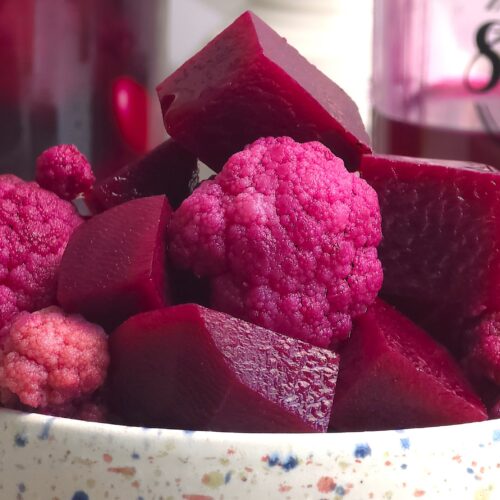
Fermented Beetroot, Cauliflower, Garlic, and Dill Recipe (Lacto-Fermented Vegetables)

A vibrant Bulgarian-style ferment made with beetroot, cauliflower, garlic, and dill. Naturally probiotic, gut-friendly, and prepared through simple wild fermentation.
Equipment
Ingredients
- 1 medium Beetroot peeled and sliced into sticks or wedges
- 1 medium head Cauliflower in florets
- 4 cloves Garlic peeled
- 1 handful Dill fresh
- 30 g Salt non-iodised sea or pink, for brine
- 1 L Water filtered or boiled-and-cooled
- 1 handful Black peppercorn optional
Instructions
- Rinse your glass jars with boiling water and leave them to air-dry.
- Slice or chop the beetroot evenly, chop the cauliflower into florets, peel the garlic, and rinse the dill.
- Dissolve 30 g of sea salt in 1 L filtered or cooled boiled water to create a 3% brine.
- Layer beetroot, cauliflower, garlic, and dill inside the jar. Press the vegetables down to remove air pockets.
- Pour the brine over the vegetables until they are fully submerged. Leave a few centimeters of space at the top of the jar.
- Fold a clean cabbage leaf over the top and place a small fermentation weight or a clean, heavy glass to keep everything submerged.
- Close with a fermentation lid or keep a standard lid slightly loose. If the lid is tight, burp the jar daily for the first 2–3 days to release built-up gases.
- Leave the jar at 18–22°C for 7–10 days.
- Expect bubbles and cloudiness; both are normal signs of active lacto-fermentation.
- Start tasting on day 5.
- When the flavor is tangy, crunchy, and vibrant, remove the weight and refrigerate the jar. It will keep for 3–6 months.
Notes
Sodium levels vary by brine concentration.
Beetroot will naturally color the entire ferment a deep pink; this is normal and beautiful.
If garlic turns blue or turquoise, it is safe to consume; this occurs due to a natural reaction between sulfur compounds and amino acids.
Always keep vegetables submerged to prevent mould; this is the golden rule of wild fermentation.
Store the finished ferment in the fridge to slow further fermentation.
The flavor intensifies over time; feel free to ferment longer for more tang.
YourDani x x
Nutrition
Serving: 50gCalories: 119kcalCarbohydrates: 25gProtein: 7gFat: 1gSaturated Fat: 0.4gPolyunsaturated Fat: 0.2gMonounsaturated Fat: 0.1gSodium: 5993mgPotassium: 1171mgFiber: 8gSugar: 11gVitamin A: 70IUVitamin C: 145mgCalcium: 110mgIron: 2mg
Tried this recipe?Let us know how it was!
