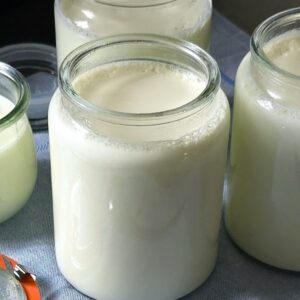
Bulgarian Yogurt Recipe (24-Hour Fermented) – Thick, Creamy & Gut-Friendly

This authentic Bulgarian yogurt recipe uses a gentle 24-hour fermentation to create a thick, velvety, probiotic-rich yogurt that’s naturally lower in lactose. Made with live cultures and organic whole milk, this homemade yogurt is creamy, nourishing, and incredibly easy to prepare using the Instant Pot’s yogurt function. Perfect for breakfasts, smoothies, chia puddings, savoury dips, or as a gut-friendly everyday staple.
Equipment
Ingredients
- 1 pack Bulgarian Yogurt Starter Culture
- 2 pint (UK) Whole Milk Organic Farm Milk
Instructions
- Sterilise the glass jars, lids, and any utensils to be used. To effectively sterilise your equipment, bring water to a boil in a kettle, then pour the boiling water into the jars and lids.
- Place milk into the Instant Pot. Cover with the lid and activate the 'Boil' function. Allow the milk to cool naturally in the pot. If you want it to cool quicker, fill the sink with cold water and toss some ice cubes. Place the pot into the sink. Do not cool too much.
- Make sure the milk temperature is below 42°℃. A thermometer is the best tool, if unavailable, use your hands to gauge the temperature. If the pot feels too hot, allow it to cool further.
- While the milk cools, prepare your equipment by emptying any boiling water from the metal bowl and yogurt pots, then cover them with a clean towel.
- Gently whisk the starter culture into the milk. If it's your first batch, use a pack of live cultures; follow the instructions on the pack. If using the previous batch, add 2-3 generous tablespoons of yogurt to the milk; whisk your starter in the bowl first. Stir very well.
- Strain the milk while pouring it into the jars and then secure the lids tightly. I use a tea strainer to achieve a smoother, particle-free yogurt texture.
- Wash and dry your Instant Pot insert. Place the jars inside, close the lid (you don't need to seal it), and select the Yogurt function for 24 hours
- Once the yogurt maker has finished its cycle, move the jars to the refrigerator to chill for a few hours prior to use.
Notes
Because this yogurt is fermented for a full 24 hours, most of the lactose (milk sugar) is consumed by the live cultures. The sugar value shown is an estimate, as homemade long-fermented yogurt naturally contains far less lactose than standard store-bought yogurt. Actual values vary depending on the milk type, starter strength, and fermentation temperature.
• Save 2–3 tablespoons from this batch to use as the starter for your next yogurt.
• For best texture, use full-fat organic milk. Semi-skimmed milk works but produces a thinner yogurt.
• Strain finished yogurt through cheesecloth for a Greek-style thick texture.
• Plant milks such as coconut or almond can be used, but need thickeners (agar-agar, tapioca starch).
• If the yogurt comes out runny, it is still delicious and probiotic-rich — simply chill it longer or whisk before serving.
• Start with small amounts if you’re new to fermented foods and build slowly for gut comfort.
• Serve with granola, berries, chia puddings, soups, savoury dips, or in baking for a tender crumb.
• For best texture, use full-fat organic milk. Semi-skimmed milk works but produces a thinner yogurt.
• Strain finished yogurt through cheesecloth for a Greek-style thick texture.
• Plant milks such as coconut or almond can be used, but need thickeners (agar-agar, tapioca starch).
• If the yogurt comes out runny, it is still delicious and probiotic-rich — simply chill it longer or whisk before serving.
• Start with small amounts if you’re new to fermented foods and build slowly for gut comfort.
• Serve with granola, berries, chia puddings, soups, savoury dips, or in baking for a tender crumb.
YourDani x x
Nutrition
Serving: 100gCalories: 61kcalCarbohydrates: 2gProtein: 3.2gFat: 3.6gSaturated Fat: 2.3gSodium: 36mgSugar: 1gCalcium: 121mg
Tried this recipe?Let us know how it was!
